

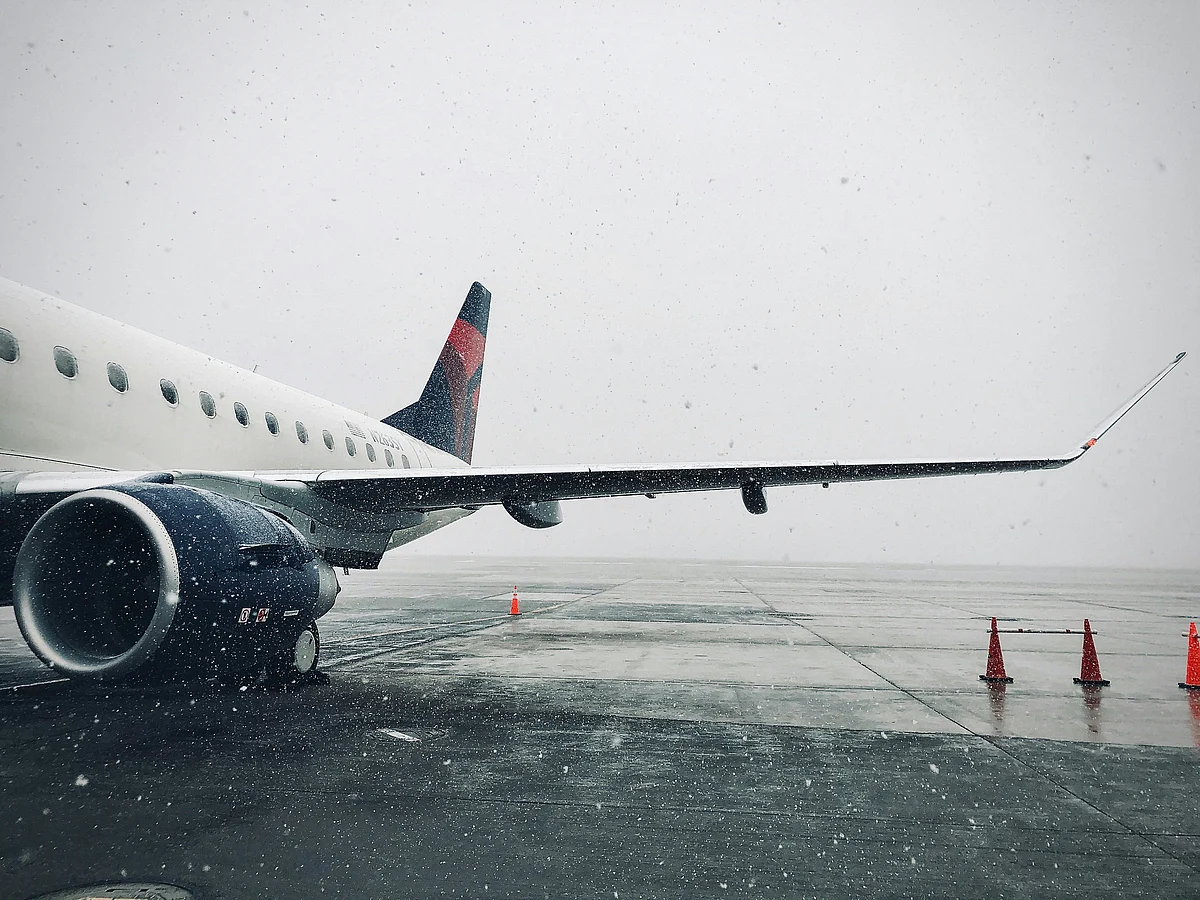
If you are travelling anywhere across East Asia this weekend, double-check your itinerary. Super Typhoon Bavi, set to hit China’s Eastern Coast on Saturday evening, has already led to the cancellation of more than 450 flights across Hong Kong and Taiwan. Further disruptions are expected as the storm inches closer to the land. Airlines have published revised schedules, introduced rebooking options and are urging passengers to monitor updates as the weather conditions continue to evolve.
If you are flying directly to Hong Kong, Taiwan or eastern Asia, or transiting on your way to Japan, South Korea or Southeast Asia, it is advisable to confirm your flight status before leaving for the airport.
Who Is Affected?
Travellers Flying To Hong Kong
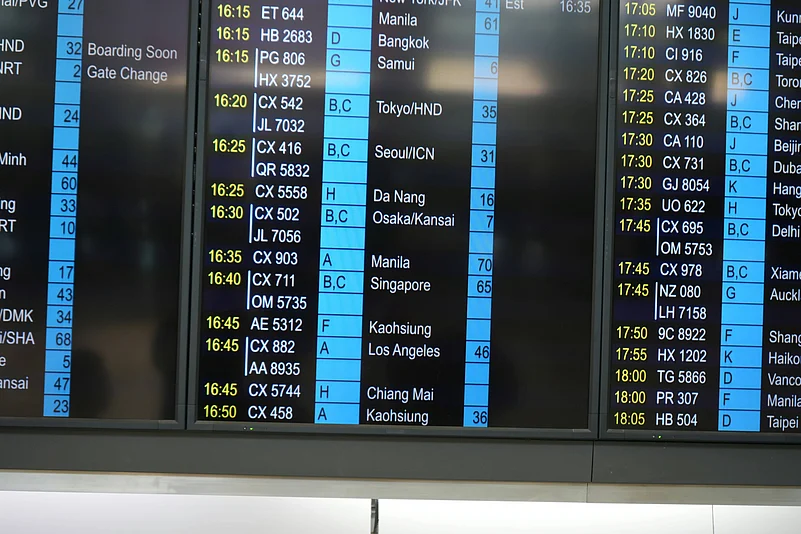
Forty flights have been cancelled at the Hong Kong International Airport, and several flights have been delayed. This has affected routes to Taipei, Kaohsiung, Okinawa, Taichung, Ishigaki and Zhoushan.
Several regional carriers, including Cathay Pacific, HK Express, and Hong Kong Airlines, have revised schedules and opened rebooking and refund options for eligible passengers. Operations will continue to fluctuate over this week, and travellers should check directly with the airline before heading to the airport.
Travellers Flying To Taiwan
Taiwan has experienced the most amount of disruption so far. According to the Civil Aeronautics Administration, 154 domestic flights and 261 international and cross-strait services have been cancelled.
Operations at Taoyuan International Airport have been reduced. Flights to and from Taipei Songshan Airport and Kaohsiung International Airport have also been affected. Several airlines have also suspended or adjusted their services, and additional changes remain possible over the weekend.

Travellers Going To Eastern China
China’s National Meteorological Centre has forecasted that Super Typhoon Babi will make landfall between Fuqing in Fujian Province and Wenling in Zhejiang Province.
Airports continue to remain open in many parts of Eastern China. However travellers should be prepared for delays or cancellations as conditions might deteriorate sooner to the landfall. Ferry services, coastal transport links and outdoor attractions in these parts may also face temporary suspensions depending on local weather conditions.
Why Is This Important?
July is one of the busiest travel periods in East Asia, with summer holidays drawing visitors across Hong Kong, Taiwan and Japan. Disruptions caused by major weather systems extend beyond the storm’s immediate impact. This affects aircraft rotations and connecting flights across the region for longer.
Typhoon Bavi is predicted to be one of the strongest storms affecting East Asia this season as it has maintained super typhoon intensity for several days. Forecasts from Hong Kong Observatory and China’s National Meteorological Centre indicate sustained winds of around 200 km/h as it tracks across the east of Taiwan before weakening after landfall.
(With inputs from multiple sources)