


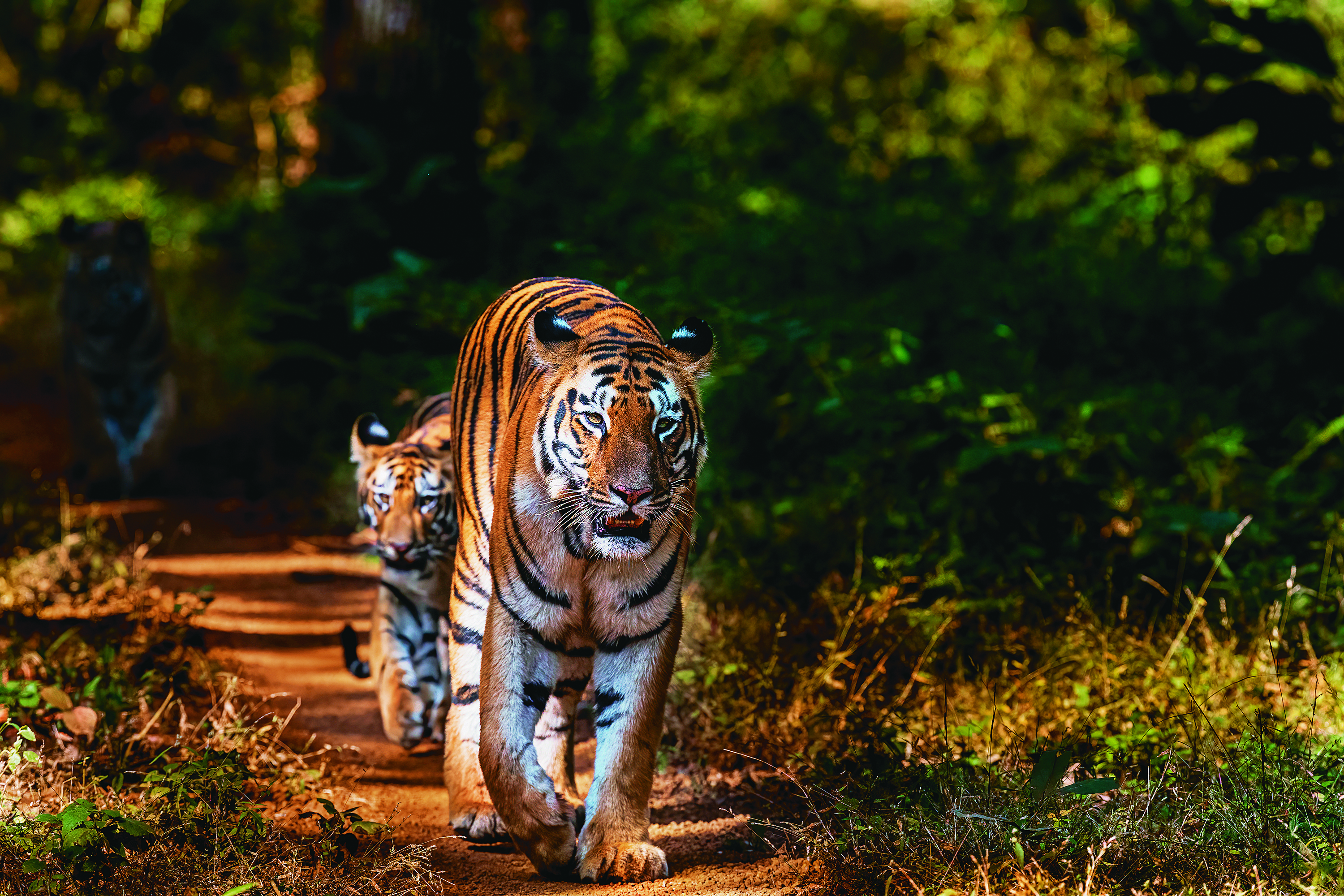
Among the several things announced by Finance Minister Nirmala Sitharaman on February 1, 2026, while rolling out the budget, a major--and perhaps only--environmental and diplomatic push that featured was the intention to host the Global Big Cat Summit this year in India. The summit will seek to bring leaders, environmental ministers and conservation experts together from 95 big cat dominated countries to brainstorm and plan collective conservation measures.
The announcement places the summit within the ambit of International Big Cat Alliance (IBCA), an initiative launched by India in the year 2024 to promote global cooperation for the protection of big cats. “We established the Big Cat Alliance in 2024. This year India is hosting the first-ever global Big Cat Summit where heads, heads of governments and ministers from 95 range countries will deliberate on collective strategies for conservation,” said Sitharaman as she presented the Union Budget 2026 in the Parliament.
Global Big Cats Summit
The summit is set to witness the congress of key political leaders, environmental ministers and wildlife experts from countries that come within the natural range of big cats. Out of the 95 such countries over the world, China, Brazil, Canada, Russia, Iran and United States form the core. Already in 2024, about 25 of these countries had revealed their intention to join the alliance while more are expected to join the framework soon.
The International Big Cat Alliance was formally launched by the Indian government in March 2024 through the National Tiger Conservation Authority under the Ministry of Environment, Forest and Climate Change. Its cardinal motives entailed conservation of seven big cats: tiger, leopard, lion, snow leopard, cheetah, puma and jaguar. These species chiefly inhabit ecosystems across Asia, Africa and the Americas, making international coordination imperative to conservative outcomes. Mapping it as a long-term project, the central government had allocated INR 150 crore to the initiative for the period spanning 2023-24 to 2027-28.
A Trace Of Global Big Cat Summit
It is to be noted that the Global Big Cat Summit is not novel and fresh in the Union Budget 2026-27. The plan can be traced back to November 2025 when it first outlined at the IBCA ministerial segment during COP30 in Brazil. Union Environment Minister Bhupender Yadav had then alluded to the need for a dedicated international platform that wildlife conservation with biodiversity preservation, habitat protection and climate action.
Sitharaman's announcement from February 1 reaffirms the idea of the summit, placing it formally on government's agenda for the year. In addition, multiple reports have cited New Delhi as the likely host city, though confirmation on the technical side of the summit, like dates and venue, stand to be undisclosed.
While New Delhi remains the heart of Indian diplomacy, other cites like Jim Corbett are pivotal to big cat presence and conservation. Commenting on the relevance of such sites, Anirudh Lakhotia, Director, Ivory Destination, said, “Jim Corbett, being India’s oldest national park and one of the world’s earliest tiger reserves, is naturally positioned to play a central role in such initiatives. If Jim Corbett were to become a focal point for such global conversations, it would reinforce its legacy and global standing.”
He also noted that conservation remains an evolving process. “Recent reports of tiger deaths underline the need for continued dialogue and improvement in conservation practices. While there have been many successes, there is always scope to strengthen conservation frameworks further,” he said.
Allocations For The Global Big Cat Summit
While the overall allocation for the Ministry of Environment, Forests and Climate Change saw a hike in Budget 2026-27 from INR 3276.82 crore in 2025-26 to INR 3536.66 in 2026-27, multiple sectors for wildlife and aquatic conservation, inversely, witnessed a decline.
The budget for the Development of Wildlife Habitats underwent a decline from INR 148 crore in 2025-26 to INR 102 crore in 2026-27. The allocation for Conservation of Aquatic Ecosystems also plummeted from INR 35 crore in 2025-26 to INR 21 in 2026-27.
These figures reveal that even as India continues to posit itself as a purveyor of wildlife conservation and sustainability, the allocations convey a different picture. The most shocking data that lends colour to this comes in the form of the allocation for Indian Institute of Forest Management, which witnessed a steep decline from INR 10 crore in 2025-26 to INR 3 lakh in 2026-27.
(With inputs from various sources.)