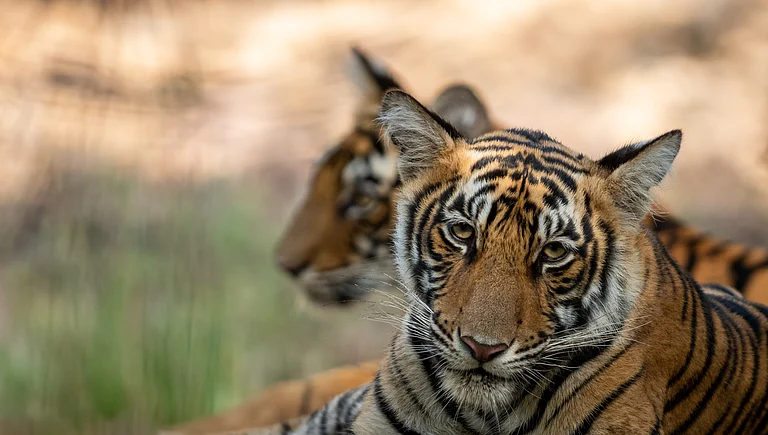
A two-year-old tiger was killed in territorial infighting inside the Achanakmar Tiger Reserve in Chhattisgarh’s Mungeli district, a forest official said on Monday. The carcass was spotted on Sunday by a forest patrolling team in the Kuterpani forest compartment of the Sarasmadol circle.
The Findings
A postmortem examination revealed that the tiger’s teeth, nails, claws and other body parts were intact. However, the neck bone was found broken, with bite marks on the lower part of the neck, confirming that the big cat died during a territorial fight with another tiger, the official said.
The site showed signs of a conflict, including broken tree branches, scratches, tiger scat and hair. Hair of another tiger was also found lodged in the claws of the deceased animal.
Internal organs of the carcass have been preserved for laboratory analysis. The other tiger involved in the fight has been identified and is being monitored through camera traps and field tracking, the official said.
Artificial Densities
Forest officials said the incident reflects normal territorial behaviour in a healthy and natural tiger population. They attributed such conflicts to favourable habitat conditions in Achanakmar Tiger Reserve, natural migration from the Kanha–Bandhavgarh corridor, and successful local breeding, which have led to an increase in the tiger population.
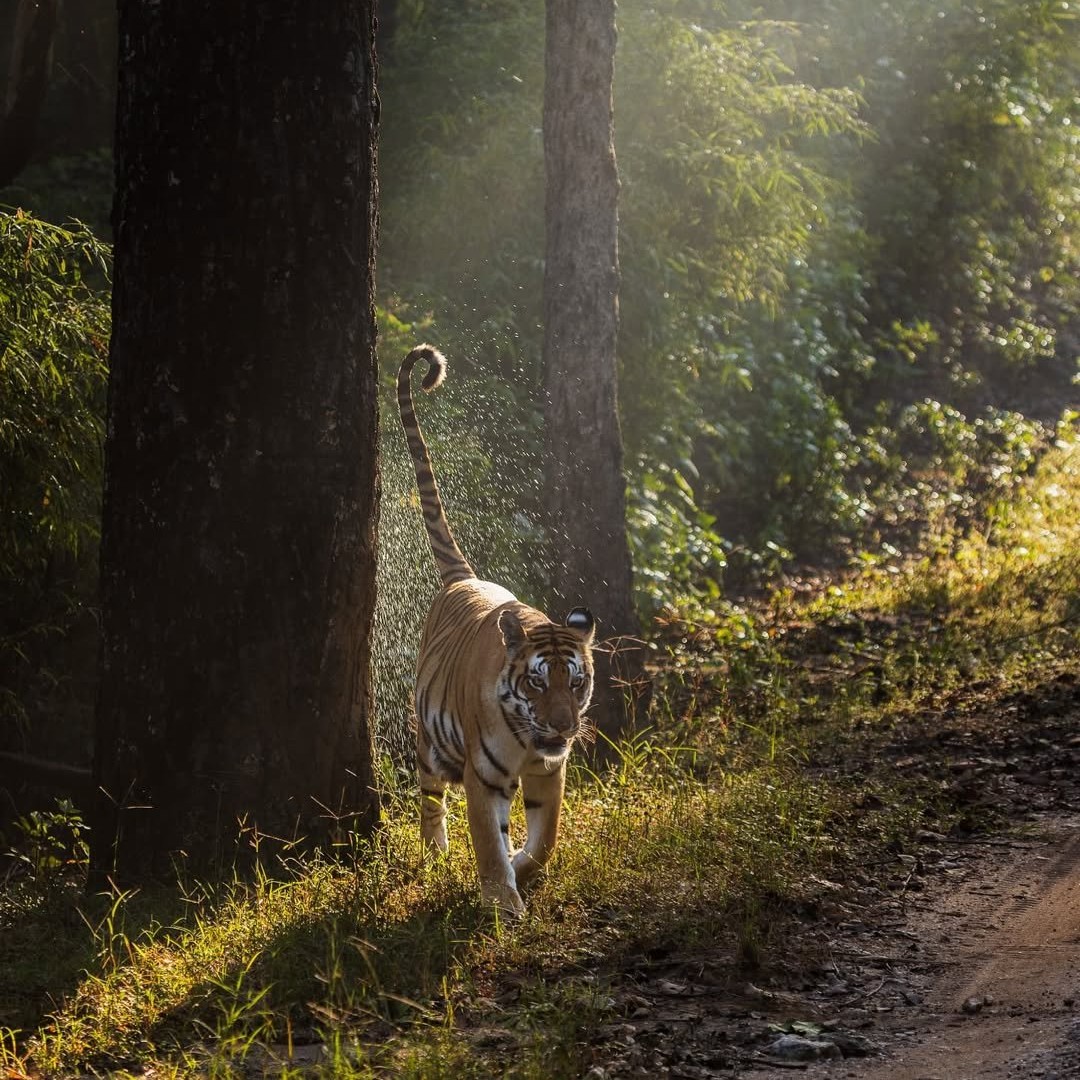

However, wildlife experts have raised concerns that the resurgence in big cat populations, combined with habitat saturation and unscientific management, is triggering ecological stress. They say that rising tiger numbers are announced as a conservation success, but there is a lack of expanded protected habitats. This has led to artificially high densities driven by aggressive habitat manipulation. rather than natural population growth.
Chhattisgarh’s tiger population doubled from 17 in 2022 to 35 by April 2025, according to the state forest department. The state has four tiger reserves — Indravati, Udanti-Sitanadi, Achanakmar, and Guru Ghasidas–Tamor Pingla.
Other Recent Incidents
That habitats are being stressed is being reflected in the number of tiger deaths. Forest personnel recovered the carcass of a female tiger on January 18 in Kaziranga National Park and Tiger Reserve in Assam. Preliminary findings indicated that the tigress died following infighting. This is the third tiger found dead in the area within a fortnight.
Multiple tiger deaths have been reported in Bandhavgarh Tiger Reserve (BTR) in Madhya Pradesh. Some of the deaths are suspected to be due to territorial fighting, while several cases are under investigation as unnatural deaths. And this is just in the last month.
(With inputs from PTI.)
FAQs
What happened in Chhattisgarh’s Achanakmar Tiger Reserve?
A two-year-old tiger was found dead after territorial infighting, highlighting rising competition among big cats in the reserve.
Where else have tiger deaths been reported recently?
Similar incidents have been reported in Kaziranga National Park in Assam and Bandhavgarh Tiger Reserve in Madhya Pradesh.
Why are wildlife experts concerned despite rising tiger numbers?
Experts say habitat saturation and unscientific management are creating ecological stress, increasing conflict among tigers and with humans.
What does “artificially high tiger density” mean?
It refers to unusually high numbers sustained by habitat manipulation rather than natural ecological balance.
How does habitat saturation affect tigers?
Limited space intensifies territorial fights, stress, and dispersal into human-dominated areas.