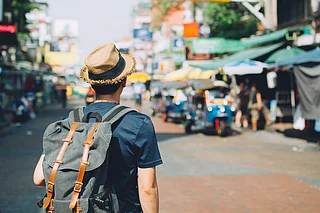


As a travel filmmaker, chasing light is part of my daily routine. I watch the sky, calculate how long a frame will hold and move quickly between locations before the conditions change. A destination often becomes a sequence of shots to be completed within a fixed schedule.
In Seychelles, that routine began to loosen.
Somewhere between the forested slopes of Mahé, the water around Petite Anse and the long coastal tracks of Desroches Island, I started leaving the camera untouched for longer periods. I was still looking for frames, but I was also beginning to notice what happened between them.
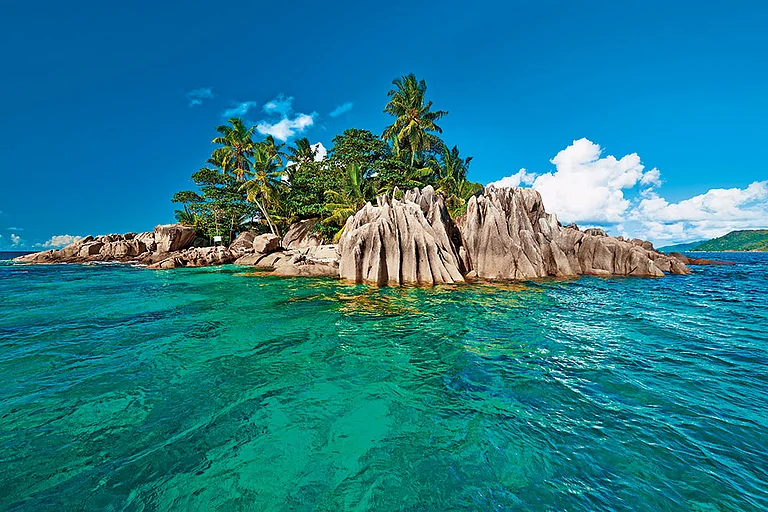
My journey took me to two Four Seasons properties that revealed contrasting versions of the archipelago. Four Seasons Resort Seychelles rises through the hills above Petite Anse on Mahé, surrounded by tropical vegetation and large granite formations. Four Seasons Resort Seychelles at Desroches Island spreads across a remote coral island, where bicycles are the main mode of transport, beaches extend without interruption, and Aldabra giant tortoises move through the undergrowth.
The properties share a service philosophy, but their landscapes, architecture and rhythms are entirely different. Moving between them became a way of understanding Seychelles itself.
A Stay Shaped By The Landscape
Seychelles is an archipelago of 115 islands in the western Indian Ocean, off the coast of East Africa. Its population and tourism activity are concentrated largely around the inner islands of Mahé, Praslin and La Digue. These are granitic islands, recognised by their steep green interiors, sculpted rock formations and sheltered bays. Many of the more distant outer islands, including those in the Amirantes group, are low-lying coral islands surrounded by reefs.
I arrived on Mahé in early February after leaving behind Delhi’s grey winter. From the aircraft, the islands appeared in fragments of green and blue, separated by large stretches of ocean. On the ground, the air felt warm and salt-laden, and the transition through Seychelles International Airport was calm and uncomplicated.
It was already dark when I reached Four Seasons Resort Seychelles. The property appeared gradually through the foliage, with softly lit villas and pathways climbing the hillside above Petite Anse. The welcome was simple: coconut water, warm smiles and an introduction to the resort before I was driven by buggy to my villa.
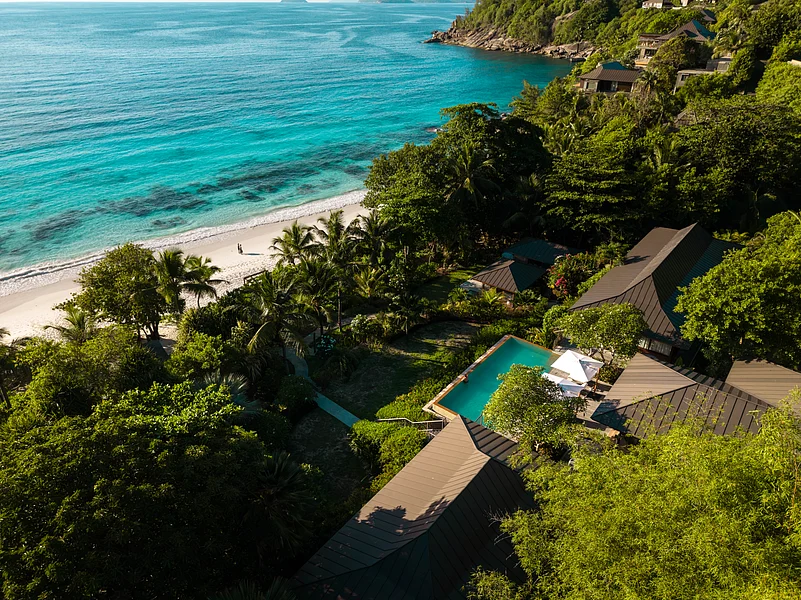

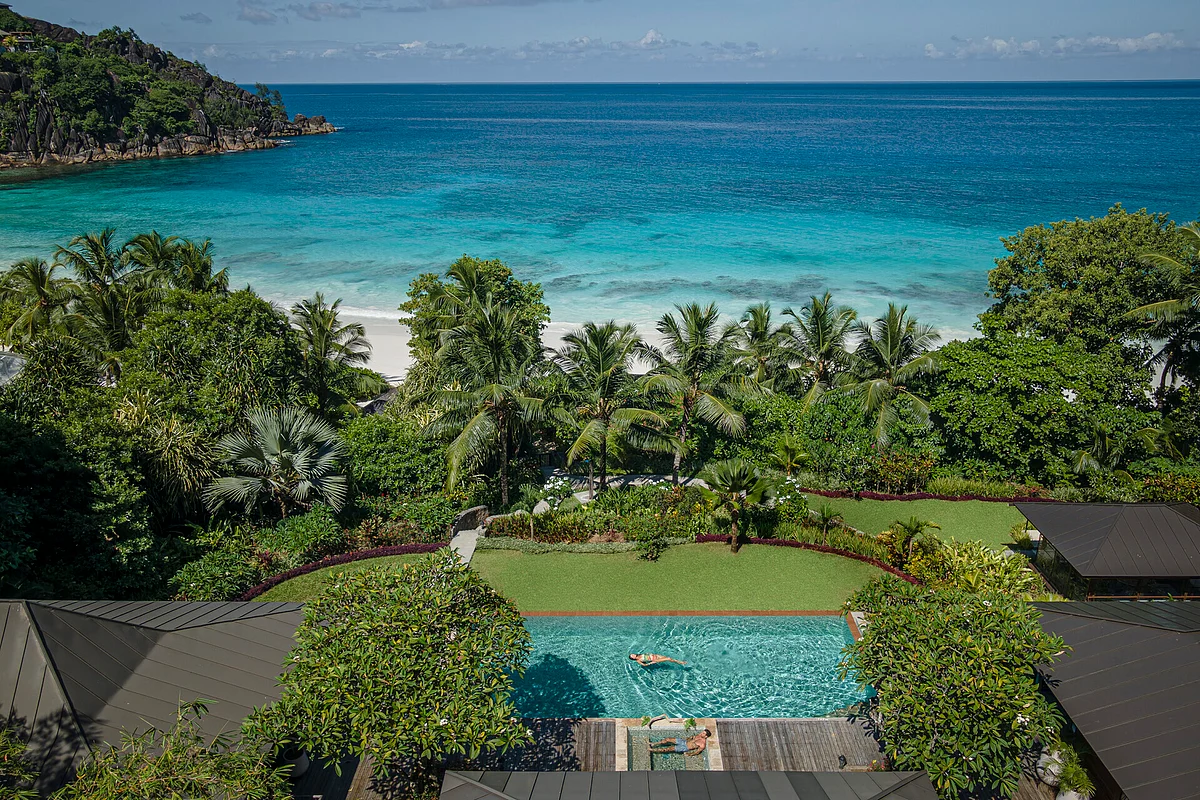
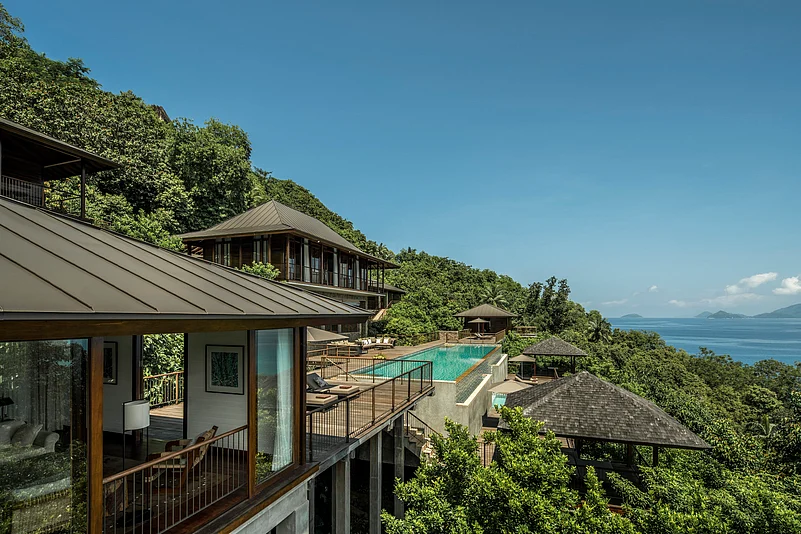
Morning revealed how carefully the property had been positioned within its surroundings. Rather than occupying a single flat site, it follows the contours of the hill. Villas sit at different elevations, partly screened by tropical plants and granite boulders. This creates privacy while keeping the ocean visible from much of the property.
My ocean-view villa overlooked Petite Anse Bay. Its private infinity pool mirrored the changing sky, while the deck, outdoor rain shower and open living spaces kept drawing me outside. The interiors combined warm wood, muted tones, and references to Creole architecture without competing with the landscape.
The villa offered the kind of privacy that changes the way a day unfolds. I could begin with coffee overlooking the water, swim without leaving the room and spend time filming fruit bats moving between the trees. Even when the resort was occupied, it rarely felt busy. Guests moved quietly among the beach, restaurants, spa, and villas, and the layout ensured there was always a secluded corner nearby.
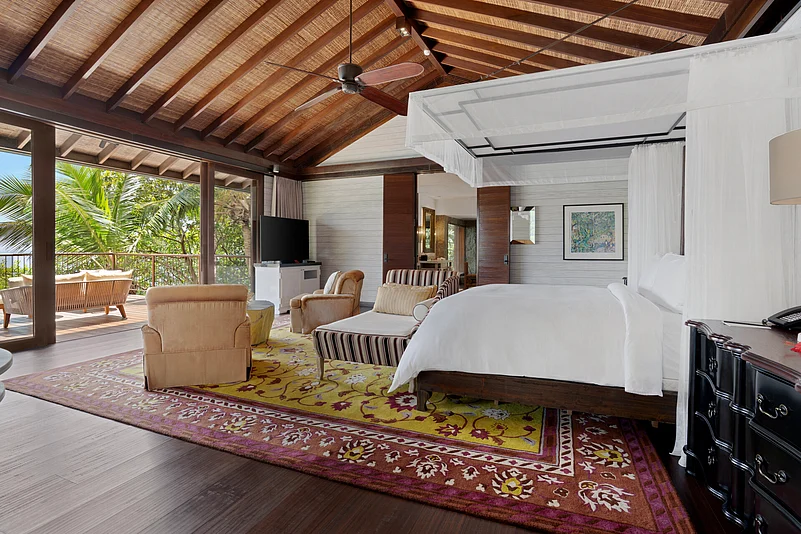
Service was attentive without becoming intrusive. Buggies arrived quickly when needed; staff remembered preferences, and meals were paced to suit the surroundings. The emphasis was less on visible grandeur and more on ease.
Food became an important part of my stay. Seychellois cooking reflects African, French, Indian and Asian influences, shaped by the movement of people and ingredients across the Indian Ocean. Fresh seafood, tropical fruit, coconut, chilli, cinnamon and herbs appear frequently across the islands.
At ZEZ, positioned high above the bay, breakfast came with wide views of Petite Anse. Moringa pancakes, island-style egg dishes, tropical fruit and fresh juices made it difficult to treat breakfast as a hurried stop before filming.
Kannel, closer to the beach, had a more relaxed atmosphere and a menu suited to afternoons by the water. I tried grilled fish, salads and a Seychellois octopus curry that was aromatic, tender and deeply flavoured. At KOI, the resort’s Japanese restaurant, sushi, tempura, and signature rolls introduced a distinct culinary language to the stay. Desserts such as the ZEZ Signature Sundae and mochi ice cream became small evening rituals.
The resort’s Le Syel Spa occupies one of the highest points on the property. Treatment rooms open towards the ocean and surrounding vegetation, allowing natural light and breeze to become part of the experience. I chose a massage using botanical oils, and by the end of it, the mental noise I had carried from the city had begun to recede.
What stood out at Four Seasons Resort Seychelles was how closely the experience remained linked to the hillside and bay. The architecture, food, spa and service did not feel detached from Mahé. The property created a protected retreat, but it also kept the island constantly in view.
The Island Opens Out
The journey to Desroches began with a short domestic flight southwest of Mahé. From the air, the change in geography was immediate. Mahé’s rising terrain gave way to a narrow, level island encircled by reef and open water.

Desroches forms part of the Amirantes Islands and is home to only one resort, Four Seasons Resort Seychelles at Desroches Island. The aircraft landed on a runway bordered by palms, after which the scale of the island became apparent. There were no hillside roads, dense settlements or clusters of buildings. Instead, sandy tracks ran through coconut groves towards widely spaced villas and long sections of coast.

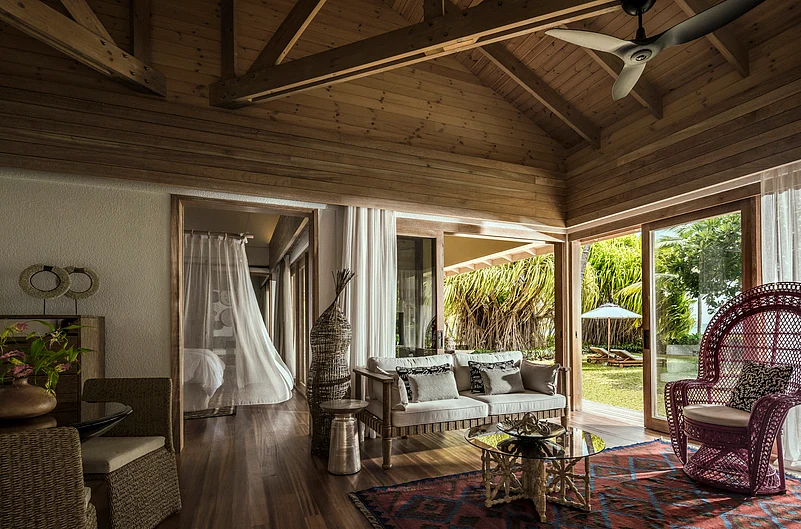
My villa had its own pool and direct beach access. Unlike the elevated seclusion of Mahé, Desroches offered openness. The sea was only a few steps away, and the beach seemed to continue in both directions without interruption. The villa’s layout encouraged indoor-outdoor living, with generous space, natural materials and an atmosphere that felt less like a conventional hotel room and more like an independent island home.
Here, bicycles replaced buggies as the most enjoyable way to travel. Each day, I cycled along shaded tracks between beaches, conservation areas and resort facilities. I could stop whenever the light changed, leave the bicycle under a tree and walk towards the water with the camera.
The resort’s dining experiences matched this sense of place. Meals drew heavily on seafood and produce suited to the island setting, while the relaxed service allowed dinners to stretch without feeling formal. The experience was polished, but footwear, schedules and ceremony mattered far less than they had in the city.
Desroches also offered a broader range of outdoor activities. Snorkelling excursions introduced me to coral reefs, reef fish, rays, sea cucumbers and turtles. One of the strongest moments of the trip came when I swam beside a hawksbill turtle feeding among coral and seagrass. It continued moving at its own pace, seemingly unconcerned by our presence.
The island’s giant Aldabra tortoises were equally memorable. Some moved freely through the vegetation, while others gathered within the island’s tortoise sanctuary. Big Pete, one of the best-known residents, appeared accustomed to visitors and extended his neck whenever someone approached.
The resort works with the Island Conservation Society to protect habitats, monitor wildlife and introduce guests to the ecology of Desroches. Conservation manager and marine biologist Nasreen Khan explained how her days could begin with sunrise beach patrols and continue through turtle monitoring, kayaking, marine education and stargazing.
Her work added context to what otherwise might have remained a series of attractive encounters. Seychelles’ marine ecosystems face pressures from warming waters, coral bleaching, erosion and climate change. On Desroches, conservation was not presented as a separate attraction. It was integrated into the way guests experienced the island.
The difference between the two Four Seasons stays became clearer with each day. On Mahé, the resort’s drama came from height, granite, jungle and the contained beauty of Petite Anse. On Desroches, the appeal came from space, remoteness and direct contact with the sea. One property encouraged me to look outward from a hillside refuge. The other invited me to move continuously across an island.
Yet both created the same rare condition: time felt less fragmented.
By the end of the journey, I was still a filmmaker. Seychelles gave me more than enough to record, from changing water and cloud formations to forested slopes, tortoises and marine life. But some of the moments I remember most clearly were not planned shots.
They were the quiet minutes beside my villa pool on Mahé, the view from breakfast at ZEZ, a bicycle ride through Desroches, the movement of a turtle below the surface and the sound of the ocean outside my room.
The two Four Seasons properties did more than provide places to stay. They shaped the way I encountered each island. Through their landscapes, food, design, activities and conservation programmes, they allowed Seychelles to reveal itself gradually, one frame and one pause at a time.
The Information
Getting there
The easiest way to reach Seychelles from India is by air via Seychelles International Airport (SEZ) on Mahé Island, located near Victoria. Direct flights are available from Mumbai, while travellers from other major Indian cities can choose from several convenient one-stop connections.
Best time to visit
Seychelles is a year-round destination, with temperatures generally warm year-round. April, May, October and November are considered particularly favourable, falling between the seasonal trade winds and typically bringing calmer seas. May to October is relatively cooler and drier, while November to April is warmer, more humid and may see short, intense showers.
For more information, visit fourseasons.com/seychelles/ & fourseasons.com/seychellesdesroches/