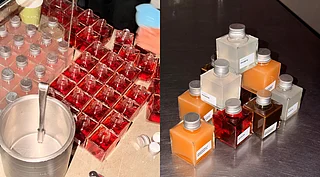


Earlier this year, I had to choose a spot for a weekend outing with the girls. The brief was simple: good cocktails, low decibel levels, and no decking up. This was before ‘cocktail bar’ became the buzzword in the capital. Around then, shapeshifting spaces were just picking up in Delhi, and the new kid on the block was Savage Sandwich Shop by day and Painkiller by night. So Painkiller became my choice.
Drinks named Dolo 650 and Ciplakiller caught our attention as we went over the menu, which felt like rummaging through our medicine drawers. Yet nothing apart from the names of the cocktails was clinical.
Cut to the end of the year, and China’s growing interest in bars serving herbal cocktails inspired by Traditional Chinese Medicine (TCM) is in the news. Ingredients associated with wellness, from ginseng and goji berries to other traditional herbs, are finding their way into drinks designed for a generation that wants its nightouts to feel a little more mindful.
China’s TCM-Themed Cocktail Bars
In China, a new nightlife trend is bringing Traditional Chinese Medicine (TCM) into the world of cocktails, as younger consumers seek to balance indulgence with an interest in wellness. Wrecking themselves while saving themselves. It is also an example of a trend that has come to be called “punk wellness,” which refers to a lifestyle which is not necessarily healthy, but people try too hard to reduce its effects while incorporating healthier ways to practice it.
These themed bars are attracting young urban customers with herbal-infused alcoholic drinks, often described as “prescription cocktails”. The concept combines traditional herbal knowledge with contemporary mixology, turning ingredients associated with Chinese medicine into an unconventional nightlife experience.
At some establishments, bartenders even wear white coats, assess customers’ pulses and ask about their lifestyles before recommending personalised drinks. At Joychic Bar in Nanjing, for instance, a gin-based cocktail called Meng Po Soup draws on Chinese mythology and traditional herbal ingredients, while other venues offer concoctions tailored to customers’ moods and perceived needs.
For young consumers navigating demanding work schedules, stress and the pressures of urban life, these bars offer an appealing combination of socialising, novelty and the promise of self-care. They also make traditional practices more accessible to a generation that might be more inclined to explore TCM through a personalised cocktail than a conventional herbal preparation. However, the wellness claims surrounding these drinks warrant caution. Alcohol does not become beneficial simply because it is combined with medicinal herbs.
What’s Happening In India?
In India, wellness has not entirely seeped into the country’s cocktail culture, but this year has seen the rise of zero-proof cocktails. A growing interest in mindful drinking has encouraged bartenders to experiment with low-alcohol and alcohol-free alternatives. The market for alcohol-free beverages has moved beyond sugary mocktails to include sophisticated alternatives that replicate some of the complexity, ritual and experience of drinking cocktails.


Most drink menus have a section dedicated to zero-proof cocktails, which are essentially mocktails crafted with a unique set of ingredients and using the same craft as cocktails. A recent visit to Café Loco in Delhi’s Greater Kailash introduced me to a one-of-a-kind Ayurveda-inspired beverage and wellness program featuring drinks with ingredients such as giloy, triphala, and turmeric.
Wellness bars could be the next step or extension of this shift, offering drinks that draw on botanicals, traditional ingredients and the language of self-care. For bars, this presents an opportunity to rethink what a night out looks like. Guests might want elaborate glassware, a bartender's storytelling and the social experience of a well-made cocktail without necessarily wanting alcohol. Others may be drawn to ingredients traditionally associated with wellness, even when they have no intention of giving up their favourite tipple.
Another way bartenders are bringing wellness (not in the conventional sense) into their glasses is through the garden-to-glass philosophy (like farm-to-table). This places fresh produce, herbs and seasonal ingredients at the centre of the drinking experience. Citrus peels can be repurposed, fruit scraps turned into syrups, and herbs used to create infusions that add complexity to a drink. For tipplers, this offers a chance to know what goes into their glasses.
For bartenders, this opens up possibilities beyond conventional cocktail ingredients. Locally sourced botanicals, fermented ingredients, teas and spices can bring new flavours to menus while giving drinks a stronger sense of place.
This approach also demonstrates that a more mindful drinking culture need not be restricted to alcohol-free beverages or medicinal herbs. Sustainability, ingredient provenance, and experimentation can all become part of the experience.