Sponsored Content
Sawantwadi is a small Konkan town with a surprisingly grand inheritance. Set along the mid-western coast of India in the Sindhudurg district of Maharashtra, it was once the capital of the Sawant Bhonsle kingdom and still carries the dignity of its royal past. Its geography alone feels like an overture—the Arabian Sea lies on one side, the Western Ghats on the other, and in between sits a settlement where history, craft, and everyday life overlap without fuss.
The rise of Sawantwadi began in the seventeenth century, when the Sawant family held hereditary Deshmukhi rights under the Adil Shahi rulers of Bijapur. The western coastline over the next few decades became a contested stretch of land, with the Marathas under Shivaji, the Mughals, and the Portuguese in Goa all vying for control. While the capitals shifted, borders blurred, and allegiances were tested, the Sawant lineage endured. When the dynasty settled at Sundarwadi, today’s Sawantwadi, the town gradually took shape around the rhythms of court life.
By the late princely period, conquest had given way to culture. Under the regency of Parvatidevi, reforms were introduced and the arts found strong patronage. The palace began to evolve into a cultural centre rather than a seat of power, a transition that still defines the town’s character today.
A Palace That Still Sets The Tone


The Sawantwadi Palace remains the town’s emotional and architectural anchor. Built in the late eighteenth century, it reflects a distinctly Konkan style, timbered roofs, carved wooden details, deep verandahs, softened by subtle Portuguese and British influences. Overlooking the placid waters of Moti Talao, it feels less imposing than lived-in.
Parts of the palace now house a small museum, with coronation memorabilia, family portraits, and traces of the royal household. Another wing has been thoughtfully restored as a heritage stay and artisan workspace. Here, craftspeople demonstrate traditional toy-making, chess-set carving, and the meticulous painting of Ganjifa cards. It doesn’t feel like a performance for visitors; more like being quietly let into a living tradition. Buying a lacquered toy here feels closer to supporting continuity than to shopping for souvenirs.
Just beyond the palace walls lies Moti Talao, the lake that completes the picture. Created in the eighteenth century as part of the royal landscape, it still serves as the town’s shared breathing space. Evenings bring walkers, couples, and the occasional traveller lingering on a bench. When the water is still, the palace reflects clearly on its surface—an image that seems to belong as much to memory as to the present moment.
Craft As Everyday Life
If the palace gives Sawantwadi its centre, craft gives it its pulse. The town’s artisan traditions date back to the seventeenth and eighteenth centuries, when Brahmin communities from Andhra and Telangana settled here, bringing lacquerware and Ganjifa with them.
Ganjifa cards—circular, hand-painted playing cards with roots in Persia—were adapted and reimagined in Sawantwadi. Persian imagery slowly gave way to Indian themes, with decks depicting the Dashavatara, zodiac signs, or scenes from the epics. Painted in vivid reds, greens, yellows, and blacks, the cards were both recreational and instructional. Even today, artisans produce full Dashavatara sets of 120 cards, each painted by hand. The process is painstaking, and the tradition now survives in only a handful of places across India.
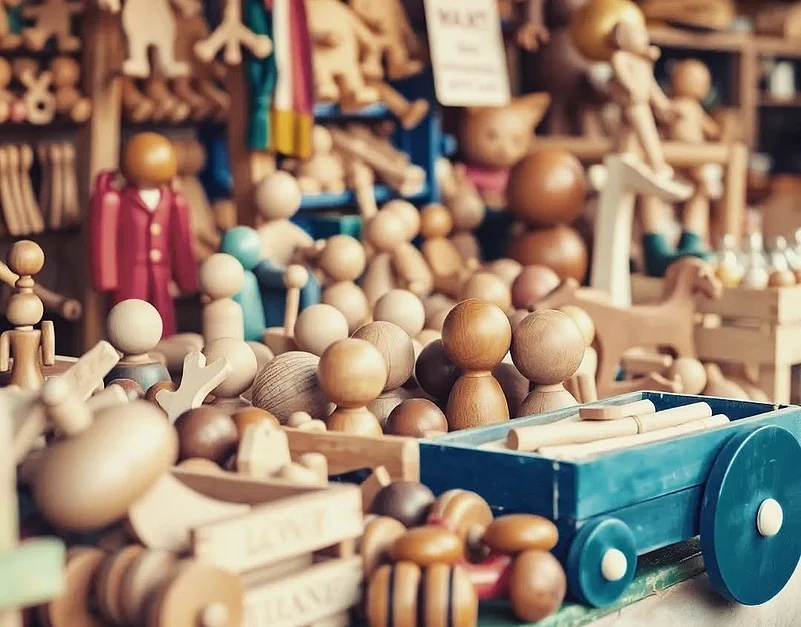
The wooden toys tell their own quiet story. Made from Indian coral tree wood and finished with glossy lacquer, they once formed part of everyday domestic and ritual life. Miniature kitchen sets taught children household roles, soldier figures echoed Maratha regiments, animals populated village stories, and deity sets appeared during festivals. These objects were, in their own way, lessons in culture and identity.
That continuity hasn’t been lost. Today’s artisans still carve chess boards, Bhatukli kitchen sets, animals, and figurines much as they always have. While buyers now include collectors and designers, the look remains unmistakable—bright, narrative, and rooted in the Konkan.
Between Sea, Ghats, And Borders

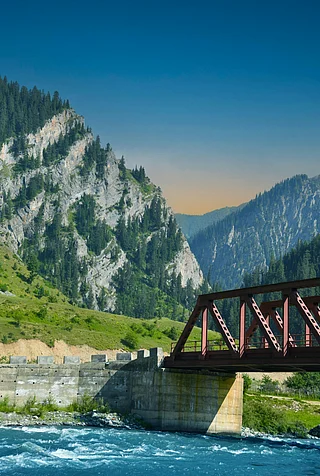
Beyond its palace and workshops, Sawantwadi’s appeal lies in its position. It’s an easy base for slow travel—towards the beaches of Vengurla, the temples and mangroves near the Goa border, or the forested slopes of the Ghats. The seasons follow a familiar coastal rhythm: humid summers, dramatic monsoons, and a crisp, pleasant winter between December and February.
You hear several languages spoken including Malvani, Marathi, Konkani, Hindi, and English, that serves as a reminder of how fluid this coast has always been, shaped by trade and movement. Despite better roads, rail links, and nearby airports, the town itself remains resistant to rush.
Sawantwadi isn’t frozen in time, and it isn’t trying to be. It’s a place where a royal palace doubles as an art space, where traditional toys sit comfortably alongside contemporary tastes, and where a traveller arriving from Goa can, within a couple of hours, be sitting beside a quiet lake watching the light shift on old walls.
It doesn’t demand a checklist or a packed itinerary. It rewards curiosity, patience, and the simple act of wandering. If you’re drawn to places that feel grounded yet quietly unexpected, Sawantwadi fits the bill—not a spectacle, but a mood. Heritage here doesn’t shout. It hums, and lingers long after you’ve moved on.
The Information
Best time to visit
Winter (December to February) is the most comfortable season, though the monsoon has its own moody charm if you don’t mind the rain.
Where to stay?
Accommodation is modest but comfortable, with heritage options available, and the town makes a good base for exploring the coast, the Ghats, and the Goa border.
How to reach?
Fly into Mopa (around 1 hour) or Dabolim (2–3 hours), take the Konkan Railway to Sawantwadi Road, or drive via NH66 for a scenic coastal–ghat route.
What to shop for?
Hand-painted Ganjifa cards, lacquerware toys, Bhatukli kitchen sets, wooden chess boards, and locally processed cashews.
Places to visit nearby
Sawantwadi Palace — historic royal residence with carved wooden interiors, museum galleries, and artisan workshops
Moti Talao — a peaceful lake at the heart of town, ideal for evening walks
Velagar Beach — a quiet stretch of sand near the Goa border
Chitarali Market — the main craft area for wooden toys and lacquerware
Surrounding countryside and Ghats — green walks, streams, temples, and rural Konkan scenery