

Sponsored Content
Perched on a small hill in Maharashtra’s Beed district, Parli Vaijnath Temple, also known as Shri Vaidyanatha Temple, is one of the twelve sacred Jyotirlingas of Lord Shiva. Many come seeking blessings, healing, and strength, while others arrive simply to experience the deep spiritual energy that surrounds the temple. Amid the everyday rhythm of Parli town, the temple feels like a quiet sanctuary that connects the earthly with the divine. With every ring of the temple bell, every curl of incense in the air, and every quiet chant of “Om Namah Shivaya,” the space has the ability to calm restless minds.
Legends, Kings And A Queen's Devotion
The origins of Parli Vaijnath Temple stretch back over six centuries. Believed to have been originally constructed during the Yadava dynasty under the guidance of Hemadpant, the chief minister of Devagiri, the temple later fell into ruin. Its revival came in the 18th century through the devotion of the legendary Maratha queen Ahilyabai Holkar, who restored several iconic temples across India. An inscription at the site records that the reconstruction took place in 1706.
Mythology adds deeper magic to Parli’s story. One of the most powerful legends speaks of the demon king Ravana performing fierce penance to please Lord Shiva. Pleased with his devotion, Shiva granted him the Jyotirlinga on one condition: it must not be placed on the ground before reaching Lanka. Through divine trickery, Ravana was forced to set the ling on the earth at Parli, where it became permanently established.
The name “Vaijnath” or “Vaidyanath” means “Lord of Physicians,” reinforcing the belief that worship here brings not only spiritual upliftment but also physical healing. The temple also follows a rare spiritual tradition: Tulsi is offered to Lord Shiva, while Bilva leaves are offered to Lord Vishnu, symbolising the unity of Shaivism and Vaishnavism.
Things To Do And See At The Temple
The Grand Structure
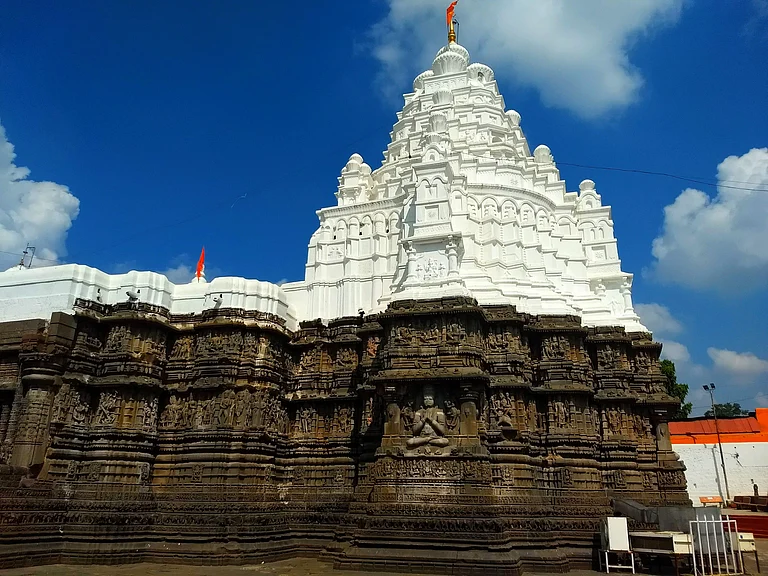
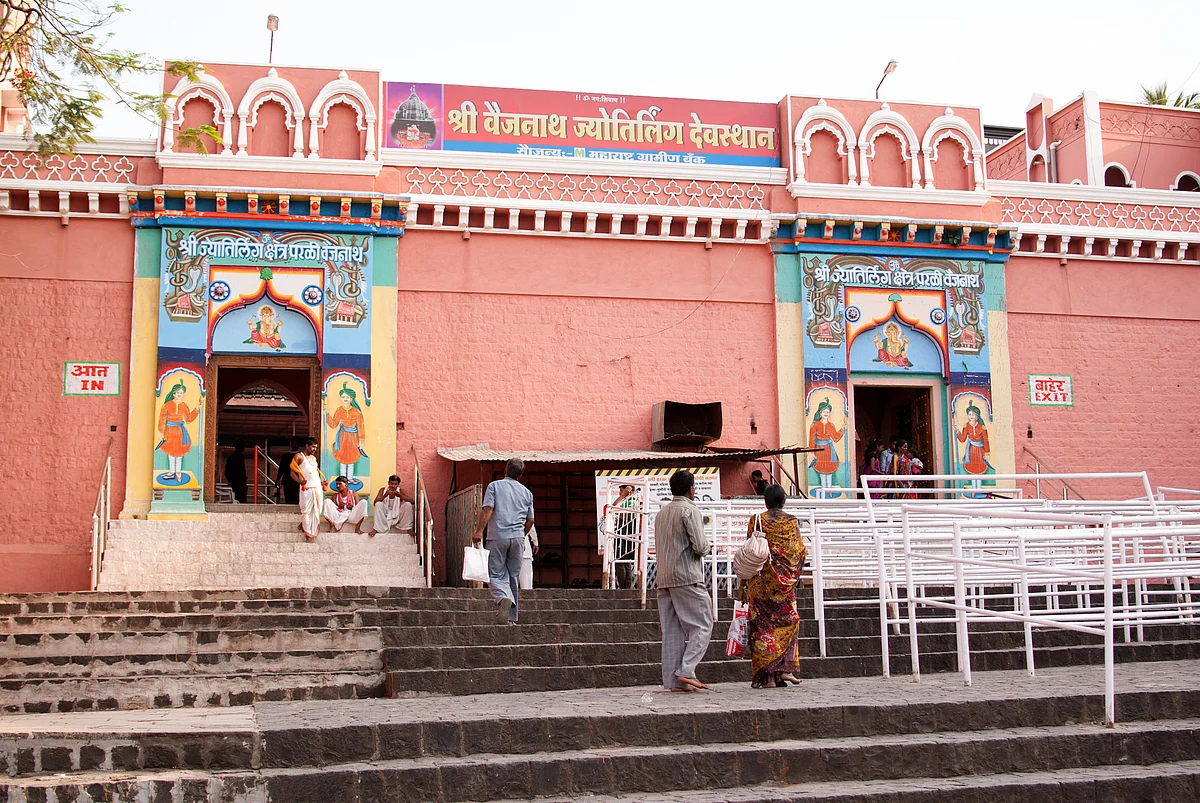
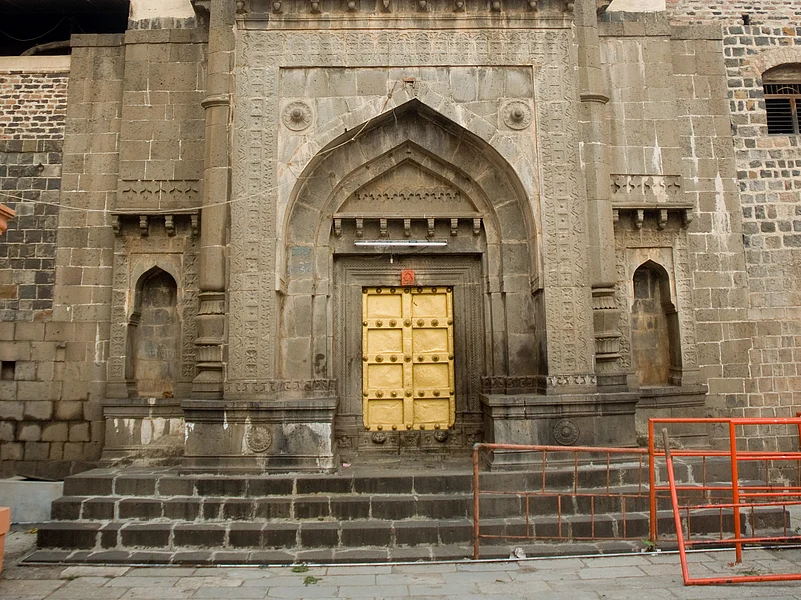
Standing atop a 75–80-foot-high hill near Meru Parvat, the temple immediately draws attention with its majestic stone structure, fortified walls, wide stairways, and grand brass-plated doors. The climb up the steps itself feels ceremonial and builds a sense of anticipation.
The Sabhamandap And Nandi Idols
Inside the sabhamandap, three Nandi (Lord Shiva's divine vehicle) idols rest beneath a canopy, one crafted in brass and two in stone. Alongside them stands an imposing brass statue of Veerbhadra, or the fierce manifestation of Lord Shiva, adding to the sacred grandeur of the space.
The Inner Sanctum And jyotirlinga
At the heart of the temple lies the smooth black stone Jyotirlinga in the inner sanctum. Unlike many temples, devotees here are allowed to touch the Jyotirlinga during worship, making the experience deeply personal and spiritually moving.

The Twelve Lingas And Other Shrines
Within the temple complex, twelve smaller lingas represent the twelve Jyotirlingas of India. Additionally, the complex also houses smaller shrines dedicated to Narad, Kuber, and Shani Maharaj, allowing devotees to offer prayers beyond the main sanctum.
Rituals, Sunlight Legend, And Festival Energy
Daily abhishekams (or bathing a deity's idol) with milk, water, honey, and bilva leaves keep the temple alive with devotion. A rare belief speaks of sunlight once falling directly on the Jyotirlinga twice a year. During Mahashivratri, Shravan, Kartik Purnima, and Dussehra, the temple is filled with lamps, chants, processions, and thousands of devotees.
Nearby Attractions
Aundha Nagnath Temple
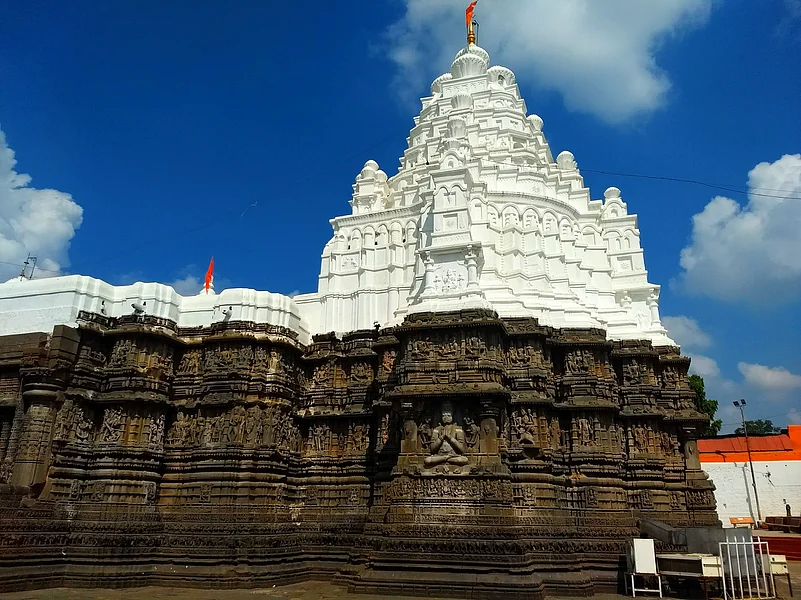
Located around 118 km from Parli, this ancient Jyotirlinga is known for its beautiful Hemadpanthi architecture and peaceful spiritual atmosphere.
Tulja Bhavani Temple
About 240 km away, this revered shrine of Goddess Bhavani is the kuldevi of Chhatrapati Shivaji Maharaj and one of Maharashtra’s most powerful Shakti peethas.
Hazur Sahib Gurudwara
Situated roughly 105 km from Parli, this is one of the five sacred Takhts of Sikhism and the final resting place of Guru Gobind Singh Ji.
Yogeshwari Devi Temple
Just 25 km from Parli, this revered Shakti Peetha is set amid ancient caves and historic ruins, attracting both devotees and history lovers.
Dharur Fort
For travellers drawn to history and offbeat exploration, this majestic fort offers sweeping views and insights into Maharashtra’s warrior past.
Why Parli Vaijnath Is More Than A Pilgrimage
Beyond its religious fame, Parli Vaijnath is also one of the fastest-growing towns in Beed district, thriving as a centre of trade and commerce. Its agricultural markets handle cotton, groundnut, jaggery, grains, and pulses, which are traded across cities like Akola, Kalyan, Delhi, and Hyderabad. The town’s industrial legacy dates back to 1905, when its first ginning and pressing mill was established, one of the earliest in the Marathwada region.
Moreover, visiting Parli Vaijnath is not only to offer prayers at the Jyotirlinga but also to step into centuries of belief, healing traditions, royal patronage, sacred geometry, and collective human hope. Whether you come seeking health, peace, faith, or simply a deeper connection with India’s sacred heritage, Parli Vaijnath does not disappoint.
How To Get To Parli Vaijnath
By Air
The nearest major airport with regular flights to cities such as Mumbai and Delhi is Aurangabad Airport, located about 225 km from Parli Vaijnath. While Nanded Airport is geographically closer at roughly 91 km, it operates with limited flight connectivity.
By Train
Parli Vaijnath has its own railway station, which connects well with cities like Nanded, Parbhani, and parts of Telangana. However, travellers coming from major hubs such as Mumbai or Delhi may need to change trains at junctions like Parbhani Junction or Panvel, depending on the route and train availability.
By Road
Parli is well connected by road to nearby cities such as Nanded, Latur, Beed, Jalna, and Hingoli. Maharashtra State Road Transport Corporation (MSRTC) buses run regularly to and from these regions. Taxis and private vehicles are also convenient options for those travelling by road.
Local Transport
Within Parli town, auto-rickshaws are the most common and reliable mode of transport. App-based cab services like Ola and Uber are generally not available in the immediate area.
Best Time To Visit Parli Vaijnath
The best time to visit is from October to February, when the weather is pleasant and ideal for temple visits. Mahashivratri and the holy month of Shravan offer the most vibrant spiritual experience, though these periods see heavy crowds. Summers are hot, and the monsoon brings rain, which may affect travel.
FAQs
1. Where is Parli Vaijnath Temple located?
Parli Vaijnath Temple is located in Parli town, Beed district, Maharashtra.
2. Why is Parli Vaijnath considered a Jyotirlinga?
It is one of the twelve sacred Jyotirlingas of Lord Shiva mentioned in Hindu tradition.
3. What is the legend associated with Parli Vaijnath?
According to legend, Ravana received the Jyotirlinga here after being tricked into placing it on the ground.
4. Who restored the Parli Vaijnath Temple?
The temple was restored in the 18th century by Queen Ahilyabai Holkar.
5. When is the best time to visit Parli Vaijnath?
October to February is ideal, with Mahashivratri and Shravan being the most significant periods.