History often feels permanent, etched in stone, sealed in time, and preserved through generations. Yet, despite billions spent on preservation and restoration, nature has the final say. Over centuries, some of the world’s most iconic monuments and natural wonders have been damaged, destroyed, or altered by earthquakes, storms, volcanic eruptions, and erosion.
From ancient marvels like the Colossus of Rhodes to modern-day losses like Malta’s Azure Window, these sites underscore the vulnerability of even the most celebrated landmarks. For today’s traveller, they reinforce a timeless lesson: travel while you can. In the following sections, we explore famous monuments and natural wonders lost to natural calamities, some vanished entirely, others only partly.
Monuments Lost To Natural Calamities
Colossus Of Rhodes (Modern-Day Greece)
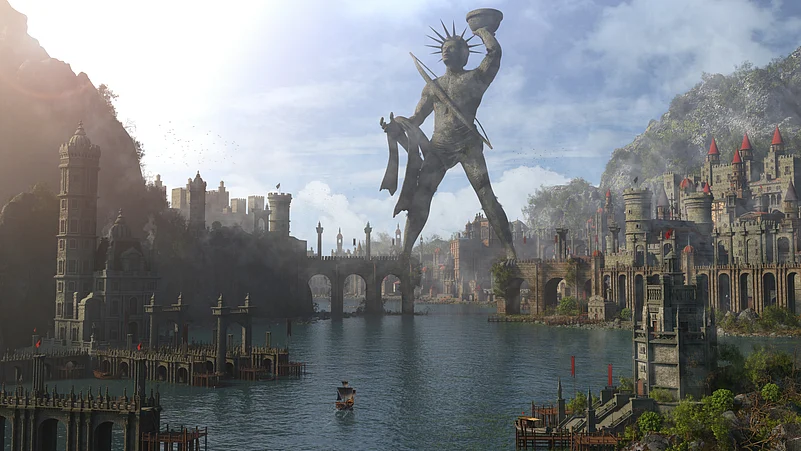

One of the Seven Wonders of the Ancient World, the Colossus of Rhodes was a giant bronze statue of the sun god Helios built in the 3rd century BCE. It stood over 30 metres high at the entrance to Rhodes' harbour and was seen as a symbol of strength and victory. Completed in 280 BC, it was considered a triumph of engineering. However, the monument did not last long. Around 226 BCE, a powerful earthquake struck the island, causing the statue to collapse. The ruins reportedly remained for centuries and were admired even in their broken state. Eventually, the remains were removed, and the Colossus was never rebuilt.
Lighthouse Of Alexandria (Egypt)
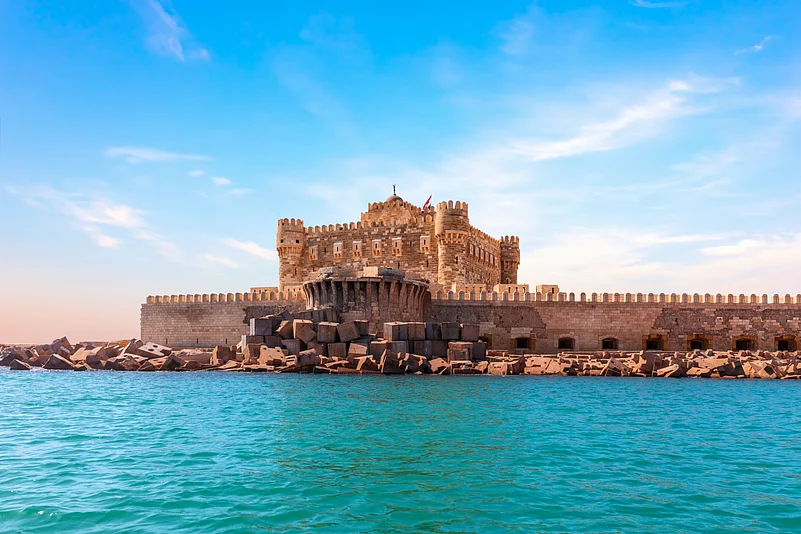
Another of the Seven Wonders, the Lighthouse of Alexandria, also known as the Pharos, was among the tallest man-made structures of the ancient world. Built on the island of Pharos around the 3rd century BCE, it guided ships safely into Alexandria’s busy harbour.
Between AD 956 and 1323, multiple earthquakes weakened the structure. By the 14th century, the lighthouse had largely collapsed. It is also suggested that, by the time the famous traveller Ibn Battuta visited in 1349, the Pharos of Alexandria was in ruins. Parts of its remains were later used in the construction of the Citadel of Qaitbay, which now stands on the same site. Underwater archaeological discoveries near the harbour also suggest that massive stone blocks from the lighthouse still lie submerged.
Mausoleum At Halicarnassus (Turkey)
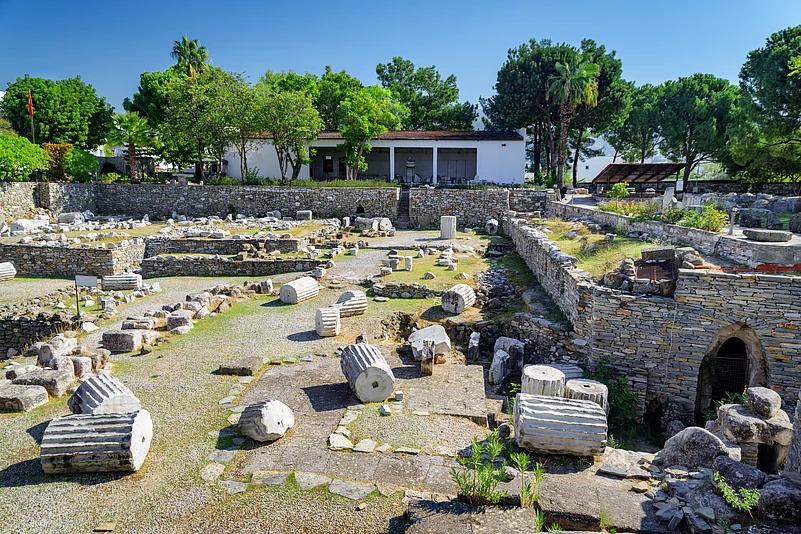
Built as a grand tomb for Mausolus, a ruler of Caria, the Mausoleum at Halicarnassus was considered one of the most beautiful structures of the ancient world. The tomb was so magnificent that his name became the root of the word 'mausoleum.' It combined Greek, Egyptian, and Near Eastern architectural styles and stood out for its detailed sculptures and towering form.
The monument survived for centuries but was gradually damaged by earthquakes between the 12th and 15th centuries. Much of the remaining stone was later used by the Knights of St John to build a fortress in Bodrum.
Gaziantep Castle (Turkey)
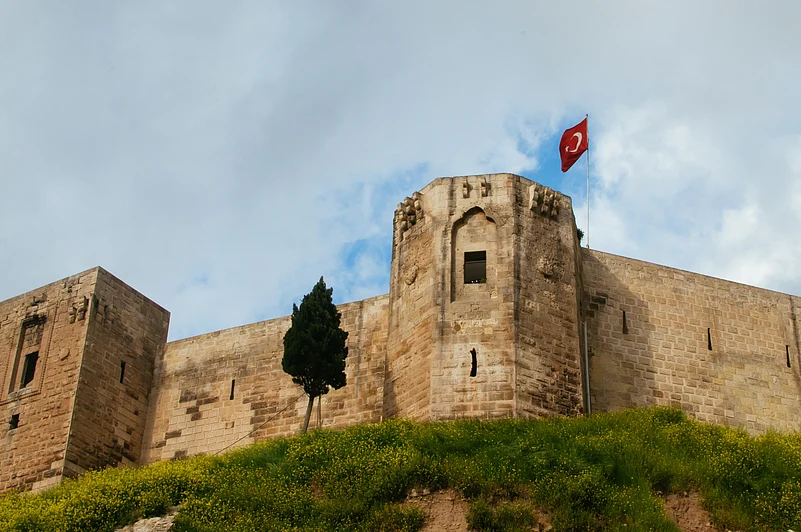
Originally built as a watchtower during the Hittite era and later developed into a major fortress under Roman rule, Gaziantep Castle stood for more than 2,000 years. Set on a hill above the city, it was strengthened over time with additions during the Byzantine and Ottoman periods and remained one of southern Turkey’s most prominent defensive landmarks for centuries.
In 2023, powerful earthquakes struck Turkey and Syria, causing significant damage to the castle. The tremors caused the iron railings and walls to collapse, leaving the historic site in a state of rubble. Restoration efforts have been underway, but the damage has permanently altered parts of this historic monument.
Prag Mahal (Bhuj, Gujarat)
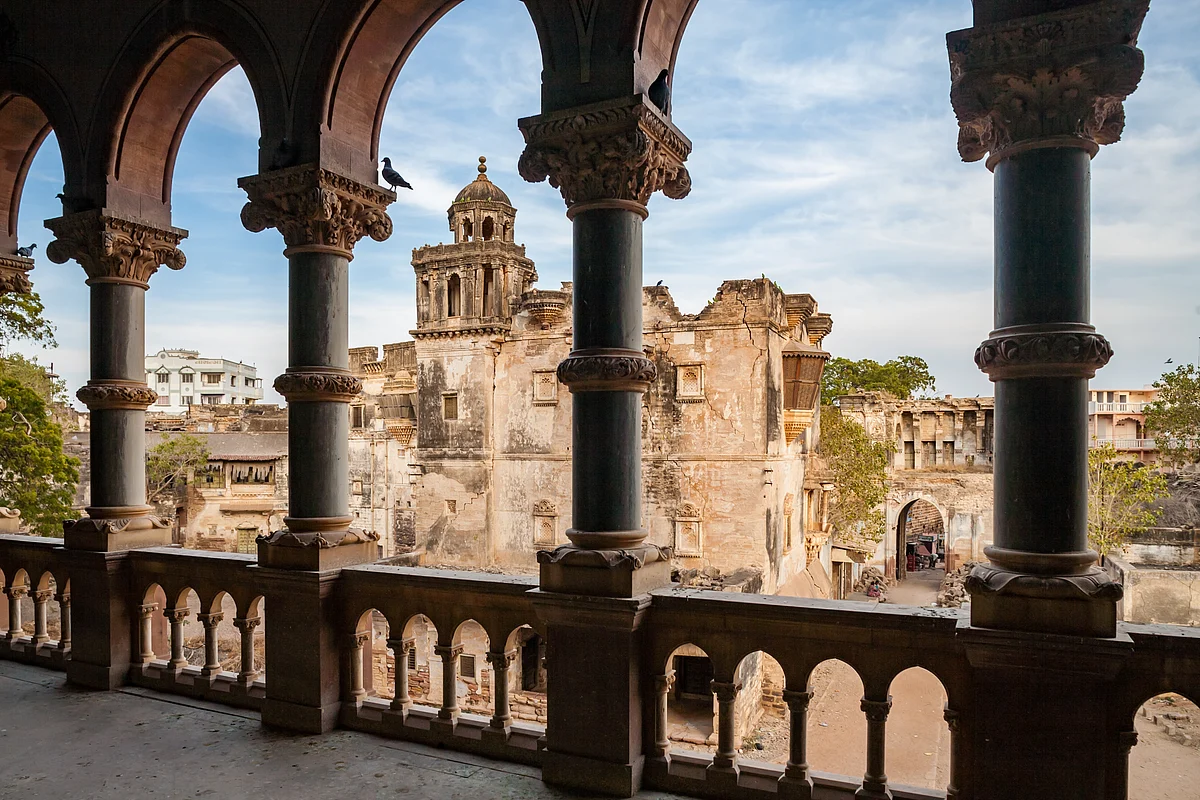
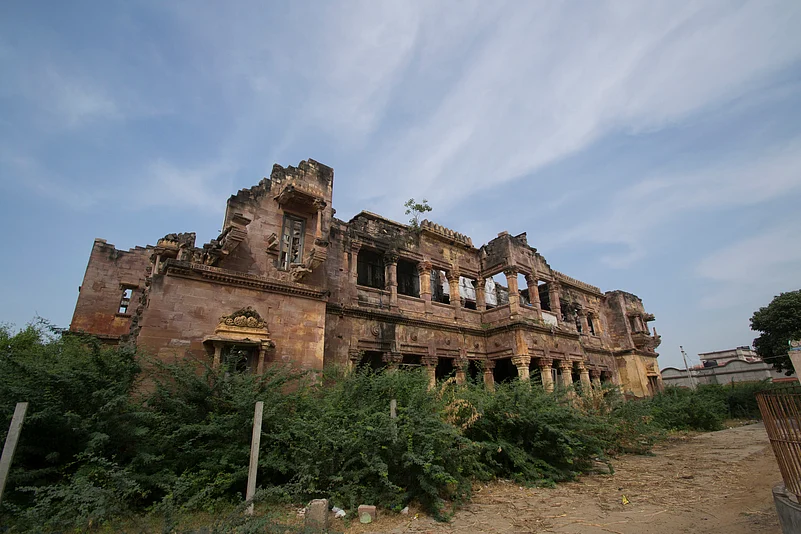
Standing side by side in Bhuj’s historic palace precinct, Prag Mahal and Aaina Mahal together form one of Kutch’s most striking heritage landmarks. Built in the 19th century during the rule of Maharao Pragmalji II, Prag Mahal is known for its Italian Gothic influence, grand arches, and intricate stonework. Its bell tower remains one of the defining features, offering panoramic views across Bhuj.
Nearby, Aaina Mahal, literally the 'Palace of Mirrors', dates back to the 18th century and was built by Maharao Lakhpatji. The palace is celebrated for its richly ornamented interiors, featuring mirror work, chandeliers, painted ceilings, and decorative elements shaped by both Indian artistry and European influence.
In 2001, the devastating Bhuj earthquake caused widespread destruction across the old city, and the palace complex was not spared. Both structures suffered significant damage, highlighting how even monumental heritage architecture remains vulnerable in high-seismic regions like Kutch.
Natural Wonders Lost To Natural Calamities
Pink And White Terraces (New Zealand)
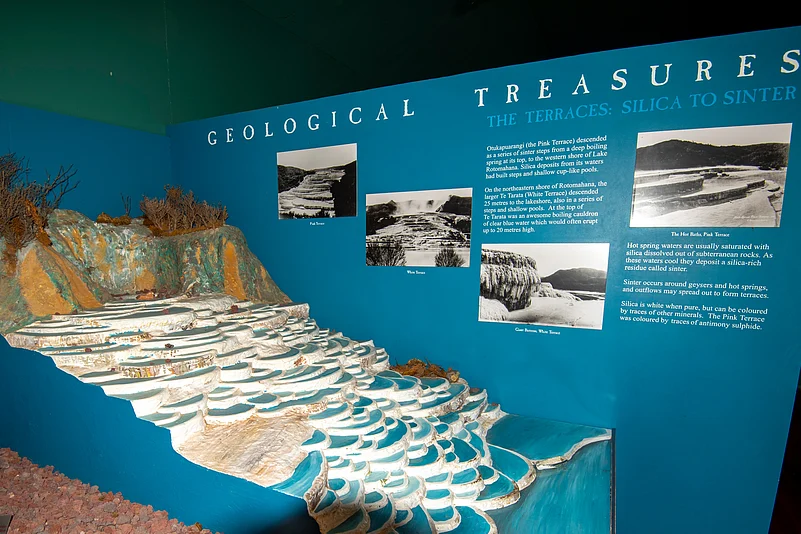
Once celebrated as the Eighth Wonder of the World, the Pink and White Terraces were silica terraces formed by geothermal activity near Lake Rotomahana.
In 1886, Mount Tarawera erupted, reshaping the landscape and burying the terraces under ash, mud, and debris. For decades, it was believed they were completely destroyed. In recent years, researchers have suggested parts of the terraces may still exist beneath the lake, but they remain inaccessible and are no longer visible in their original form.
Azure Window (Malta)
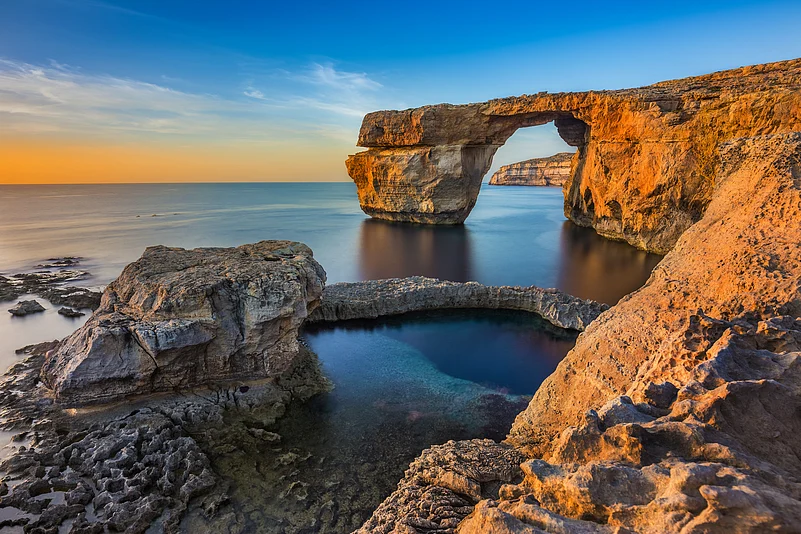
The Azure Window was a limestone arch on the island of Gozo. Tourists flocked to see it, and it became a defining symbol of Maltese tourism.
Years of coastal erosion and storms weakened the structure. In 2017, after heavy weather, the arch collapsed into the sea. The loss sparked widespread grief and conversation about how natural attractions, especially those shaped by erosion, are temporary.
Darwin's Arch (Ecuador)

Located in the Galápagos Islands, Darwin’s Arch was a striking rock formation rising above the ocean and a popular destination for divers and wildlife enthusiasts. The arch was known for its dramatic shape and the marine life around it, including hammerhead sharks and sea turtles.
In 2021, the top of the arch collapsed due to natural erosion. What remains today are two vertical stone pillars, now often called 'The Pillars of Evolution.' While the surrounding waters remain a rich ecosystem, the iconic arch shape is gone.
Twelve Apostles (Australia)
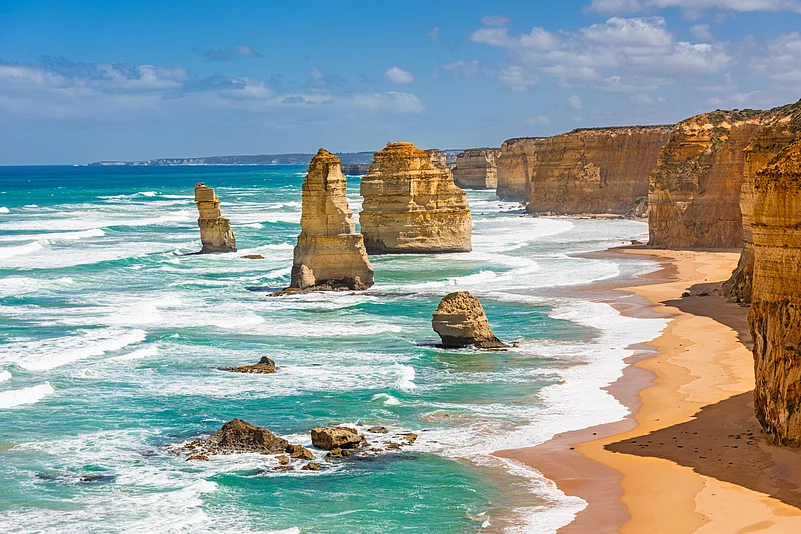
The Twelve Apostles is one of Australia’s most famous coastal attractions, where limestone stacks rise from the ocean along Victoria’s Great Ocean Road. Despite the name, there were never exactly twelve stacks visible at once.
These formations are shaped by wind, waves, and erosion. Over time, several stacks have collapsed. In 2005, a 50-metre-tall stack collapsed in seconds in front of a group of tourists. Another smaller stack fell in 2009. The same ocean that carved these pillars from the mainland cliffs continues to batter them, meaning that one day, they will most likely disappear.
FAQs
1. Which famous monuments were destroyed by earthquakes?
The Colossus of Rhodes collapsed after an earthquake, and the Lighthouse of Alexandria was heavily damaged by repeated quakes over centuries.
2. What happened to the Lighthouse of Alexandria?
The Pharos was weakened by multiple earthquakes between AD 956 and 1323 and eventually collapsed, with parts reused in later construction.
3. Why did Malta’s Azure Window collapse?
The limestone arch collapsed due to years of coastal erosion and storm damage, eventually giving way during heavy weather.
4. Are the Pink and White Terraces in New Zealand completely gone?
They were buried after Mount Tarawera erupted in 1886. Some research suggests parts may still exist underwater, but they are no longer visible.
5. What is left of Darwin’s Arch today?
After the top collapsed in 2021 due to erosion, two stone pillars remain, often referred to as the “Pillars of Evolution.”
6. Will the Twelve Apostles in Australia disappear?
Possibly over time. The limestone stacks are continuously shaped by waves and erosion, and several have already collapsed.