


Sponsored Content
Telangana, cradled on the uplands of the ancient Deccan plateau, has for centuries been a cultural bridge between northern and southern India. Its landscapes carry echoes of the Satavahanas, Kakatiyas, Qutub Shahis, and Asafjahis—dynasties that shaped its ethos, economy and aesthetics. The result is a culture threaded with poetry and percussion, craft and ritual, faith and festivity. Telangana’s identity today is an evolving confluence of its tribal heartlands, rural craft clusters, cosmopolitan cities, and deeply rooted traditions.
A Legacy Carved Through Dynasties


The Satavahanas, among the earliest known rulers of the region, laid the groundwork for an independent and self-sustained village economy—an ethos still evident in Telangana’s thriving craft belts and agrarian rhythms. The medieval brilliance of the Kakatiya dynasty, with Warangal as its capital, powered innovations in temple architecture, martial dance traditions, and local crafts. Later, the Qutub Shahis and Asafjahis ushered in the refined cultural cosmopolitanism of Hyderabad, with its dakhni humour, Deccani literature, miniature paintings and a linguistic lilt that still colours everyday life.
Across centuries, geography and polity have shaped Telangana’s cultural vocabulary—one that is rhythmic, resilient, and richly layered.
Dance and Performing Arts: Movements of Memory
Few art forms capture Telangana’s soul as powerfully as the Perini Shiva Thandavam, a dynamic dance that once prepared Kakatiya warriors for battle. Revived in recent decades, this ritualistic performance—marked by vigorous footwork and hypnotic rhythms—is now a proud state symbol showcased at major festivals.
Yet the region’s performing traditions extend far beyond royal courts. Pastoral and agrarian communities developed their own expressive storytelling forms to reflect everyday struggles, hopes and humour. Golla Suddulu, Oggu Kathalu, and Gotralu blended narrative with moral wisdom, keeping oral histories alive across generations.
Perini Shiva Thandavam
A martial dance rooted in 10th-century Kakatiya heritage, the Perini is performed before sacred fire to invoke Shiva’s energy. Its controlled force, measured leaps, and rhythmic intensity embody Telangana’s ancient warrior spirit.
Oggu Katha
A vibrant narrative tradition, Oggu Katha combines song, percussion, dialogue and movement. Performed by members of the Golla/Yadav and Kuruma communities, it retells the legends of deities such as Mallanna, Beerappa and Yellamma. The resonant beats of the dolu and hand-held oggu drum accompany dramatic vocal storytelling that carries divine lore to village courtyards and temple grounds.
Gussadi

Every Diwali, the forests and hamlets of Adilabad come alive with the pulsating steps of Gussadi dancers from the Raj Gond and Kolam tribes. Their peacock-feathered headdresses, ash-smeared bodies, and animal-inspired choreography celebrate harvest, kinship, and ancestral memory. Traditionally performed as part of the Dandari-Gussadi festival, this dance has recently reached urban audiences through cultural showcases in Hyderabad.
Chindu Bhagavatham
A lively theatrical tradition akin to Yakshagana, Chindu Bhagavatham uses costumes, dialogue, music and acrobatic leaps to narrate stories from the Bhagavatam. Its spirited energy—true to the root word chindu meaning “jump”—makes it one of Telangana’s most engaging folk theatre forms.
Handicrafts and Handlooms: Weaving Heritage into Everyday Life

Telangana’s craft traditions are as diverse as its landscapes. From loom-rich villages to tribal metalcasting hamlets, craft here is more than livelihood; it is lineage, aesthetic, and identity.
Pochampally Ikat
The famed Pochampally Ikat, originating in Bhoodan-Pochampally, is one of India’s oldest and most recognised tie-dye weaving traditions. Geometric patterns dyed into yarn before weaving create textiles of remarkable precision and longevity. In 2021, the village was recognised by UNWTO as one of the Best Tourism Villages in the world.
Cheriyal Paintings

These vivid scroll paintings, rooted in storytelling traditions, depict episodes from epics and village life in bold colours and stylised forms. Cheriyal remains one of India’s few surviving narrative scroll traditions.
Nirmal Paintings
Renowned for their natural dyes and delicate brushwork, Nirmal paintings draw from Mughal miniatures, Ajanta frescoes, and classical motifs. Their origins trace back to the Kakatiya era, and today they adorn everything from wooden trays to large-format canvases.
Dokra Metalcraft
The tribal craft of Dhokra—practised in Adilabad’s Jainoor, Ushegaon and Chittalbori—uses the ancient lost-wax technique to create figurines of animals, deities, and everyday scenes. These rustic, beautifully imperfect creations reflect the deep symbolism of indigenous communities.
A Land Where Craft Meets Community
What sets Telangana’s craft ecosystem apart is its intimate connection to community life. Craft clusters are interwoven with seasonal cycles, temple rituals and oral histories. In many regions, artisanship is a collective ritual—passed down in families, nurtured in village workshops, and celebrated in annual fairs. Visitors discovering these clusters encounter not just objects, but stories—of dynasties, deities, forests, and familial bonds.
Festivals: Where Faith and Colour Converge
Festivals in Telangana are exuberant celebrations that spill into streets, courtyards and lakes with music, flowers and community revelry.
Bathukamma
A symbol of feminine creativity and ecological reverence, Bathukamma is celebrated during Dasara. Women craft towering floral arrangements with seasonal blooms like tangedu and gunugu, gathering at village centres to dance in rhythmic circles. In 2025, Bathukamma earned two Guinness World Records, including one for the tallest floral structure at 63 feet.
Bonalu
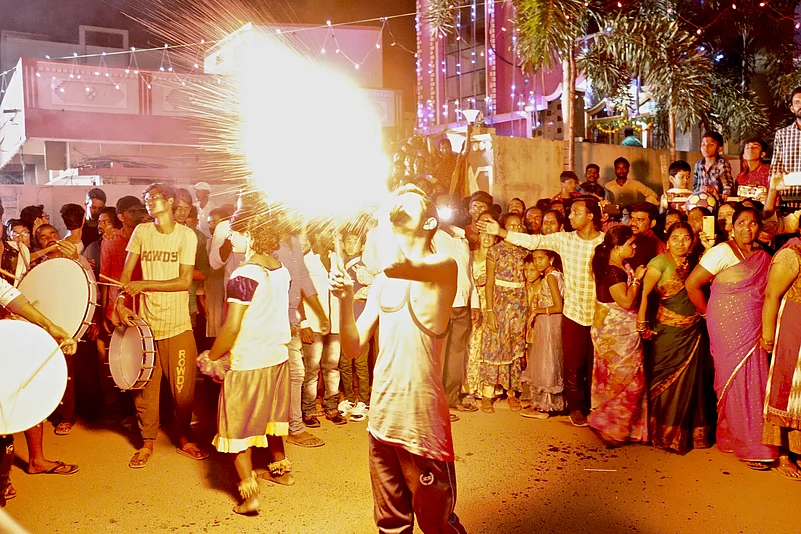
Celebrated during the month of Ashadam, Bonalu honours Goddess Mahakali. Women offer rice cooked with milk and jaggery in decorated pots topped with neem leaves and lamps. Rituals such as Rangam (prophecy) and the ceremonial procession of the Ghattam, accompanied by bare-bodied Pothurajus, make it one of Telangana’s most visually striking festivals.
Fairs and Jataras
Telangana also hosts some of India’s largest tribal and regional fairs—including Medaram Jatara (one of the world’s largest gatherings of its kind), Edupayala Jatara in Medak, Nagoba Jatara in Adilabad, and the Chenchu Festival of Nallamala.
A Culture Rooted in Continuity
Telangana’s art, craft and festivals are not relics of a bygone past—they are living traditions that continue to evolve. From the warrior rhythms of Perini to the vibrant whirl of Bathukamma, from the intricate weft of Ikat to the mythic narratives of Oggu Katha, the state’s cultural identity is shaped daily by its people. To explore Telangana is to witness a region where heritage is not just preserved—it is performed, painted, woven, danced and celebrated in every corner of its landscape.


