“Come heee-re, lifer!” For 5 days of some of the most spectacular birding we’ve ever done, this was our guide Danielson Aleixa beckoning us, pointing to something in the rainforest canopy that he had first heard then located. As exciting it was to see new species (‘lifers,’ in birding lingo), was the infectious enthusiasm with which Danielson was showing them to us.
From November 2 until 6, my colleague Shrishtee Bajpai and I were on the edge of the Amazon forest, near Santa Barbara in the Belem municipality area of Brazil. Our hosts were Danielson and partner Fernanda Freitas, a couple that runs a quietly efficient, ecologically sensitive birding tour enterprise. Taking advantage of our participation in people’s events at the Climate COP30 in Belem, we had decided to go five days earlier to experience the legendary Amazon forest and riverine ecosystem.
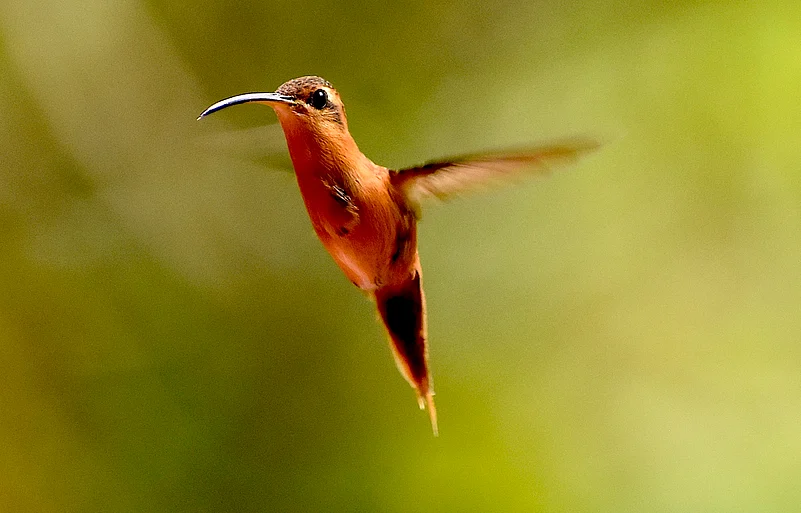

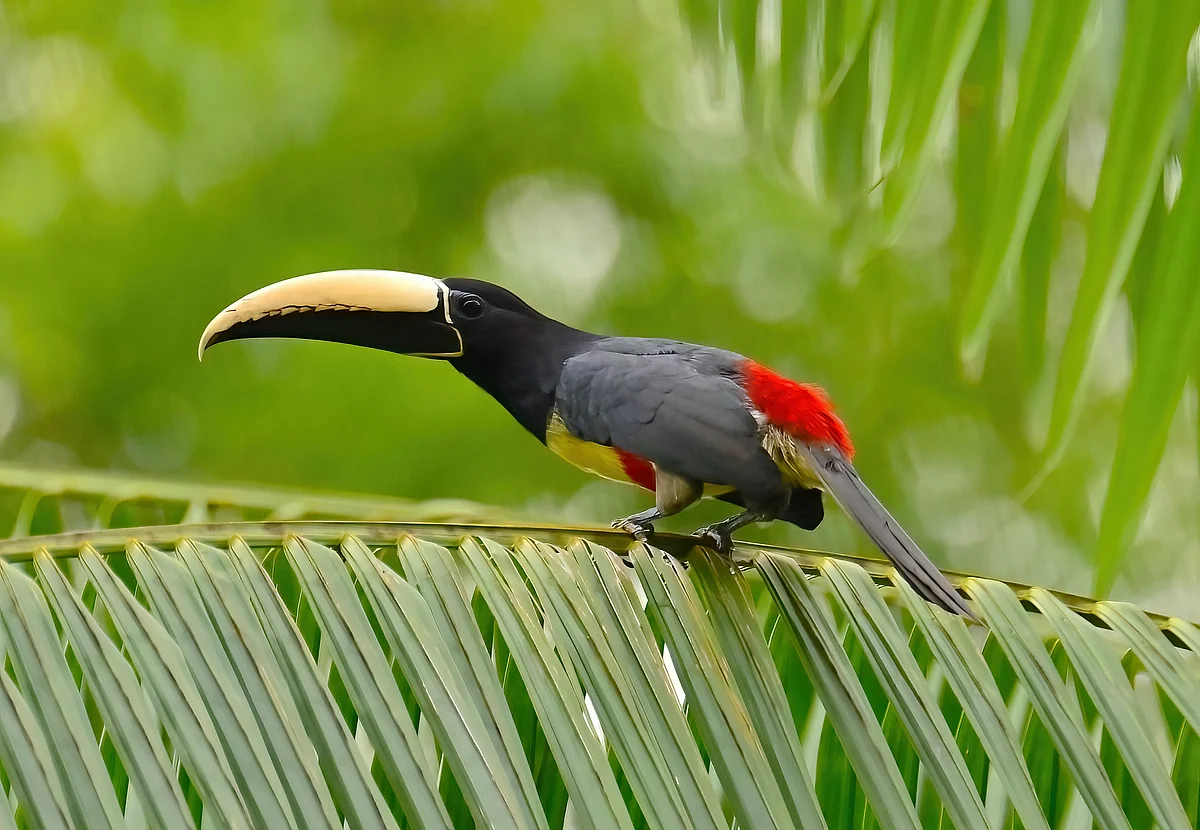
One of us arrived earlier than the other, and was immediately treated to Brazilian coffee and the sight of three species of hummingbirds in our hosts’ garden. One of them, the Reddish hermit, is so tiny it could easily be mistaken for a largish bee. And within an hour, one of the largest and most multi-coloured species found here, the Channel-billed toucan, showed itself. These first few sightings brought home the fact that when it comes to diversity, birds can rival or outshine any other group of animals.
Birding In Danielson And Fernanda’s Backyard

Danielson and Fernanda started the Para Birding Tour enterprise some five years back. Danielson has been birding since he was 13 years old, learning from a French ornithologist with whom his father worked. His long experience showed in the amazing ability to recognise all bird calls, and spot things deep inside the dark rainforest that we would have easily missed. As he told us in an interview (present to watch on Ashish Kothari's Youtube channel), recognising sounds is essential in the Amazon forest, given the difficulty of spotting many species (and if one does not want to get spondylitis, constantly having to crane up into the canopy!). Fernanda has picked up superb birding skills in the last few years – they met while studying biology, and decided to settle in a rural area near Santa Barbara town rather than in a city. She is also the English speaker of the two, important for visitors from outside Brazil.
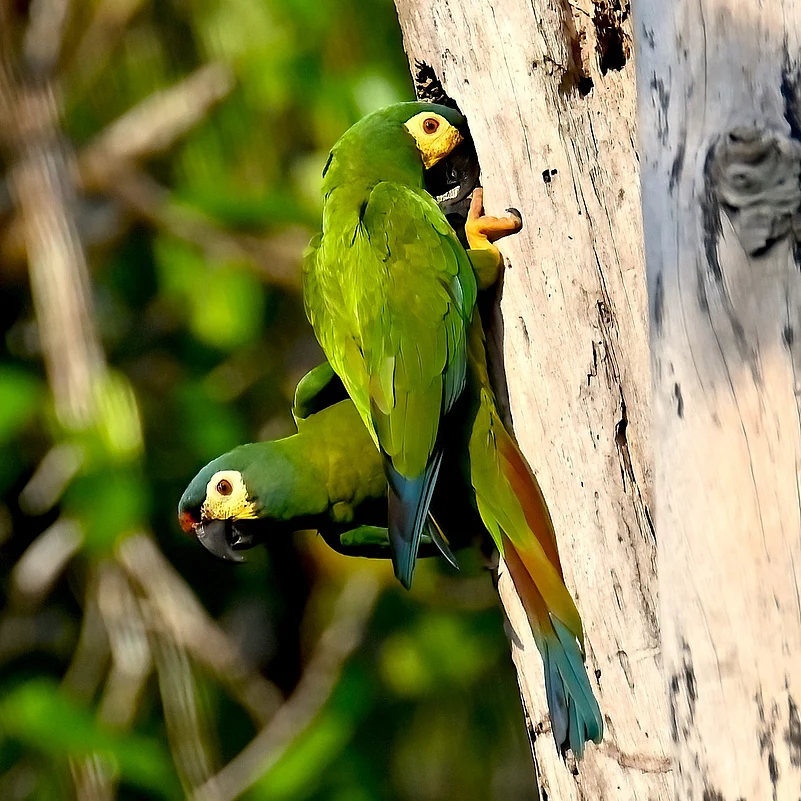
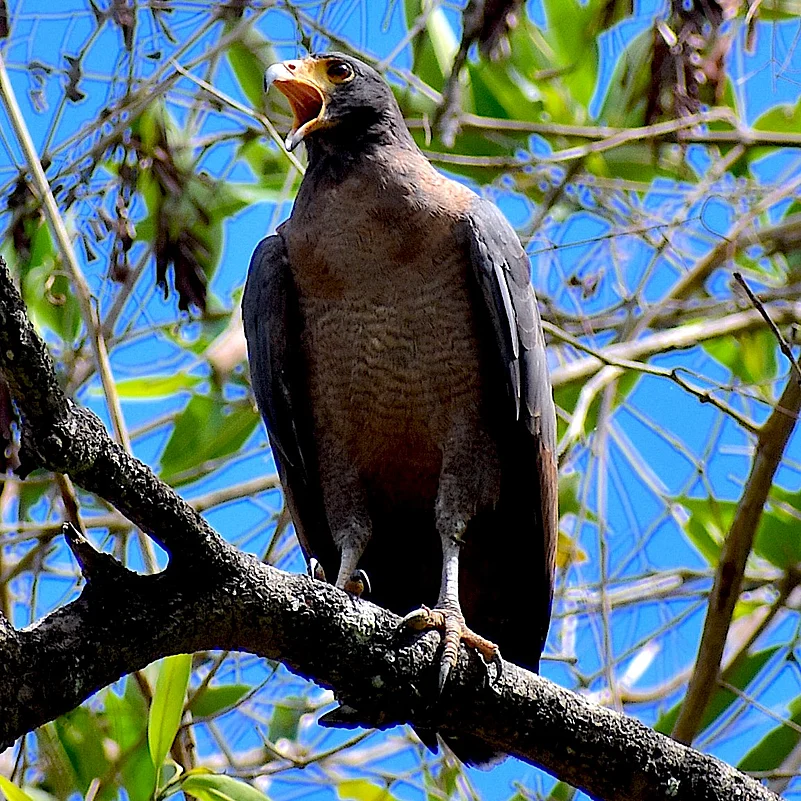
The five days we spent with them were full of birding experiences we will never forget. We saw at least 50 species new for us within about half a kilometre of their place, as it contains several ‘ecotones’ (meeting points of different ecosystems) – rainforest, scrub, streams, agricultural fields, plantations. Of several species of hummingbirds, the quaintest was the Dot-eared coquette, tiny with the oddest-looking ear-flaps, which, along with its tail, fan out in a mesmerising dance. Apparently, this is one of the best places to see this uncommonly sighted species. Then were colourful parrots and macaws, of which the Jandaya parakeet with its orange-coloured head in particular evoked a ‘Wow!’ Close to their house, on a huge tree, there were the tubular hanging nests of the loud and odd-looking Green oropendolas. On the larger end of the size spectrum were toucans and aracaris, vultures (the Black being about as common as kites in India), and raptors like the Hookbilled hawk and the Yellow-headed caracara. Then there were the ones that looked like nature got a bit confused, or mischievous, like the Vulturine parrot with a head like that of a vulture! And the very appropriately named Screaming piha, whose ear-shattering call at well over 110 decibels is believed to be the second loudest in the world of birds. According to local narratives, this bird used to alert slave-owners to the whereabouts of escaped slaves!
Beyond The Backyard: Mangroves, Quilombos And Bays
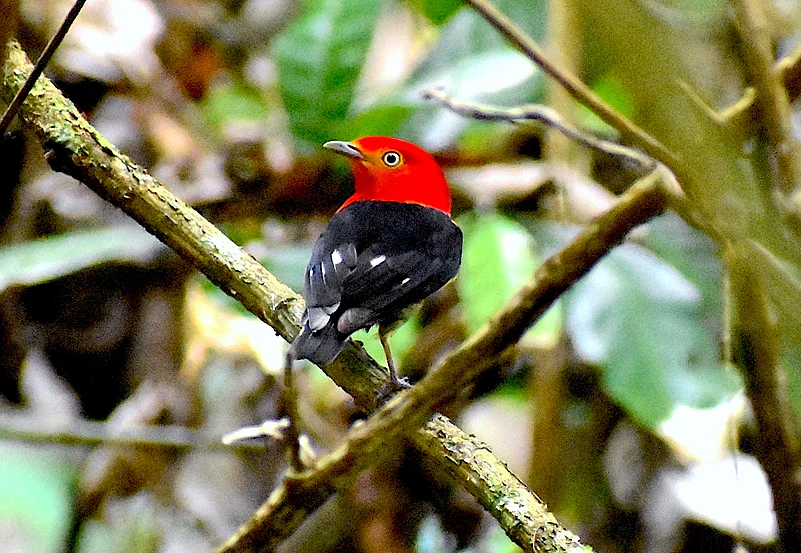
We were also taken to a number of sites away from their immediate neighbourhood. Very interesting was a forest area conserved by the Menino Jesus Quilombo community (descendants of Africans brought over as slaves by the Portuguese colonisers in the 16th century, who escaped and established settlements – clearly the Screaming piha was not able to give away their hiding places!). The community extracts Brazil nut and other forest produce from the area, and its protection has enabled considerable wildlife to thrive. Most spectacular here was the Redhooded manakin, which could be appropriately labelled the jewel of the forest. At the San Caetano docks, we sighted the startling-coloured Scarlet ibis, and in its mangrove ecosystem, we saw the endemic Rufous crab hawk and Bicolored conebill. The bays at Mosquero, the grounds of the Parque de Gunma where the Japanese have funded an agroecology research and biodiversity conservation project, and the town of Santa Barbara had their own birding delights. Some of these were well over an hour’s drive away, and we were impressed by the enthusiasm of our hosts to show us different ecosystems and the birds unique to them.
As delightful as the birding was the warm hospitality we got. There is a room adjoining their house, which can comfortably accommodate two people (if there is a larger group, there is a hotel close by). We ate food with the family (Fernanada’s mother cooks some amazing stuff!), and it was, as they call it, a ‘culinary immersion’. We got our first taste of some superb Amazonian fruits (acai, cupuacu), and were given a diversity of local dishes.
All in all, five very wholesome days!
Information
Website: parabirdingtour.com
Address: Near Santa Barbara do Para town, ~50 km from Belem city
Cost: Please check the website
Contact: parabirdingtour@gmail.com; +55 (91) 984553357 / 85750478
(Ashish Kothari is an Indian environmentalist and author.)