Norwegian libraries are not just quiet rooms lined with shelves—they’re some of the most architecturally ambitious, socially vibrant public spaces in the world. From glass-fronted waterfront icons to youth-only creativity hubs, these libraries redefine what it means to be a place for reading, learning, and gathering.
It’s no surprise that libraries are thriving here. A 2018 Nordstat survey found that 54 per cent of Norwegians had visited a public library in the previous year, the highest figure ever recorded. Backed by a 1985 law that mandates every county to maintain a public library, these spaces are designed not just to store books, but to nurture culture, conversation, and community.
At the heart of this movement is Oslo’s spectacular Deichman Bjørvika—named Public Library of the Year 2021 by IFLA—alongside several other remarkable libraries that are well worth building into your Norway itinerary.
Deichman Bjørvika, Oslo
Opened in 2020 between the Oslo Opera House and Oslo Central Station, Deichman Bjørvika is the capital’s cultural living room. Spread across multiple floors, the library houses everything from reading lounges and quiet study zones to digital workshops, cinemas, play areas, cafés, and a restaurant.
An app guides visitors through the building, but the real reward is the top floor—an airy sanctuary overlooking the Oslofjord, Langkaia, and the opera house. “The library is meant to feel like a large, cosy living room,” says Knut Skansen, director of the Oslo Public Library. It’s a space to pause between home and work, to read, reflect, or simply watch the city move.
The building has been widely praised for combining environmental awareness with architectural flair, and for demonstrating how libraries can function as modern social institutions.
Stormen Library, Bodø
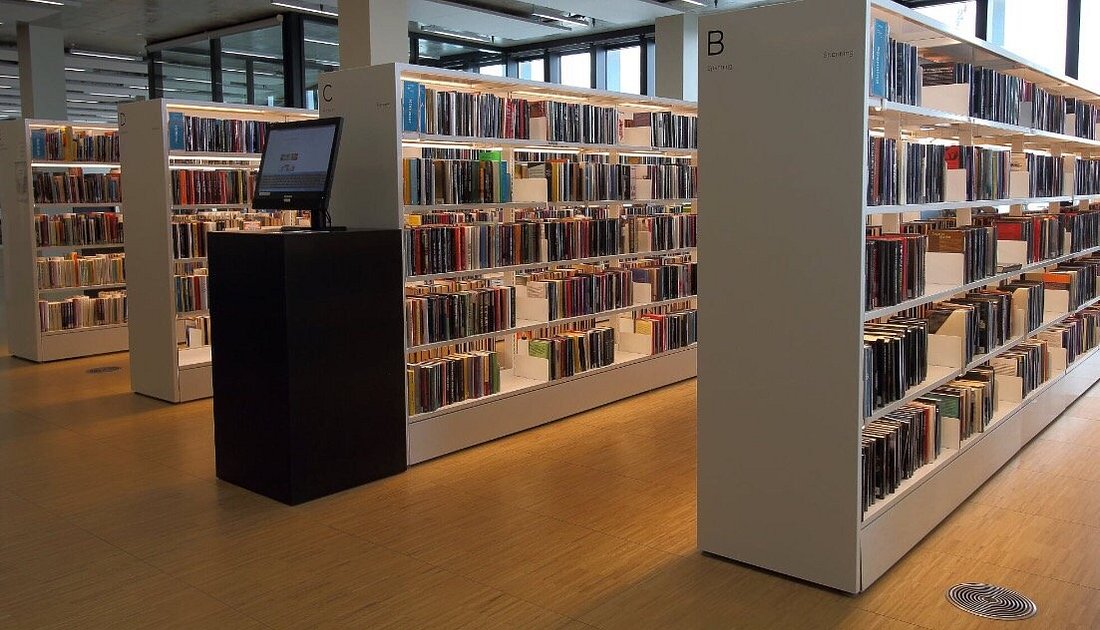

With its dramatic glass façade and harbour views, Stormen Library feels more like a cathedral than a civic building. Designed by British firm DRDH Architects, the library forms part of a larger cultural complex that also includes a concert hall.
Named Norwegian Library of the Year 2018, Stormen hosted over 650 events that year and welcomed nearly half a million visitors. Natural light floods the interiors, making it as appealing to linger in as it is to admire from the waterfront.
Tromsø Library & City Archives
Housed in a former cinema, Tromsø Library and City Archives retains its original ceiling from the Fokus Cinema era, lending the space a distinctly cinematic character. Since opening as a library in 2005, it has become one of the city’s most active cultural hubs.
In a delightfully human touch, the library maintains different temperatures on different floors, catering to readers who prefer their books enjoyed warm—or cool.
Vennesla Library & Culture House
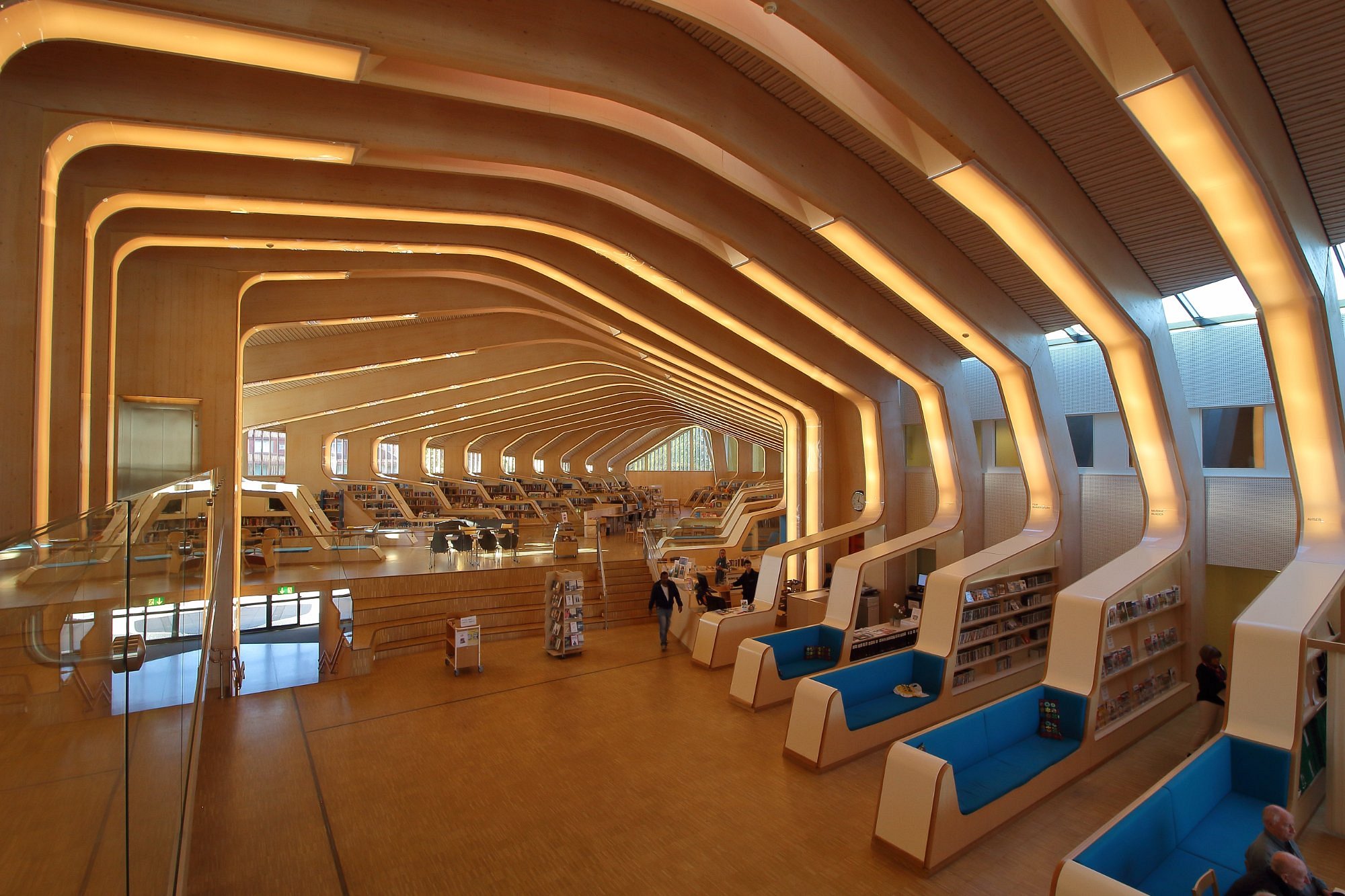
Often cited among the world’s most beautiful libraries, Vennesla Library and Culture House, a.k.a. Kulturhuset i Vennesla, is a masterclass in architectural storytelling. Designed by Helen & Hard, the building’s ribbed wooden interior curves seamlessly across walls and ceilings, creating an immersive spatial experience.
Opened in 2011, it doubles as a venue for concerts, theatre, and film screenings. The library has been ranked among the top 10 most magnificent libraries globally by Wired, and named the fourth most stunning library in the world by The Huffington Post.
Deichman Biblo Tøyen, Oslo
This is one library adults can only admire from the outside. Deichman Biblo Tøyen is Norway’s first youth-only library, exclusively for children aged 10 to 15. Inside, books are grouped by themes rather than genres, and reading nooks include a converted ski lift, a pink van, and a wheelbarrow.
Beyond reading, the space hosts coding clubs, cooking classes, film screenings, author visits, and workshops—encouraging creativity as much as curiosity.
The Future Library, Oslo

Part literary archive, part art project, The Future Library is one of Norway’s most poetic cultural initiatives. Conceived by Scottish artist Katie Paterson, the project involves collecting one original manuscript every year between 2014 and 2114.
The texts—contributed so far by authors including Margaret Atwood, David Mitchell, and Sjón—are sealed in a dedicated room at Deichman Bjørvika and will remain unread until 2114. A forest of 1,000 trees planted in Oslo’s Nordmarka will one day provide the paper for printing the works.
Norway’s libraries prove that reading spaces can be bold, playful, and deeply communal. Even if you don’t pick up a book, these buildings are reason enough to step inside—and stay awhile.
FAQs
1. Why are libraries in Norway considered world-class?
They combine striking architecture, strong public funding, and wide-ranging cultural and community functions beyond books.
2. Are public libraries in Norway free to use?
Yes. Access to public libraries and most services is free for everyone, including visitors.
3. What can you do in a Norwegian library besides reading?
Libraries host events, workshops, film screenings, debates, and offer access to creative tools and shared facilities.
4. How important are libraries to Norwegian society?
Libraries are legally mandated public institutions that promote education, cultural exchange, and community engagement.
5. Do people in Norway still actively use libraries?
Yes. Surveys show more than half the population visits a public library at least once a year.