Welcomed by purple-blue skies, my husband and I land at Samui International Airport—an airport that feels less like a transit hub and more like a tropical sanctuary. Open-air pavilions replace glass terminals, bougainvillaea trails lazily across wooden beams, and palm-fringed walkways guide you to baggage claim. It is an arrival that sets the tone for the island: unhurried, intimate, and deeply connected to nature.
Muay Thai And Oceanfront Luxury: An Active Escape In Koh Samui
At first glance, Koh Samui is all turquoise waters and fragrant Thai cuisine. But for those willing to look beyond the surface, the island reveals a deeper cadence—one shaped by the heritage and enduring spirit of Thai martial art

Advertisement
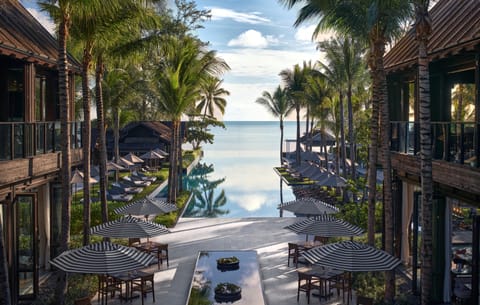
Kimpton Kitalay view from the reception area Kimpton Kitalay
A 20-minute drive later, we arrive at Kimpton Kitalay Samui on idyllic Choeng Mon Beach. True to its name—Kitalay, meaning “Song of the Sea”—the resort evokes a romantic fishing village reimagined through a contemporary lens. We are welcomed with a refreshing coconut mocktail and bracelets crafted from recycled fishing nets, fastened with a delicate glass vial filled with sand from the resort’s own shoreline. The gesture feels symbolic—an introduction not merely to a resort, but to a way of life intimately tied to the sea.
Our one-bedroom suite unfolds like a private seaside residence. Vintage tiles dress the floors in soft Mediterranean hues, while the bath area is both lavish and serene, with a deep-soaking tub, a rain shower, a spacious walk-in wardrobe, and fragrant Aesop amenities. Thoughtful details speak volumes—a black napkin placed discreetly for makeup removal, perfectly sized slip-ons for each of us, a batik cloth tote, a beach bag woven from reclaimed fishing nets, and plush cotton robes in calming shades of blue and yellow hanging neatly in the wardrobe.
Advertisement
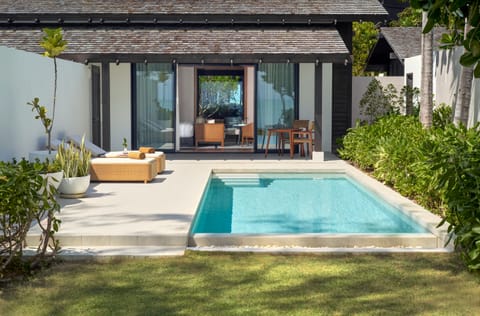
Oceanfront Pool Villa Kimpton Kitalay
The bedroom and living area, connected by a courtyard where a tree rises gently at its centre, open directly onto the pool with uninterrupted ocean views. One glance at the horizon, and I know most of my time will be spent there—floating in the water, suspended between pool and sea, tuning into the steady rhythm of waves folding onto the shore.
But our Samui escape holds more than a pool with a view.
A Resort-Led Introduction To Thailand’s Ancient Martial Art
My husband has always been the athlete between us. I gravitate toward slow, mindful travel—art galleries, local markets, unhurried conversations, the quiet poetry of culture. Yet despite our different rhythms, we share the same intention when we travel: to understand a destination through its food, traditions, and everyday rituals.
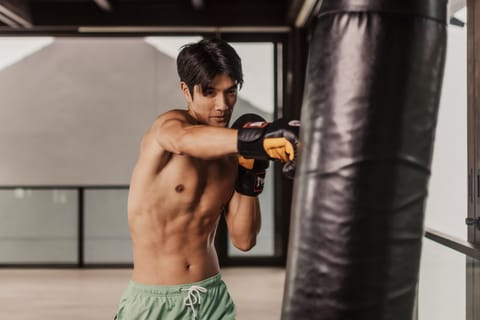
Thai Boxing Class at Kimpton Kitalay Samui Kimpton Kitalay
So, when we discovered that our resort offered Muay Thai classes, it felt like a bridge between our two worlds. For my husband—a martial artist by passion—the chance to train with a local instructor was irresistible. I signed up out of curiosity.
Advertisement
Energised by a shot of espresso at 7 am, we arrived at the resort’s boxing studio, which is no token fitness room. Professional gloves, hand wraps, focus mitts, kicking pads, and training boards were neatly arranged along the wall. Under the guidance of our trainer, Seeja, we began with an energetic warm-up: skipping, shadowboxing, and dynamic stretches to awaken the muscles.
We moved into fundamental punches—jabs, crosses, hooks—before layering in elbow strikes and knee drives. The rhythm felt awkward at first, my movements half a beat behind intention. Then came the kicks: roundhouse, push kicks, and low sweeps. Each technique demanded not just strength, but balance, precision, and control. A partner drill tested our coordination, footwork, and reflexes, forcing us to anticipate rather than react. By the time we cooled down—stretching sore hip flexors and rolling our shoulders back into place—I felt both exhausted and unexpectedly centred.
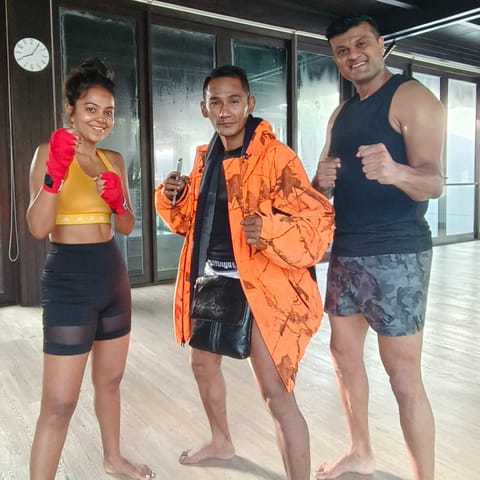
With Muay Thai trainer Seeja at Kimpton Kitalay Boxing Studio Author
Only at the end of the class did we learn that Seeja was not just a trainer, but one of Koh Samui’s respected fighters, with an upcoming bout at the local stadium. What began as a resort activity quietly evolved into something deeper—a gateway to the island’s beating heart.
Advertisement
From Ring To Retail
Over the next few days, our curiosity pulled us deeper into Samui’s Muay Thai scene. We visited Phetchbuncha Boxing Stadium, one of the island’s most famous venues, where fighters from around the world come to compete in Thailand’s national sport.
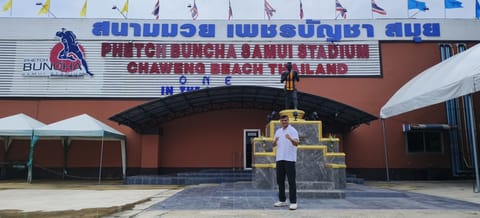
Phetchbuncha Boxing Stadium Author
The stadium, located in the heart of Chaweng Beach, hosts fights three nights a week, usually with six bouts per evening. If you’re lucky enough to catch a fight, you’ll witness men and women who have trained for years moving with astonishing speed and precision. Fists, elbows, knees, and shins fly with a rhythm that’s both brutal and beautiful.
The atmosphere is electric. Before each fight, the boxers perform the ceremonial Wai Kru, an elegant pre-fight dance honouring their teachers and ancestors. Under the bright lights and the roar of the crowd, the ring transforms into a stage where tradition and raw intensity collide.
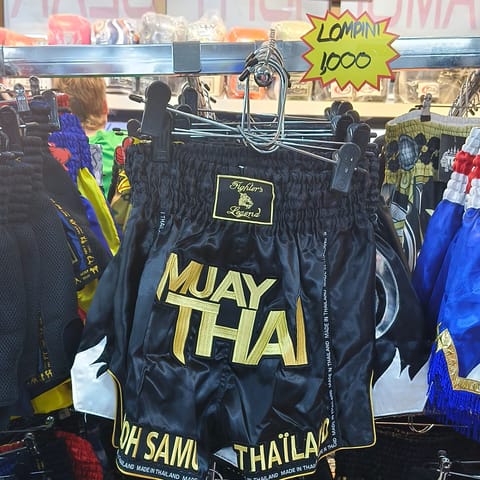
Shopping for Muay Thai gear Author
Our exploration didn’t stop at the stadium. Samui has plenty of shops selling Muay Thai gear, and my husband’s excitement was contagious. We wandered through small stores lining the streets, especially in Lamai, browsing shorts, shin guards, gloves, helmets, and bottles of traditional boxing liniment. I’m not a martial artist, yet I loved the experience—the sheer variety of clothing and accessories, vibrant colours, and the friendly, welcoming shop owners, a small reflection of Samui’s generous, easygoing spirit.
Advertisement
Beyond The Resort At A Local Gym
One evening, we decided to venture beyond the resort and check out a local gym, Dowden Muay Thai, just a five- to ten-minute walk from Kimpton Kitalay Samui. The gym offers daily classes for both locals and tourists, from complete beginners to experienced fighters. Watching a high-energy session in progress, my husband immediately signed up for the evening class the next day.
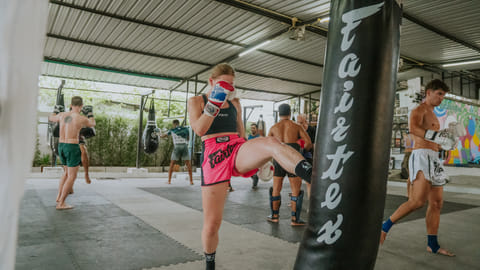
A group class at Dowden Dowden Muay Thai
The gym was founded by 39-year-old Kittiwut Wongsuwan—better known as Dowden—who has been immersed in Muay Thai for over 30 years, having fought his first fight at age 7. His experience and passion are evident throughout the facility, which is impressively equipped with a full Muay Thai training area, professional gear, and a free-weight section—perfect for improving technique, endurance, and overall fitness in group or private sessions.
While my husband trained, I watched the action in the gym’s professional ring. Muay Thai, called “The Art of Eight Limbs,” uses the whole body as a weapon: fists, elbows, knees, and shins all play a role in attack and defense. Seeing the moves up close, I finally understood how the techniques we’d practised in class connect to something bigger—discipline, resilience, and the heart of Thai culture.
Advertisement
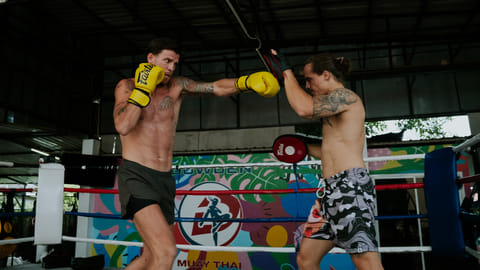
Action in Dowden's Ring Dowden Muay Thai
Talking to some master practitioners, I learned that Muay Thai dates back to ancient times and gained popularity under King Chulalongkorn (Rama V) in 1868. Its development accelerated during the reign of King Rama IX, who loved the art form and sought to make it Thailand’s national sport. He encouraged every individual to take it up for self-defence, even authorising training camps across the country.
While Muay Thai may have originated in battlefield techniques and been honed over centuries, it feels delightfully accessible in Koh Samui, where beginners and pros train side by side, and respect flows both ways. Conversations with trainers and fighters, their strength and discipline, bring the sport—and the island—to life. Through Muay Thai, Samui shifted for me—from a picture-perfect postcard to a place pulsing with action and tradition.
Other Things You Can Do In Samui
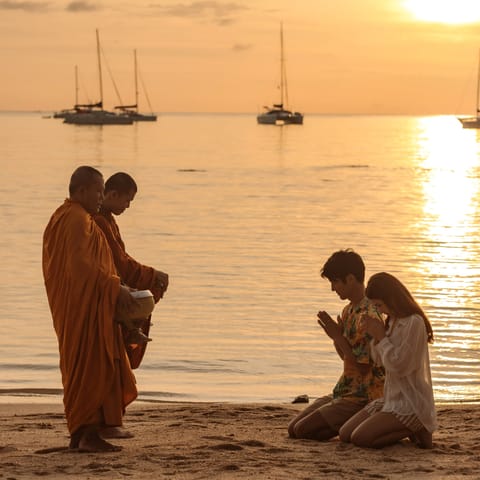
Alms giving or Tak Bat Kimpton Kitalay
Sunrise Alms Giving Ceremony (Tak Bat) – Begin the day with a deeply spiritual Buddhist ritual as monks walk at dawn collecting offerings. Locals offer tak bat to the saffron-robed devotees to make merit and receive blessings. Experiencing it on Kimpton Kitalay Samui’s beach was both grounding and emotional—a quiet, reflective start to the day.
Advertisement
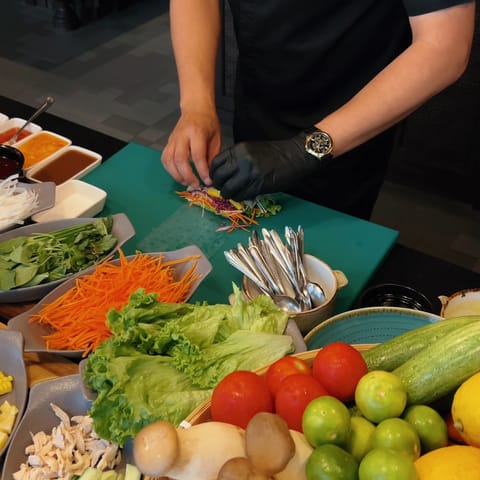
Thai cooking class Kimpton Kitalay
Local Market Visit & Thai Cooking Class with the Resort Chef – Explore bustling markets with the resort’s chef, learning about fresh Thai ingredients like galangal, lemongrass, kaffir lime, regional fruits such as mangosteen and rambutan, and how to identify fresh fish. Back in the resort kitchen, we learnt to prepare classic Thai dishes from scratch: Pomelo Salad, Tom Yum Goong, Green Curry, and Mango Sticky Rice.
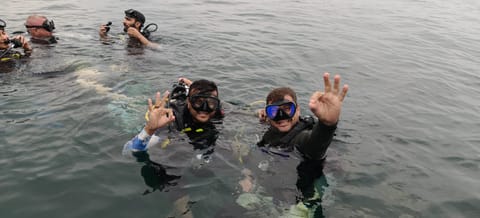
Diving in Koh Tao Author
Diving in Koh Tao – Take a half-day diving trip with 5-star PADI dive centre Silent Divers to Koh Tao, a top dive destination. We explored Tao Tong, a shallow, tranquil site ideal for macro photography, where we spotted creatures like blue-ringed octopuses, sea moths, and seahorses. Twins, near Koh Nangyuan, offered pinnacles, coral-covered boulders, and abundant tropical reef fish such as butterflyfish, angelfish, and moray eels—perfect for both beginners and seasoned divers.
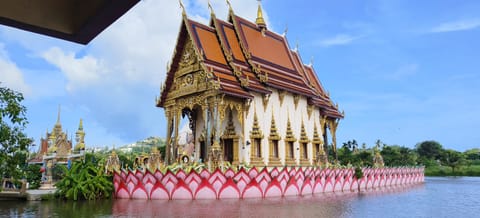
Plai Laem Temple Author
Temples and Markets – Immerse yourself in culture with a visit to Wat Plai Laem, known for its vibrant Chinese-Thai architecture, serene lake, and colourful murals depicting Buddha’s teachings. In the evenings, wander Lamai Beach Night Market and Fisherman’s Village in Bophut—a historic Hainanese settlement with preserved wooden shophouses, narrow lanes, and a lively Friday market. Kimpton Kitalay’s design draws inspiration from this charming village.
Advertisement
Stroll Along Choeng Mon Beach – Experience the beach in the late afternoon as it comes alive. Street vendors, local snacks, Muay Thai classes by the shore, kids playing in the waves, and tourists relaxing at beach bars create a lively, islander vibe. Cap it off with a ravishing sunset cocktail and soak up the atmosphere.
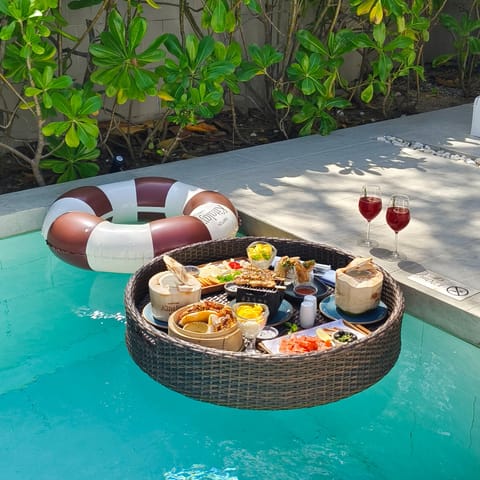
Dip In & Drink up at Kimpton Kitalay Kimpton Kitalay
Dip In, Drink Up – Kimpton Kitalay Samui elevates poolside indulgence with its “Dip In, Drink Up” experience—turning your private villa pool into a chic floating dining scene. Enjoy artfully presented gourmet bites on an Instagram-worthy tray, paired with a refreshing cocktail. Perfect for couples seeking a romantic afternoon!
Where To Stay
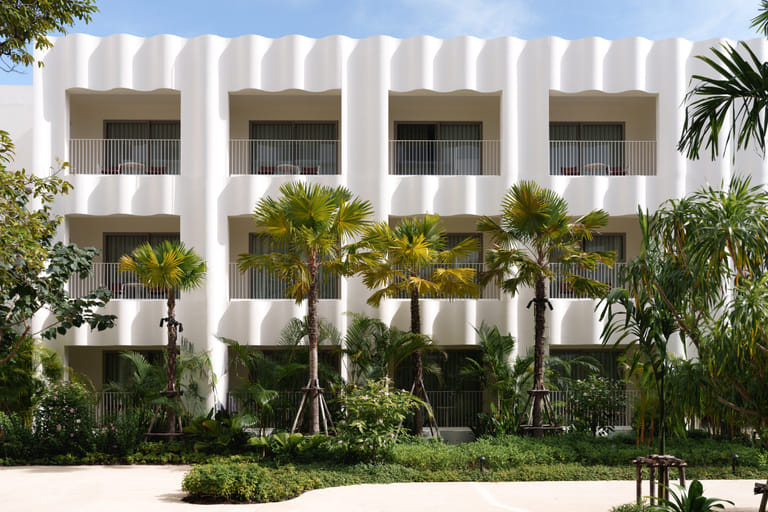
Kimpton Kitalay Samui, which sits on the gorgeous Choeng Mon Beach, offers 138 elegantly designed rooms, suites, and private-pool villas, all thoughtfully appointed with modern creature comforts that create an effortless home-away-from-home feeling. Designed like a charming seaside village, the resort blends island luxury with a warm sense of community. Guests can enjoy multiple dining venues, a spa that fuses Thai wellness traditions with contemporary touches, and a sprawling ocean-facing pool. Dine at Boho Thai Lifestyle Café for classic Thai flavours and Western favourites, savour handcrafted pastries and coffee at HOM Baking Company, or indulge in seafood and inventive fusion dishes at FishHouse Restaurant & Bar. For those who like to stay active, the resort offers everything from morning yoga sessions and Muay Thai classes to art workshops and guided market visits—ensuring you experience the true essence of Samui, at your own pace.
Advertisement
Tariff: From INR 42,318 per night, breakfast included.
(Shikha Shah is an India-based freelance travel writer and watercolour illustrator whose work has appeared in several renowned media outlets.)
Published At: