The big sighting may still be the reason to go, but across India’s wildlife destinations, some of the most interesting experiences now begin after the safari ends.
Beyond The Safari: The New Wildlife Holiday Is Not Just About The Sighting
From village food traditions and forest walks to local crafts and cultural encounters, wildlife holidays across India are offering travellers more ways to connect with the landscapes beyond the safari

Advertisement
There is a particular silence that falls over a safari vehicle when someone spots movement in the trees. Conversations stop, cameras rise and, for a few seconds, everyone waits to see what the forest will reveal.
For years, that moment has defined the Indian wildlife holiday. A tiger at the edge of a meadow, a lion stepping out of the scrub or a leopard watching from a rocky ledge is still what most travellers hope to photograph.
But a good wildlife trip rarely stays confined to that photograph.
Spend a little longer in these landscapes and other things begin to matter: a langur alarm call that makes a naturalist stop mid-sentence, a river that draws wildlife to its banks, food shaped by what grows locally, a pottery village, or communities whose relationship with the forest goes back generations.
Hospitality companies are responding to that shift too. With recent additions including Sterling Leopard Haven Jawai and Sterling Vanyatara Tadoba, Sterling Holiday Resorts says its wildlife portfolio now spans 17 resorts across 14 destinations, with more than 500 rooms and suites. More important than the numbers is the range of landscapes these stays now open up—from tiger forests and lion country to leopard terrain, birding destinations and culturally rich forest regions. Across seven of them, the safari is only the beginning.
Advertisement
Kanha: Read The Forest, Not Just The Pugmarks
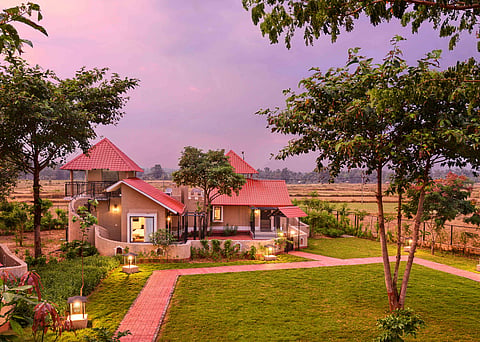
Sterling Kanha
Kanha is classic Central Indian tiger country: sal forests, open meadows and long stretches of woodland where much of the excitement lies in working out what you cannot yet see.
Travelling with a good naturalist changes the experience. A langur call, the behaviour of a herd of deer or fresh movement along a track can become as interesting as the eventual sighting. Looking for a tiger and reading a forest are not quite the same thing.
Beyond the reserve is another story. Kanha lies within a landscape associated with Gond and Baiga communities, whose art, food traditions and relationship with the forest add cultural context to a safari-led trip. Outlook Traveller has previously explored this side of Kanha, including the Tribal Museum run by The Corbett Foundation.
Stay: Sterling Kanha, in Mocha, around 6 km from Kanha National Park.
Plan It: 3 nights | Jabalpur Airport: Around 166 km.
Advertisement
Corbett: Listen Beyond The Roar

Sterling Quinta Jim Corbett
Tigers dominate the conversation around Jim Corbett National Park, but the Ramganga is just as important to understanding this landscape.
The river runs through some of Corbett’s richest habitat, drawing deer, elephants and birds to its banks. Add the Shivalik foothills, riverine forest and birdlife, and there is plenty here beyond the search for a tiger.
Corbett also carries an unusual amount of history. Chhoti Haldwani, associated with Jim Corbett, offers an entry into the human and conservation story behind the name. Back at the forest edge, the safari traffic disappears, the river becomes easier to hear and, away from urban light, the night sky becomes part of the experience.
Stay: Sterling Riverview Jim Corbett or Sterling Quinta Jim Corbett.
Plan it: 3 nights | Delhi to Corbett: Roughly 5–6 hours by road.
Wayanad: Where The Forest Enters The Kitchen
Wayanad blurs the boundary between a wildlife holiday and a journey through the Western Ghats.
Advertisement
There are elephants, deer and abundant birdlife, but also pepper vines, paddy fields, coffee and spice gardens. Food becomes one of the more interesting ways to understand the destination.
A forest drive can be followed by a farm or spice-garden visit; pepper and cardamom stop being ingredients bought in packets and become part of a living landscape. Local cooking and Malabar flavours add another dimension.
Wayanad also carries a much older human history. The petroglyphs at Edakkal Caves take the story far beyond contemporary tourism, while village visits, agriculture and craft offer reasons to step away from the usual sightseeing circuit.
Stay: Sterling Wayanad, Sterling Vythiri Wayanad or Sterling Lontano Waterfront Wayanad.
Plan it: 3 nights | Calicut Airport to Vythiri/Lontano: About 72 km.
Gir: Lions Are Only The Beginning
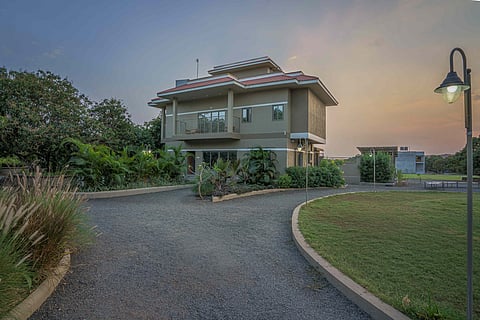
Sterling Gir
The Asiatic lion is the reason most travellers come to Gir, but the destination makes more sense as part of the larger Saurashtra landscape than as an isolated wildlife reserve.
Advertisement
The official Gir permit site notes that Asiatic lions range across more than 22,000 sq km of Saurashtra — through a geography that includes villages, grazing lands, orchards and human settlements as well as protected forest.
The Maldhari pastoral community is part of that story. So are mango orchards, Kathiawadi food and the birdlife around the region’s water bodies. Kamleshwar Dam brings crocodiles and birdwatching into the mix, while Somnath makes an easy cultural extension.
There is also the Siddi community and its distinctive Dhamal tradition, another reminder that the cultural landscape around Gir is as layered as the wildlife within it.
Stay: Sterling Gir, set in a seven-acre mango orchard beside the Hiran River and around 6.5 km from the safari gate.
Plan it: 3 nights | Diu Airport: About 97 km | Somnath: Around 44 km.
Tadoba: Tiger Country With A Gond Past
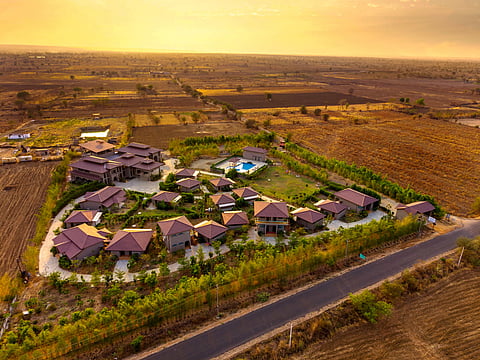
Sterling Vanyatara Tadoba
Tadoba-Andhari Tiger Reserve is one of Maharashtra’s best-known wildlife destinations, with tigers, leopards, dholes, sloth bears and rich birdlife.
Advertisement
Yet there is plenty to notice even when the headline animal stays out of sight. Teak and bamboo forests, grasslands and lakes create different habitats, and understanding how animals move through them adds considerably to a safari.
Beyond the reserve, Chandrapur is part of a historic Gond landscape. Forts, shrines, bamboo craft and regional history take the trip in another direction once you leave the forest.
Then there is Vidarbha food. Its robust, often fiery flavours are a good reason not to treat lunch and dinner simply as the intervals between two safaris.
Stay: Sterling Vanyatara Tadoba, with access to safari gates including Alizanza, Shedegaon, Madnapur, Belara and Shirkheda.
Plan it: 3 nights | Nagpur Airport: Aabout 98 km.
Pench: Look Beyond The Jungle Book
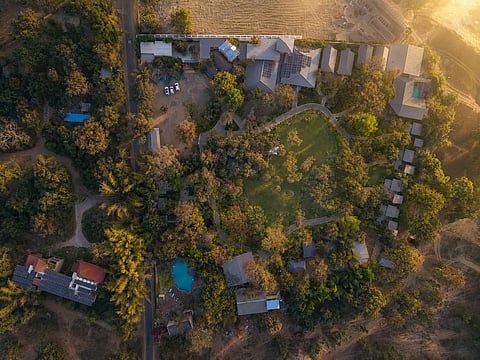
Sterling Padam Pench
Pench comes with considerable mythology attached. It is widely associated with The Jungle Book, and wildlife followers also remember it as the home range of Collarwali, one of India’s best-known tigresses.
Advertisement
But the destination becomes more interesting when the literary associations are set aside.
The larger Pench landscape includes Gond, Baiga and Korku communities, forest-edge villages, seasonal foods and local craft. Mahua and millets connect food with the forest economy, while Pachdhar village is known for its black pottery.
An afternoon outside the reserve can make the next morning’s safari richer. The forest is no longer simply scenery through which a tiger might walk, but part of a landscape in which people have been living, farming, cooking and making things for generations.
Stay: Sterling Padam Pench, near Turiya Gate, or Sterling Orient Woods Pench, near Khawasa and Khursapar.
Plan it: 2–3 nights | Nagpur Airport: Approximately 100–113 km, depending on where you stay.
Jawai: Where Leopards Live Outside A National Park
Jawai feels quite unlike India’s better-known wildlife reserves.
There is no conventional national park at the centre of the experience. Leopards live among granite outcrops around Bera and Jawai, while Rabari pastoral communities continue to graze livestock and go about everyday life below.
Advertisement
That coexistence is what gives Jawai much of its appeal.
The wildlife experience extends beyond the leopard. Jawai Dam attracts crocodiles and migratory birds, while the combination of water, granite, scrub and open country creates one of Rajasthan’s most distinctive landscapes.
Outlook Traveller has previously written about Jawai’s leopards, Rabari communities and the landscape around Bera. Time spent in the villages or around the dam adds useful context to early-morning and late-afternoon leopard drives.
And because Jawai lies between Udaipur and Jodhpur, it works naturally as a wildlife stop within a wider Rajasthan journey.
Stay: Sterling Leopard Haven Jawai, near Bera.
Plan it: 2–3 nights | Udaipur: About 150 km / 3 hours | Jodhpur: About 160 km / 3 hours.
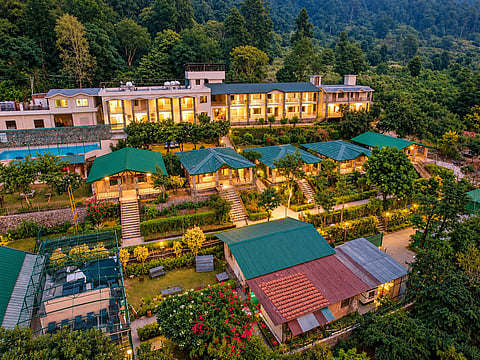
Sterling River View Corbett
The photograph is only part of the story. A good sighting will always be part of the thrill. Few wildlife travellers would pretend otherwise. But the most rewarding wildlife holidays are often the ones in which the safari becomes an entry point into a larger place.
Advertisement
That wider idea runs through Sterling’s wildlife and nature-led portfolio, which extends across Corbett, Kanha, Pench, Gir, Tadoba, Jawai, Ranthambore, Sariska, Tipeshwar, Thekkady, Wayanad, Sattal and Bastar.
They are very different landscapes, and that is precisely the point. The wildlife holiday need not follow one formula.
The journey can move from safari tracks to rivers, village kitchens and pottery workshops; from pastoral traditions and tribal histories to birding, local ingredients and conversations with people who know these landscapes intimately.
You may still come home with the photograph of a tiger, lion or leopard everyone wants to see. But what surfaces later is often less predictable: the alarm call a guide taught you to recognise, a meal you had never tasted before, a potter at work in a forest-edge village, birds lifting off from a reservoir, or a Rabari herder walking home beneath the same granite hills where you spent the morning looking for a leopard.
Advertisement
The sighting may be what brought you there. What stays with you is everything around it.
Published At: