Just outside Kolkata’s vibrant urban sprawl, a collection of boutique heritage stays offers travellers a chance to escape the city’s pace and step into history without forgoing modern comforts. From stately zamindari palaces to stays in terracotta temple towns, and meticulously restored Danish taverns by the Hooghly, each offers a distinctive experience steeped in history.
5 Boutique Heritage Stays Near Kolkata To Book This Independence Day Long Weekend
Discover a range of boutique heritage stays near Kolkata—from grand zamindari palaces and stays in terracotta temple towns to restored colonial taverns. Each offers a unique blend of history, charm, and modern comfort

Advertisement
Nihar On The Ganges
On the edge of the Ganges, just beyond the slow sprawl of Kolkata’s northern reaches, this 19th-century mansion stands quietly, its façade weathered but intact. Once the residence of Roy Bahadur Radhakanta Deb—a scholar, reformer—it now houses travellers instead of descendants, its long corridors and shaded courtyards opening into rooms that echo with restrained grandeur. There is no attempt at spectacle; the renovation is spare, attentive, and content to let the building speak for itself. Above, the Sunset Travel Café offers a high view over the river’s shifting silt and soft geometry. Tea arrives unhurried. Conversations, when they happen, tend to do the same. The house is run by 100 Miles, a travel collective founded in 2000 by Chandan Sourav and Swarojit Roy, whose work moves between memory and geography. Their projects—like Romancing Calcutta, a city tour conducted entirely by local transport, or the cross-border Bhasa Sutra bicycle expedition—are less about escape than return: to the texture of cities, to language, to a way of travelling that resists speed and forgetfulness.
Advertisement
Address: Sukchar, Jaiprakash Nagar, Panihati, Kolkata, Khardaha, West Bengal 700115
Mahishadal Rajbari

A front view of Mahishadal Palace Sanjoy Ganguly
Tucked away in the countryside of West Bengal is the Mahishadal Rajbari—once the seat of a feudal dynasty. Built in 1926 by Janardhan Upadhya, an officer in Akbar’s army, and designed by a French architect, the Phool Bagh Palace is an incongruous vision: Ionic columns, gold-leaf shields, and wrought iron benches, all more suggestive of Europe than rural Bengal. In front, a cannon rests on a carriage, pointing at nothing in particular. Now partially converted into a museum and homestay, the palace offers a glimpse into a world that once measured itself in rituals and symbols. Inside, the rooms have settled into a quieter life. The palace, partly museum, partly homestay, speaks in the faded language of lineage—oil portraits, cracked furniture, a chair bearing the family crest. In the dining hall, a fresco traces the story of Shakuntala. The palace is also famous for its annual Ratha Yatra celebrations that started in 1776 and its ancient Durga Puja festivities. Outside festival season, the grand Ratha lies still at Rath-Tala. Inside, time, though not forgotten, has loosened its grip—just enough for a reflection-filled getaway, or for writing something down.
Advertisement
Address: Phul Bagh Palace, P.O: Mahishadal, Dist.: Purba Midnapur, West Bengal
The Denmark Tavern
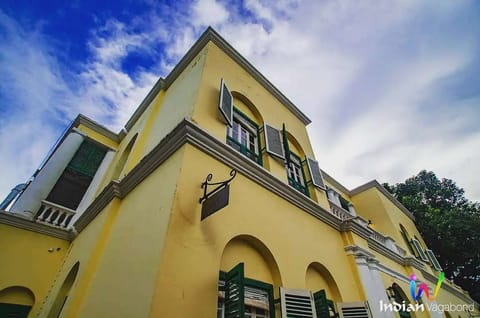
The refurbished Denmark Tavern in Serampore subhadipindia/Instagram
A fragment of Serampore’s layered history, the Denmark Tavern stands quietly by the Hooghly, its pale façade catching the light off the river. Originally opened in 1786 by British innkeeper James Parr, it was once a bustling pub for European travellers in a town under Danish rule from 1755 to 1845. For decades, the building lay in disrepair—its spiral staircase collapsed, police lines occupying parts of the crumbling interior. Now carefully restored through the Srirampur Initiative, led by the National Museum of Denmark, INTACH, and the West Bengal Heritage Commission, the tavern has been given a second life. It is both a café and a modest heritage hotel. The renovation hasn’t hidden the work—steel replaces wood in places, and lime plaster has supplanted cement—but the structure breathes again. From the first-floor verandah, the Hooghly drifts past. Below, ferries and lives move slowly across the tiered ghats, unchanged by the weight of history.
Advertisement
Address: Serampore Police Line, N.N Roy Street , LP 39/2/1, Serampore, India, West Bengal
Heritage Homestays, Amadpur
About a hundred kilometres from Kolkata, Amadpur lies folded into the landscape like a well-kept secret. The town’s terracotta temples bear the soft erosion of centuries, fields stretch wide beneath an open sky, and mango orchards spill their heavy fruit in silent abundance. At its centre stands the Chaudhuri Zamindar Bari, once the home of a landed family, now a boutique stay with rooms which offer refuge from the pace of modern life. Three double rooms blend period details with subtle modern comforts, while the largest room, with space for four, suits families or close-knit groups. The décor is restrained but warm—a conversation between past and present. Guests rise to the promise of fresh produce, gathered from the nearby fields, and can arrange transport from Kolkata, easing the journey into this slower rhythm. Pets are welcome, save for the busy festival season, reinforcing the homestay’s sense of openness and belonging.
Advertisement
Address: Heritage Homestays, Amadpur, Dist Burdwan, Village, Amadpur, West Bengal 713154
Rajbari Bawali
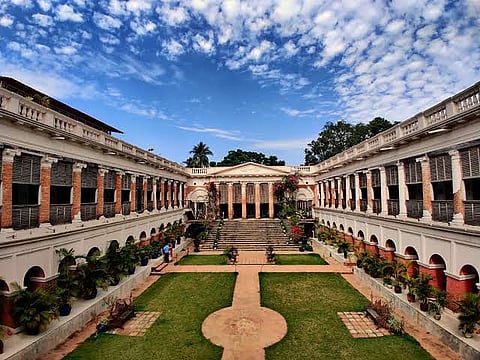
The centuries-old Rajbari Bawali has been beautifully restored therajbaribawaliofficial/Instagram
Just an hour’s drive from Kolkata, the over-250-year-old Rajbari Bawali was once a forgotten zamindari house, slowly succumbing to decay. A decade ago, Ajay Rawla, a city businessman, discovered the neglected estate. Today, it stands restored—its crumbling pillars replaced, ceilings mended, and creeping vines cleared. The grand palace features a striking portico with six Corinthian columns, a verdant central courtyard, and two floors lined with corridors, arches, and pillars. Restored using traditional materials like chuna and surki, the homestay blends antique Bengali furniture with unexpected Southeast Asian artefacts. The Rajbari offers tastefully decorated rooms, two ponds, a swimming pool, a billiards room in the old dungeon, a library, and a spa.
Address: Bowali Rajbari, The, North, Bawali, Kolkata, Raypur, West Bengal 743384

Advertisement
Published At: