Christmas in Goa is often reduced to postcard images of beach shacks, fireworks, and late-night parties. While those elements exist, they sit on the edge of a much older, deeply rooted cultural tradition. For Goans, Christmas is first and foremost a religious and community-centred festival, marked by weeks of preparation, church services, home rituals, and shared meals. This guide explores how locals truly celebrate Christmas in Goa, offering a perspective beyond tourist-facing festivities.
Preparing For Christmas In Goa: Advent, Homes And Cribs


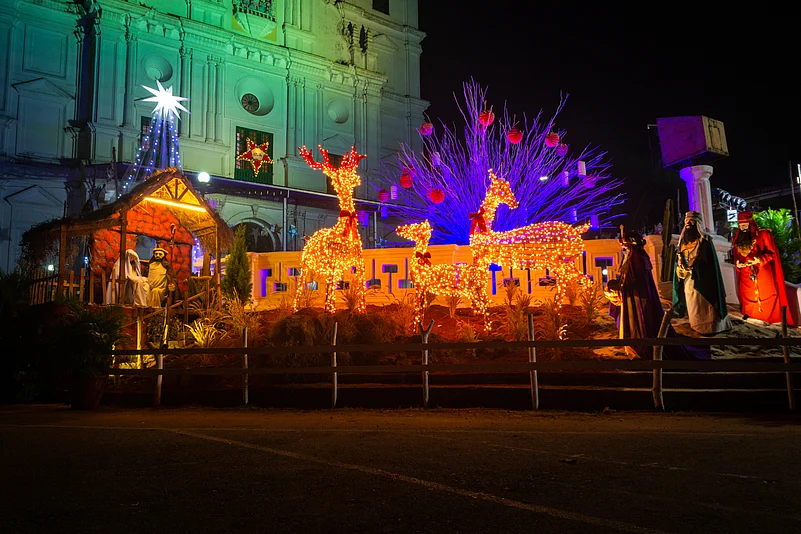
Christmas preparations in Goa begin well before December 25. Advent, the four-week period before Christmas, sets the tone. Homes are cleaned, repaired, and repainted. Courtyards are swept and decorated, acts that are both practical and symbolic of renewal. Families assemble nativity scenes, locally called cribs, using clay figurines, coconut fibres, moss, and miniature village landscapes. In some neighbourhoods, these displays become quiet points of pride.
Midnight Mass In Goa And The Central Role Of Parish Churches

The spiritual centre of Christmas Eve is Midnight Mass, locally known as Missa de Galo. Churches across the state, from village chapels to large basilicas, fill up before midnight. Services are typically conducted in Konkani, accompanied by hymns sung by local choirs rather than amplified performances.
Historic churches in Old Goa, including the Basilica of Bom Jesus, attract both worshippers and visitors, but for most Goans, the parish church remains the emotional centre. After Mass, families return home instead of heading out. Lamps are lit, sweets are shared, and the night is spent together, quietly marking the transition into Christmas Day.
Christmas Day In Goan Homes: Food, Family And Kuswar Traditions

Christmas Day unfolds at an unhurried pace. Mornings are spent at home, with relatives and neighbours dropping in throughout the day. Meals are central, but they are structured and communal rather than extended restaurant affairs.
Traditional lunches vary by household but commonly include sorpotel, vindaloo, sausages, rice, and dishes like Chicken Cafreal. In some homes, especially for larger gatherings, leitão, slow-roasted suckling pig, makes an appearance. Desserts, known as kuswar, are prepared days in advance. Alongside bebinca and dodol, families make neureos (coconut-and-jaggery-filled pastries), perad (a guava cheese), and bolinhas, often ordering them weeks ahead from heritage bakeries such as Confeitaria 31 de Janeiro in Panaji.
Alcohol, including local brews like feni, may be served, but Christmas Day in Goan homes is not a drinking-heavy affair. The mood remains celebratory yet measured.
Christmas Music, Stars And Neighbourhood Traditions In Goa
Music plays a gentle but persistent role throughout the season. Carol groups, often organised by church youth associations, move through neighbourhoods in the days before Christmas. These informal visits are welcomed with refreshments rather than applause.
Another enduring practice is star-making. While commercial decorations are now widespread, many villages still host informal competitions to create large paper-and-bamboo Christmas stars, lit from within and displayed on balconies or in community spaces. These handmade stars remain a visual marker of the season, especially after dusk.
In parts of South Goa, villages such as Benaulim and Varca observe crib-hopping, a community activity where families visit neighbouring homes to admire elaborate nativity scenes featuring moving water, detailed dioramas, and village life.
After Christmas In Goa: St Stephen’s Day And Year-End Rituals
December 26, observed as the Feast of St. Stephen, is traditionally reserved for visiting extended family and exchanging gifts with those outside the immediate household. As the year draws to a close, some neighbourhoods also observe the Burning of the Old Man. A straw effigy symbolising the passing year is set alight on New Year’s Eve, a quiet, symbolic ritual marking closure and renewal.
Meanwhile, Goa’s tourism-driven celebrations continue in parallel. Beach parties and ticketed events coexist with local customs, rather than being part of them. Many Goans working in hospitality return home after late shifts to rejoin family gatherings.
For visitors seeking to understand Christmas in Goa beyond its nightlife reputation, the answers lie in parish churches, residential lanes, local markets, and shared tables, where the season is not performed but lived.
FAQs
1. How do locals celebrate Christmas in Goa?
Locals celebrate Christmas through church services, home rituals, shared meals, and community gatherings rather than large public parties.
2. What is Midnight Mass in Goa called?
Midnight Mass is locally known as Missa de Galo and is a central part of Christmas Eve.
3. What food is traditionally eaten during Christmas in Goa?
Common dishes include sorpotel, vindaloo, sausages, rice, and sweets collectively known as kuswar.
4. What is kuswar?
Kuswar refers to traditional Goan Christmas sweets such as bebinca, dodol, neureos and perad.
5. Do locals in Goa celebrate Christmas on the beach?
Beach celebrations cater mainly to tourists; locals typically spend Christmas Eve and Day at home or church.
6. Is Christmas a good time to experience local culture in Goa?
Yes. Christmas in Goa offers deep cultural insight through church services, home rituals and neighbourhood traditions rarely seen during peak tourist events.