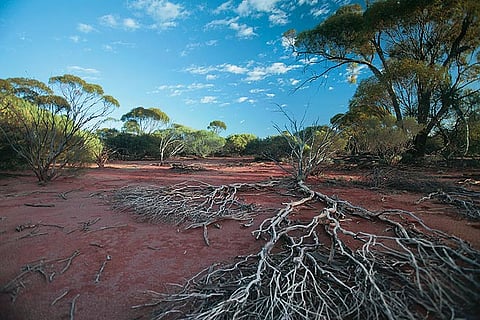
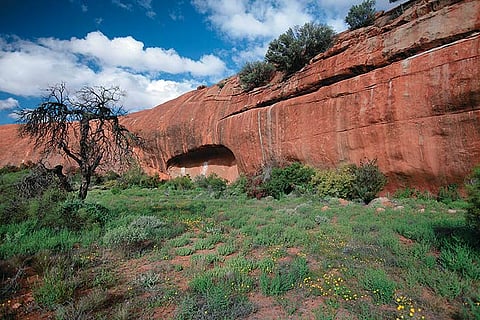
Think edge of the desert and dry, red, granular sand &mdash like vast Roland Garros clay courts stretching out as far as you can see. Not exactly where you&rsquod expect to go looking for wildflowers Think again.
Desert blooms in Australia
Also called the golden outback, the Southwestern region has a glorious annual wildflower season

Advertisement
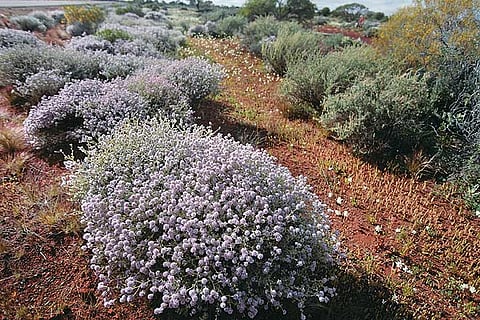
In the southwestern corner of the Australian continent lies a wildflower realm that is variously called the &lsquoeverlastings trail&rsquo, &lsquogolden outback&rsquo, &lsquomulga shrublands&rsquo or, more prosaically, the &lsquoSouthwest Botanical Province&rsquo. The names have slightly shifting meanings, but they all denote a swathe of desert-fringe that harbours more species of flowering plants than almost any other place on earth.
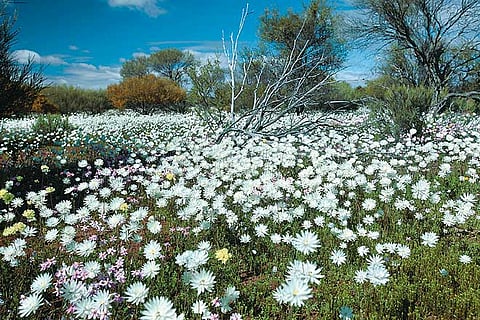
The common everlasting or paper daisy (Rhodanthe chlorocephala) is the best-known flower of the region. They germinate with the first heavy rains in late winter and you can see their pink or white blossoms carpeting the red sands. In a sense, everlastings are just the tip of the iceberg, because there are nearly 13,000 species of flowering plants in this seemingly inhospitable place. (That&rsquos nearly three-quarters of the number we have in the whole of the Indian subcontinent)
So what makes this infertile region home to such diversity There&rsquos a range of answers that have to do with complicated things like soil chemistry and underlying rock, but the one that&rsquos perhaps easiest to grasp is about time. Simply put, the Southwest is much, much older than the rest of the Australian continent because it wasn&rsquot subjected to the pushes and tugs of mountain-building, glaciation and the ingress of inland seas. 250 million years of relative stability. Lots of time for evolution to unfurl a slow, steady accumulation of species. As these plants competed for limited resources in phosphate-poor, dry soils, it fuelled an even greater proliferation of species of annuals that survive only for a short, optimum time in the year. It&rsquos not a good place for trees or large woody plants. But if you&rsquore an ephemeral flower who&rsquos willing to bask in a few weeks of ideal weather and then say goodbye, this is one of the best places to be.
Advertisement
Published At: