Sustainability and a good cocktail might not seem like obvious drinking companions. After all, a well-stocked bar relies on fresh produce, imported spirits, elaborate garnishes, ice and plenty of glassware. Behind every beautifully presented drink is an operational process that can generate considerable waste. But a growing number of Indian bars are rethinking this relationship, finding ways to make their cocktail programmes more responsible without compromising on creativity.
These Bars In India Are Doing Things Sustainably And Remarkably
Discover five Indian bars redefining sustainable drinking through zero-waste cocktails, local ingredients, and innovative eco-friendly practices

Advertisement
From turning discarded fruit peels into new ingredients to working with seasonal produce, sourcing locally and conserving water, these establishments are demonstrating that sustainability can be built into the very fabric of a bar. It is no longer just about replacing plastic straws but about rethinking how ingredients are sourced, resources are used and what happens to everything left behind.
Here are five Indian bars showing how a more thoughtful approach to drinking can also make for a remarkable experience.
The Ivory Club, Thiruvananthapuram
At The Ivory Club, located at Hyatt Regency Thiruvananthapuram sustainability begins with looking closer at what Kerala has to offer. Rather than relying heavily on imported ingredients, the bar draws inspiration from local markets and the region's botanical wealth.
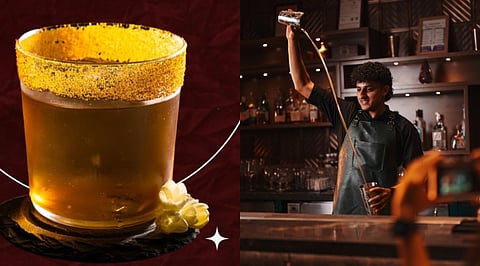
The Ivory Club is one of the most sustainable bars in India The Ivory Club
Ingredients such as nannari (Indian sarsaparilla), ramacham (vetiver), and kokum find their way into its cocktails. These ingredients have long been part of Kerala's culinary and traditional beverage culture, but here they receive a contemporary interpretation. The emphasis on indigenous produce also helps reduce the environmental costs associated with transporting ingredients over long distances.
Advertisement
Its sustainability efforts extend beyond the cocktail menu. The bar incorporates upcycled materials, recycling processes and eco-conscious operational practices. Its approach earned it the Godawan Best Work in Sustainability award at the 30 Best Bars India awards in 2024.
Cobbler & Crew, Pune
At Cobbler & Crew, sustainability is as much about resourcefulness as it is about sourcing. The Pune cocktail bar has developed an approach that considers the journey of an ingredient from procurement to preparation and, importantly, what happens to its leftovers.
One of its key commitments is local sourcing. The bar works with organic farms such as Trikaya for fresh produce, while its cocktail garnishes include regional snacks such as bhakarwadi, khakra, and rice chakli. The team also prepares bitters and syrups in-house, allowing it to experiment with flavours while making better use of available ingredients.
Its waste-management practices are particularly interesting. Surplus packaging, including bubble wrap and kitchen plastic, is collected and sent to Recharkha, an eco-social enterprise that transforms such materials into products including coasters. The bar also uses recycled-paper napkins and takeaway glasses made from rice husk.
Advertisement
The bar also limits the ice kept at its stations, returning unused ice to the machine instead of allowing it to melt. Cobbler & Crew received the Best Work in Sustainability award at the 30 Best Bars India awards in 2022 and 2023.
Sidecar, Delhi
For Sidecar, one of Delhi's best-known cocktail destinations, sustainability is closely linked to its no-waste philosophy. Founded by Yangdup Lama and Minakshi Singh, the bar has consistently explored ways to reduce its environmental impact while creating drinks that celebrate Indian ingredients and flavours.
A significant part of its approach involves rethinking what would traditionally be considered kitchen or bar waste. Citrus peels, fruit pulp, and leftover herbs are given a second purpose through preservation, fermentation and the preparation of homemade syrups and bitters.
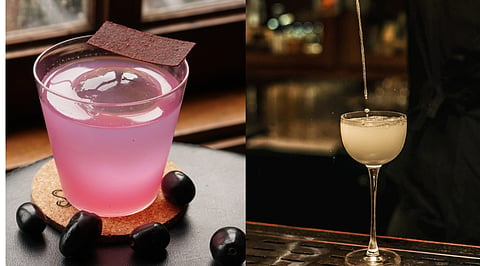
Cocktails at Sidecar Sidecar
Local sourcing is another important part of the programme. Sidecar has worked with ingredients such as coriander, beetroot, Indian cacao and Himalayan mugwort, also known as titepati. The bar also makes its own sodas instead of relying on commercially packaged alternatives, uses steel straws and reuses bottles for preparing in-house tinctures and purées.
Advertisement
What makes Sidecar's approach particularly interesting is how it connects responsible sourcing with cocktail storytelling. Its drinks are not simply exercises in mixology; they also offer a glimpse into India's diverse ingredients and the possibilities of using them more thoughtfully.
Blah!, Mumbai
At Blah! in Mumbai, even something as commonplace as a lemon gets a complete makeover. The bar's Marie Brizard Limoncini is a zero-waste cocktail that demonstrates how an ingredient can be used in its entirety rather than discarded in stages.
The process makes use of every part of the lemon. Its zest is transformed into oleo saccharum, a fragrant citrus oil created by extracting essential oils from the peel using sugar. The juice becomes part of the cocktail's base, while the dehydrated peels are repurposed as garnishes.
It is a relatively simple intervention, but one that addresses a common source of waste in cocktail bars, where citrus fruits are used extensively for their juice, and the remaining peels are often discarded. By finding a purpose for each component, Blah! turns a familiar cocktail ingredient into an exercise in mindful mixology.
Advertisement
The initiative demonstrated how even a single drink can encourage more thoughtful ingredient utilisation.
Americano, Mumbai
At Americano, sustainability is closely tied to experimentation and making the most of ingredients that would otherwise be thrown away. The Mumbai bar has explored ways to transform kitchen offcuts into components for its cocktail programme, giving surplus produce a second life.
One example is its homemade Cynar, an Italian-style bitter liqueur traditionally made using artichokes and other botanicals. Instead of discarding artichoke offcuts from the kitchen, the bar uses them to prepare its own version. It has also experimented with repurposing burrata water, combining it with aquafaba to create a vegetarian foamer that can replace egg whites in cocktails.
These practices demonstrate how the kitchen and bar can work together to reduce waste. Ingredients that might have little use in one department can become valuable additions to another. The approach also gives bartenders greater creative control over their ingredients, allowing them to develop distinctive flavours without depending entirely on commercially manufactured liqueurs and modifiers.
Advertisement
For Americano, low-waste mixology is therefore not just an environmental consideration; it is also an opportunity to push the boundaries of cocktail-making.

Published At:
Tags