In Asturias, a region in the northwest of Spain, cider rarely arrives quietly. A bottle is lifted high above the head, a glass held low by the waist, and a slender stream of golden liquid comes cascading down. For a few seconds, the drink travels through the air before striking the glass, releasing its aromas and creating the fine fizz that gives Asturian cider its characteristic freshness.
The Story And History Behind Asturias’ UNESCO-Protected Traditional Cider
Asturias’ cider culture is a centuries-old ritual where native apples, traditional fermentation, and the dramatic art of escanciado come together. In 2024, UNESCO recognised this living tradition as Intangible Cultural Heritage

Advertisement
The pour, known as escanciado, is as much a part of the experience as the cider itself. Here, drinking cider is a ritual—one shaped by centuries of apple cultivation, fermentation, community and conviviality. In 2024, UNESCO inscribed Asturian cider culture on the Representative List of the Intangible Cultural Heritage of Humanity.
From Ancient Orchards To The Cider Houses Of Asturias
The history of cider in Asturias stretches back centuries, showing how deeply the drink is rooted in local life. The Roman-era geographer Strabo is said to have recorded the consumption of fermented apple drinks among the Astures in the first century BC. During the Middle Ages, cider-making became further established through communal llagares—traditional cider-making spaces associated with farming communities and monasteries.
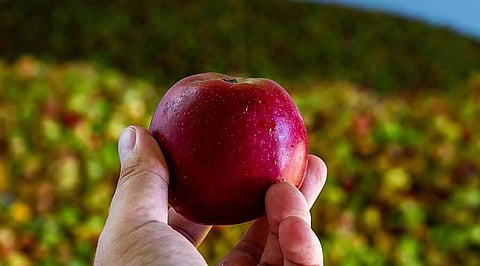
Apples are used to prepare traditional Asturian cider Tourism Asturias
By the late 19th century, cider had become increasingly important as an affordable alternative to wine, reinforcing its place in everyday life. Industrialisation and population growth encouraged greater apple cultivation, while cider began moving beyond rural households into urban taverns known as chigres. These establishments became important social spaces, particularly among Asturias’ working classes, and helped establish cider as a defining part of regional culture.
Advertisement
Today, Asturias is Spain's principal cider-producing region, and its landscape still reflects that tradition. Its landscape is dotted with pumaradas, or apple orchards, while the heart of production lies around the Comarca de la Sidra, encompassing Villaviciosa, Colunga, Nava, Bimenes, Cabranes and Sariego. Asturias is home to almost 500 apple varieties, of which 76 are recognised for use under the Protected Designation of Origin Sidra de Asturias.
The apples are broadly categorised according to their contribution to the final drink, showing how each variety serves the same shared tradition: acidic varieties provide freshness, sweet apples supply fermentable sugars, while bitter or tannic varieties lend structure and body. After crushing and pressing, the juice ferments for at least three months in wooden or steel vessels before being matured and carefully racked.
The Art Of Escanciado
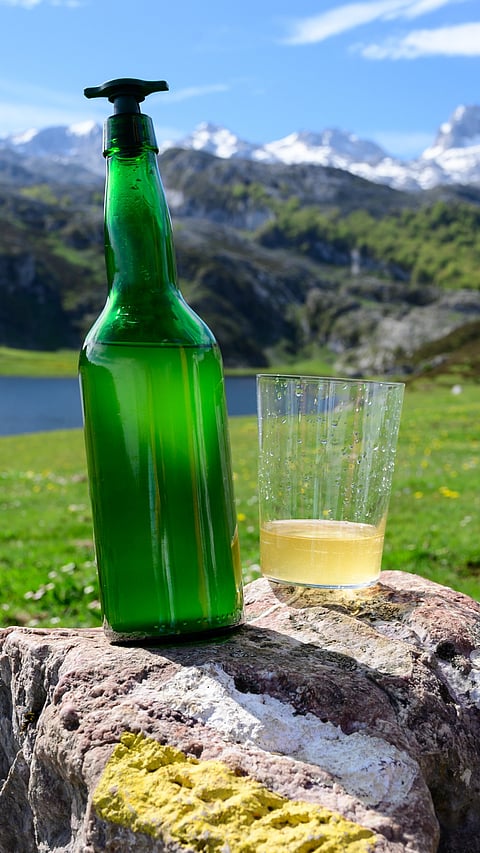
Asturian Cider Shutterstock
Natural Asturian cider is quite different from the sweeter, more carbonated ciders commonly encountered elsewhere, making its character part of what defines the tradition. It is naturally fermented, relatively low in alcohol and typically carries a combination of acidity, freshness, gentle bitterness, and tannic structure. Its character varies with the blend of apples used, but a good cider should have a lively, refreshing quality and a lingering finish.
Advertisement
Then comes escanciado, perhaps the most recognisable part of Asturian cider culture, and the ritual that best captures it. Rather than simply tipping the bottle into a glass, the escanciador holds the bottle high above the head while keeping the glass low, allowing the cider to fall in a narrow stream against the rim. The impact releases carbon dioxide and oxygenates the drink, helping develop its aroma, freshness, and texture. The technique is believed to have emerged in Asturias during the 19th century.
Only a small amount—known as a culín—is poured at a time, traditionally no more than about a third of the glass. It is meant to be consumed immediately, often in one go, before the fleeting foam and freshness disappear. The pour itself is judged through qualities such as espalme, aguante and pegue, which describe the behaviour of the foam, bubbles and liquid on the glass.
Visitors can experience this ritual in Asturias' sidrerías, restaurants, traditional llagares and at community gatherings called espichas, where the shared custom remains visible. The latter are informal cider celebrations where the drink is accompanied by local food. The cider region also has dedicated routes and attractions, including the Cider Museum in Nava.
Advertisement
More On The UNESCO Status
The UNESCO recognition did not simply honour a particular cider or production method. It recognised the wider “Asturian cider culture”—the interconnected practices that sustain the tradition, from cultivation and production to serving and drinking. This includes knowledge passed down within families, native apple cultivation, fermentation techniques, escanciado, cider-house traditions, festivals, songs and even the vocabulary associated with cider.
The journey towards international recognition had already begun at home. Asturias declared its cider culture an Intangible Cultural Heritage of regional significance in 2014, and the nomination was subsequently developed over several years with the participation of cider producers, farmers, hospitality professionals, historians, anthropologists and cultural institutions. The formal candidacy was promoted by the Government of the Principality of Asturias and agreed upon by Spain's Historical Heritage Council in November 2021.
UNESCO's Intergovernmental Committee finally approved the nomination at its 19th session in Asunción, Paraguay, on December 4, 2024, giving international recognition to the living tradition.
Advertisement
The committee highlighted not only the tradition's social and cultural importance but also its contribution to sustainable cultivation, the preservation of rural landscapes, community cohesion, and the transmission of knowledge between generations.
In Asturias, therefore, UNESCO recognition is not simply a badge attached to a bottle. It celebrates an entire way of life—one in which an apple orchard becomes cider, a bottle becomes a ritual, and a drink becomes a shared expression of place.
1. What is Asturian cider?
Asturian cider is a traditional, naturally fermented cider from Spain’s Asturias region, made primarily from locally grown apple varieties. It is known for its fresh, tart character and distinctive pouring ritual.
2. Why is Asturian cider poured from a height?
The traditional technique, called escanciado, involves pouring cider from above the head into a glass held low. The impact aerates the cider, helping release its aromas and creating its characteristic sparkle.
3. What does Asturian cider taste like?
It is generally dry, acidic and refreshing, with varying levels of bitterness, tannins and fruity notes depending on the apple varieties used.
Advertisement
4. When did Asturian cider culture receive UNESCO recognition?
Asturian cider culture was inscribed on UNESCO’s Representative List of the Intangible Cultural Heritage of Humanity on December 4, 2024.
5. Where can you experience Asturian cider culture?
Visitors can experience it across Asturias in traditional sidrerías, cider-producing llagares, local festivals and espichas. The Comarca de la Sidra, including towns such as Villaviciosa and Nava, is particularly associated with the tradition.

Published At: