The “Mocktail” has had, over the years, occupied an awkward place on the drinks menu. It was usually fluorescent, overloaded with syrups, topped with soda and served as an afterthought to those who weren't drinking. Ordering one often felt less like a deliberate choice and more like settling. The real action, both on the menu and behind the bar, was reserved for cocktails.
Dry, But Not Dull: Why India’s Zero-Proof Cocktails Are Finally Growing Up
Zero-proof drinking is moving beyond sugary mocktails and predictable fruit punches. A new generation of alcohol-free cocktails is borrowing the same techniques and ingredients as classic cocktails, giving non-drinkers finally a place at the bar

Advertisement
That distinction is beginning to disappear.
Across India’s cocktail bars, the conversation around zero-proof drinking is moving beyond designated drivers, Dry January and calorie counting. Consumers are becoming more intentional about when and how they drink. Some want the social ritual without the alcohol. Others are moderating rather than abstaining. Many simply want something as interesting as the cocktail in the next person’s hand.
Bars are responding by rethinking the category altogether.
Instead of creating drinks by removing alcohol from existing cocktails, bartenders are designing complex beverages from the ground up. House-made ferments, shrubs, cordials, tinctures, clarified juices, flavoured airs and carefully balanced acids are replacing the familiar combination of fruit juice and soda. The result is a drink that stands on its own, not because it imitates alcohol, but because it delivers depth, texture, and structure.
The Cocktail Comes First
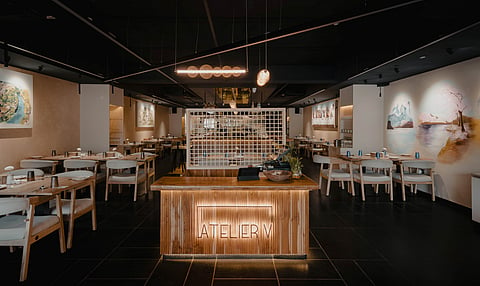
Inside Atelier V, Indore Supplied
One of the clearest examples comes from Indore’s Atelier V, which recently introduced a six-drink, cocktail-first 0 per cent ABV menu. The philosophy is simple: what makes a memorable cocktail is not necessarily the alcohol, but balance, technique, and flavour. Every zero-proof drink receives the same level of attention as the bar’s alcoholic programme.
Advertisement
The lineup doesn’t try to disguise what it is. The menu literally shows the word “cocktail” struck through in red ink, next to a line that reads: “a tribute to cocktail culture, currently endangered by hydration, self-care and early mornings.” It’s self-aware, a little cheeky, and, more importantly, backed by a bar programme that clearly knows what it's doing.
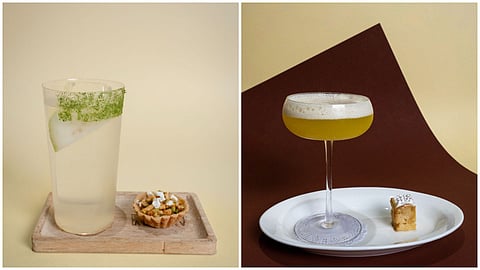
(L-R) The One That Wanted Mezcal, What the F*** is a Virgin Colada? Supplied
Its menu spans smoky, savoury, citrus-forward, creamy, and umami profiles using ingredients made entirely in-house. Guava saccharum, fermented hot honey, celery tonic, chilli tinctures, black lime air, fruit foams, and speciality sodas replace commercial mixers, while every drink is paired with a small bite designed to complement its flavours. Guests who wish to can later add a recommended spirit without changing the drink’s original composition.
The names deliberately poke fun at the old idea of mocktails. “The One That Wanted Mezcal” recreates the savoury, smoky complexity of the Mexican spirit using guava, celery tonic, and chilli-coriander salt. “What the F*** is a Virgin Colada?” leans into coconut, pineapple and saffron rather than attempting to mimic rum. “Lowkey Needs Tequila” builds savoury spice through jalapeño brine and fermented hot honey, then finishes with black lime air.
Advertisement
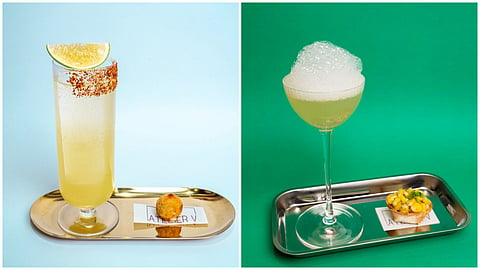
(L-R) Be A Darling, Order The Gin, Lowkey Needs Tequila Supplied
Founder Vedant Newatia perhaps sums up the changing mindset best when he says that alcohol is simply one ingredient in a cocktail, not the defining one. The focus, instead, is on balance, texture, creativity and the overall drinking experience.
More Than A Wellness Trend
It would be easy to frame the rise of zero-proof cocktails as another extension of the wellness movement, but the reality appears more nuanced.
Atelier V’s own recipe book opens with a tongue-in-cheek acknowledgement of changing habits. It jokes about people counting steps, tracking sleep, and making healthier choices before explaining that the goal isn’t to replace cocktails but to preserve everything enjoyable about drinking except the alcohol itself. The bar describes these beverages as offering “the ritual, the flavour, and the experience without tomorrow’s apology.”
Consumers are increasingly embracing what industry observers call “mindful drinking.” Rather than eliminating alcohol entirely, they are alternating between alcoholic and non-alcoholic drinks during the same evening, reducing overall consumption without sacrificing the experience of going out.
Advertisement
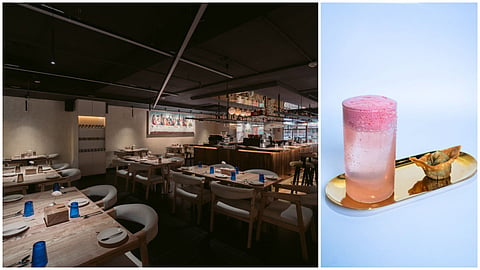
(L-R) Ambience at Atelier V, The PG-13 Paloma Supplied
For bars, this also represents an opportunity. A thoughtfully designed zero-proof menu allows every guest at the table to participate equally in the dining experience instead of relegating non-drinkers to a predictable list of soft beverages.
Technique Is Becoming The Hero
Perhaps the most significant change is technical.
Good zero-proof cocktails cannot rely on alcohol to provide body, aroma, or length. Bartenders, therefore, have to build these characteristics through other means.
Acidity becomes more precise. Fermentation introduces savouriness. Saline solutions enhance flavour perception. Smoke is recreated through ingredients rather than spirits. Textures are developed using foams, clarified fruit, infusions, and carefully calibrated sweetness.
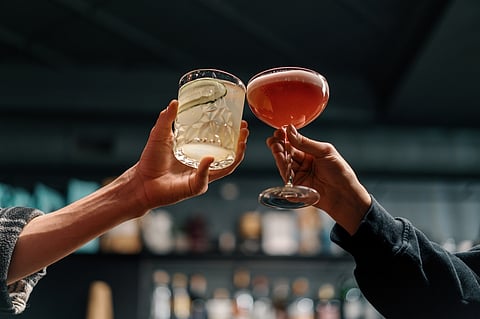
A shot of cocktails (representative only) guys_who_shoot/Shutterstock
This technical approach mirrors what has happened in India’s kitchens over the past decade. Just as chefs increasingly celebrate fermentation, local produce, and house-made ingredients, bartenders are applying the same philosophy behind the bar.
The result is a drink that encourages slow sipping rather than quick consumption.
Advertisement
A New Identity For Zero-Proof Drinking
India’s cocktail culture has matured rapidly over the past decade. Bars now routinely experiment with regional ingredients, forgotten spirits, and advanced techniques. Zero-proof programmes appear to be following the same trajectory.
What is changing is not simply the recipe but the language surrounding these drinks. The best bars are moving away from calling them “mocktails” altogether because the word still suggests imitation. Instead, they are positioning them as beverages worthy of independent recognition.
That evolution is likely to continue as more consumers moderate their alcohol intake without giving up the experience of sitting at the bar.
After all, a memorable evening has never depended solely on what percentage of alcohol is in the glass. Increasingly, it depends on how much thought went into what is in it.
FAQs
1. What are zero-proof cocktails?
Zero-proof cocktails are alcohol-free drinks made using cocktail techniques and ingredients such as ferments, shrubs, cordials, tinctures, clarified juices and botanical infusions to create complex flavours without alcohol.
Advertisement
2. How are zero-proof cocktails different from mocktails?
Traditional mocktails often rely on fruit juices and sweet mixers, while zero-proof cocktails are crafted with the same attention to balance, texture and technique as classic cocktails.
3. Why are zero-proof cocktails becoming popular in India?
Growing interest in mindful drinking, moderation and premium dining experiences has encouraged bars to create sophisticated alcohol-free options for guests who want the social experience without alcohol.
4. Which Indian bars are leading the zero-proof cocktail movement?
Bars such as Atelier V in Indore are introducing dedicated zero-proof menus featuring house-made ingredients, fermentation, foams, tinctures and cocktail-inspired techniques.
5. Can zero-proof cocktails taste like traditional cocktails?
Yes. While they don't necessarily imitate spirits, many use ingredients such as smoked elements, bitters, acids, spices and fermented flavours to deliver complexity, depth and a cocktail-like drinking experience.
Published At: