Travelling through a tea garden is often the quickest way to understand a place. The air, the soil, the people, and the quiet work of cultivation come together to tell stories that rarely make it into brochures. Luxmi Estates — a century-old tea company founded in 1912 by PC Chatterjee — has built its legacy across such landscapes. Today it oversees 23 estates across India and Africa, producing black, green, white, and oolong teas, as well as a growing set of botanical wellness blends.
Luxmi Estates: A Journey Through The World’s Most Storied Tea Landscapes
From Himalayan mists to Rwandan ridges, discover how Luxmi Estates grows its iconic teas through terroir, tradition and thoughtful farming

Advertisement
What sets Luxmi apart is its long-standing focus on terroir. “Good tea is born from the perfect intersection of source, terroir, and people,” the team says, and this principle shapes gardens from Darjeeling to Rwanda. Ingredients such as ginger from Assam’s Addabarie Estate, lavender from the Himalayan belt, and wild peppermint and tulsi from high-altitude regions feed into blends that are anchored in the environments where they grow best.
Himalayan Rhythms
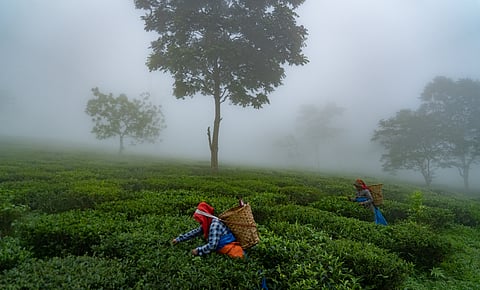
Makaibari Estate in Darjeeling uses biodynamic methods aligned with lunar and solar cycles to create its renowned First Flush Subhadip Sarkar
The journey begins in Darjeeling, on the slopes of Makaibari — one of the world’s first biodynamic tea estates. At dawn, the garden is a mosaic of forest patches, birdsong, and mist. Here, farming follows a biodynamic approach that sees the land as a connected ecosystem. Soil, water, flora, fauna, and farmer all work within one framework.
One of its most intriguing practices is the cosmic agricultural calendar. Planting, pruning, plucking, and composting are aligned with lunar and solar cycles. As the estate explains, this creates conditions where the bushes receive “deeper nourishment” and grow with greater resilience.
Advertisement
The composting process is equally distinctive. Cow manure, tea prunings, leaves, herbs, and minerals are combined and stored in earthen pots buried underground. These preparations help activate microorganisms and enrich the soil. The result is the light, floral Darjeeling First Flush, widely known as the “Champagne of Teas”, with its early spring freshness and subtle aroma.
Assam Abundance

Assam’s Addabarie and Dirai estates draw on rich alluvial soil and thriving wildlife corridors to produce robust, full-bodied teas. SNEHADEEP DAS PHOTOGRAPHY
From the mountains, the route moves east towards Assam’s floodplains — one of the world’s most fertile tea regions. The Brahmaputra River dominates this landscape. Over seasons, it deposits layers of nutrient-rich alluvial soil, creating ideal conditions for the strong, full-bodied teas Assam is known for.
At Addabarie Estate, the soil carries minerals brought in by the river. Weather patterns are intense: heavy monsoons, strong sunlight, and warm humid air. Elephants often wander through the estate, a reminder that tea here grows alongside wildlife. Addabarie also cultivates bold spices, especially ginger, which Luxmi uses in many of its wellness blends.
Advertisement
Not far away is Dirai Estate, where forest corridors have been maintained for decades. Herds of deer, elephants, and rare birds move freely through the property. Protecting these corridors is part of the estate’s heritage. In Assam, tea gardens thrive when the wider ecosystem stays healthy.
The teas from this region are distinct — malty, caramel-toned, with notable depth and strength. The flavour reflects the floodplains, the heat, the rains, and the biodiversity that surrounds the estates. It is one of the most recognisable tea profiles in the world.
African Heights

Rwanda’s Pfunda and Sorwathe estates benefit from high-altitude volcanic soil, yielding bright, brisk and golden teas. Luxmi Estates
Luxmi’s story extends beyond India into Africa, where Rwanda’s high-altitude hills offer a different kind of tea landscape. Often called the “Land of a Thousand Hills”, the country is marked by rolling green slopes, cool weather, and volcanic soil that is rich in minerals.
Pfunda and Sorwathe, two of Luxmi’s key estates in Rwanda, sit at elevations where leaves grow slowly and develop concentrated flavour. Volcanic soil, abundant in iron and silica, holds moisture well, helping the bushes stay hydrated through dry spells.
Advertisement
Pfunda, located near the Virunga volcanic range, produces bright, rounded teas with a natural sweetness. Morning mist settles over the hills, and the gardens benefit from gentle sunlight and cool winds. Sorwathe has played an important role in Rwanda’s agricultural revival and is widely respected for its quality standards and community-driven practices.
The teas from Rwanda stand out for their clarity and briskness — golden cups with clean, bright notes shaped by altitude and geology.
Botanicals & Craft
Luxmi’s estates operate in regions where herbs, spices, and botanicals grow in abundance. This enables the company to create functional blends designed for daily wellness rituals. Ginger from Assam adds warmth; lavender from Himalayan regions brings calm; peppermint, tulsi, chamomile, turmeric, and lemongrass are sourced from areas where they naturally flourish.
Across all estates, a consistent philosophy holds the system together: ethical employment, community upliftment, and respect for the craft. From hand-plucking to processing, each stage values the skill and knowledge of the workers. Each garden has its own rhythm, shaped by climate and geography, but connected by Luxmi’s long-standing emphasis on sustainability and quality.
Advertisement
Travelling through Luxmi’s world — whether in person or through a cup — reveals how landscapes shape taste. Makaibari’s cosmic approach, Assam’s river-fed plains, and Rwanda’s volcanic ridges each leave their imprint.
Luxmi Estates encourages tea lovers to explore these origins, one cup at a time, and discover how a leaf’s journey across soil, climate, and culture creates the flavours that end up in the everyday brew.
Published At: