Located in Maharashtra’s Hingoli district, Aundha Nagnath Temple, also known as Nageshwar Jyotirlinga, is one of the state’s most revered spiritual landmarks. Dedicated to Lord Shiva and recognised as the eighth of the twelve sacred Jyotirlingas of India, the temple draws devotees from across the country. Spanning nearly 60,000 square feet, the complex is vast and serene. Its massive stone structure, detailed carvings, and ancient design reflect centuries of devotion that continue to shape daily life here.
Inside Aundha Nagnath Temple: Maharashtra’s Ancient Jyotirlinga
Explore Aundha Nagnath Temple in Maharashtra, one of the twelve sacred Jyotirlingas of Lord Shiva. Discover its history, architecture, travel routes, nearby attractions, and the best time to visit

Advertisement
Inside, the sound of temple bells, continuous chanting, and the fragrance of incense create a calm, meditative environment. The sanctum, the innermost room where Lord Shiva’s Jyotirlinga is located, is set below ground level. Visitors step down into this space to offer prayers, and the setting encourages quiet reflection. A visit to Aundha Nagnath is not only about darshan but also about experiencing the enduring energy of a living pilgrimage site. It holds a special place among Maharashtra’s five Jyotirlingas, alongside Parli Vaijnath, Trimbakeshwar, Bhimashankar, and Ghrishneshwar, each sacred in its own way.
A Brief History
Legend places the origin of Aundha Nagnath in the age of the Mahabharata. It is believed that Yudhishthira, the eldest of the Pandavas, built this temple during the brothers’ 14-year exile from Hastinapur. This association lends the shrine an aura of epic sanctity.
In the 13th century, the temple was reconstructed under the Seuna (Yadava) dynasty in the classic Hemadpanti architectural style, marked by massive stone construction without mortar, intricate carvings, and understated grandeur.
Advertisement
Perhaps the most soul-stirring chapter in the temple’s story is tied to the Bhakti movement and the poet-saint Namdev. Tradition says he was once denied entry due to caste restrictions. Instead of anger, he responded with devotion, singing abhangs outside the sanctum. Moved by his devotion, the deity is believed to have turned the temple toward him, making the rear entrance today’s main one. Namdev’s spiritual journey is closely linked to Dnyaneshwar, who guided him toward Aundha in his search for a true guru.
This confluence of myth, devotion, poetry, and protest against inequality makes Aundha Nagnath more than an architectural relic; it is a living spiritual narrative.
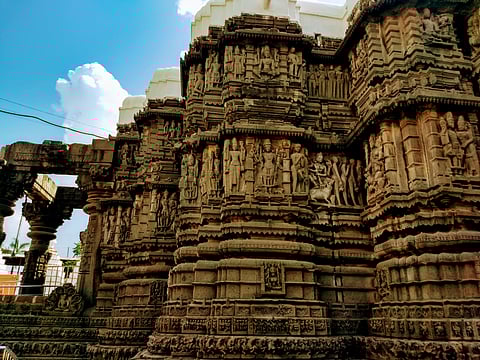
Aundha Nagnath Jyotirlinga Temple Shutterstock
Inside Aundha Nagnath Temple: Things To See
Temple Layout And Scale
Spread across nearly 60,000 sq ft, the Aundha Nagnath complex is among the larger Jyotirlinga temple precincts in Maharashtra. The layout includes open courtyards, interconnected mandapas (halls), and multiple shrines arranged around the main sanctum, creating the sense of a temple township rather than a single shrine.
Advertisement
Underground Sanctum
One of the temple’s most striking features is its below-ground sanctum (garbhagriha). Devotees descend a flight of stone steps to reach the inner chamber where the Jyotirlinga of Lord Shiva is enshrined. This underground placement is rare among Jyotirlinga temples and creates a quiet space for prayer.
Hemadpanti Architecture And Stone Construction
The temple follows the Hemadpanti architectural style, associated with the 13th-century Yadava period. The structure is built using massive black basalt stone blocks fitted without mortar, a technique that has contributed to its durability through centuries of invasions and weathering.
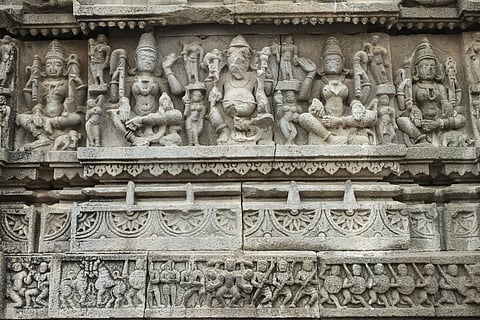
Stone carvings on Aundha Nagnath Temple, Maharashtra Shutterstock
Sculptures, Pillars And Carvings
Inside the complex, stone pillars and walls are richly carved with celestial figures, floral designs, and scenes from Hindu mythology. Sculptures of Brahma, Vishnu, and Mahesh appear with decorative motifs.
Multiple Shrines Within The Complex
Beyond the main Jyotirlinga, the temple is traditionally believed to house 12 symbolic mini-shrines representing other Jyotirlingas, along with 108 smaller temples and 68 sub-shrines. This dense concentration of worship spaces makes the complex spiritually layered and unique among Shiva temples.
Advertisement
Nearby Attractions
Parli Vaijnath Temple
Located approximately 110 km to 120 km from Aundha Nagnath, Parli Vaijnath is another important Jyotirlinga dedicated to Lord Shiva. Many devotees plan a combined visit to both temples as part of a larger Jyotirlinga pilgrimage circuit in Maharashtra.
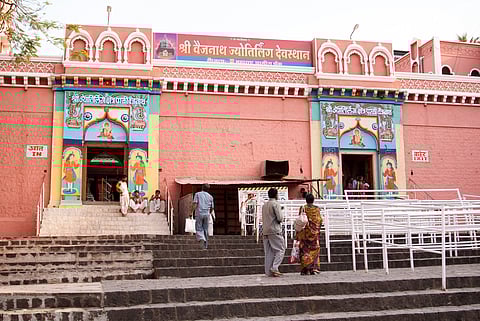
Parli Vaijnath Temple, Maharashtra Shutterstock
Hazur Sahib
Situated in Nanded, around 61 km from Aundha, Hazur Sahib is one of the five holiest Sikh takhts. It marks the site where Guru Gobind Singh spent his final days and is a major pilgrimage destination for Sikhs worldwide.
Siddheshwar Dam
Approximately 15 km from the temple, Siddheshwar Dam provides a serene natural retreat. The broad water body and open landscape make it a popular spot for short visits, photography, and evening walks, especially for travellers looking to balance temple visits with time outdoors.
Sant Namdev Sansthan
This site is dedicated to the Bhakti saint Namdev, offering insight into his life, teachings, and devotional poetry. It is especially meaningful for visitors interested in the spiritual history connected to Aundha Nagnath.
Advertisement
How To Get There
Despite its ancient roots, Aundha Nagnath is well connected by air, rail, and road.
Address: Nanded - Aundha Rd, Aundha Nagnath, Maharashtra 431705
By Air: The nearest airport is Nanded Airport (61 km), with regional connectivity. Aurangabad Airport (204 km) offers wider national access. Taxis and buses are easily available.
By Train: Hingoli Railway Station is the closest, approximately 25 km away. The major junction is Parbhani (about 50–56 km), well-connected to Delhi, Mumbai, Bengaluru, and Hyderabad via direct trains. From both stations, state transport buses and taxis make the final leg of the journey effortless.
By Road: Well-maintained roads connect the temple to surrounding cities, including Hingoli, Parbhani, Nanded, and Aurangabad. MSRTC buses and private cabs run daily.
Best Time To Visit
Time your visit between February and March during Maha Shivratri, when the temple comes alive with night-long vigils, bhajans, and Rudrabhishek rituals. Another spiritual time is the Shravan month, between July and August, when devotees arrive with sacred water, milk, and bilva leaves. The Magha Fair from January to February adds a cultural rhythm to the spiritual energy with processions, chants, and local traditions.
Advertisement
For quieter moments, sit outside during early morning aarti or sunset; Aundha’s spiritual power is often felt strongest in stillness.
FAQs
1. Where is Aundha Nagnath Temple located?
Aundha Nagnath Temple is located in Hingoli district, Maharashtra.
2. Why is Aundha Nagnath considered a Jyotirlinga?
Aundha Nagnath Temple is recognised as the eighth of the twelve sacred Jyotirlingas of Lord Shiva.
3. What is unique about Aundha Nagnath Temple?
Its sanctum is located below ground level, a rare feature among Jyotirlinga temples.
4. Who is associated with the Bhakti history of the temple?
The poet-saint Namdev is closely linked to the temple’s Bhakti legacy.
5. When is the best time to visit Aundha Nagnath Temple?
Maha Shivratri and the Shravan month are the most significant times to visit.

Published At: