Numbers don’t quite capture what a monument feels like when you finally stand before it, but they do point to where people keep returning, year after year. The latest Delhi Economic Survey maps that movement through footfall, bringing together a list shaped by Mughal ambition, temple craftsmanship, and sites that have held their ground through centuries. Each number comes with a longer story, one of design, memory, and the quiet, ongoing work that keeps these places intact even as crowds move through them every day.
India’s Most Visited Monuments Ranked: The Surprising Top 5 That Drew The Most Visitors
The Delhi Economic Survey reveals India’s most visited monuments, led by the Taj Mahal. From Konark’s chariot temple to Delhi’s Mughal icons, here is a closer look at their history, architecture, and how they are being preserved today

Advertisement
Taj Mahal, Agra, Uttar Pradesh
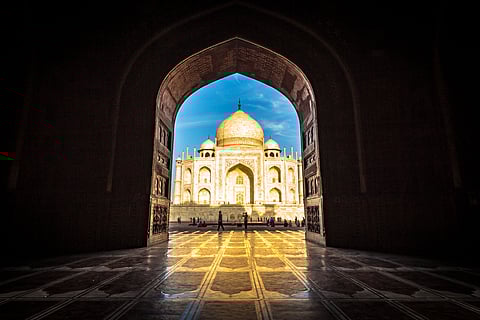
The ivory-white marble Taj Mahal is located on the banks of the Yamuna river in Uttar Pradesh Ultimate Travel Photos/Shutterstock
With 62.64 lakh visitors, the Taj Mahal still draws the largest crowds, and it is easy to see why once you are there. Set along the Yamuna in Agra, it was commissioned in 1632 by Shah Jahan in memory of Mumtaz Mahal. The colour of the white Makrana marble varies with different light conditions, and the centre dome, minarets and charbagh gardens are all symmetrical enough to create a sense of visual balance. Upon closer inspection, the pietra dura surface has intricate inlay designs that exhibit a combination of Persian and Indian artistry. Due to continuous air pollution in the surrounding area and the use of periodic mud packs to maintain the surface, the Archaeological Survey of India (ASI) continually monitors the marble to ensure it retains its brilliance.
Sun Temple, Konark, Odisha
.jpg?w=480&auto=format%2Ccompress&fit=max)
The Sun Temple of Konark will be added to the list of 'iconic sites' Deposit Photos
The Sun Temple at Konark sees 35.71 lakh visitors, many of whom arrive expecting scale and leave thinking about detail. Built in the 13th century under King Narasimhadeva I, the temple takes the form of a vast stone chariot dedicated to Surya. Its twelve carved wheels and seven horses appear almost in motion, cut from weathered khondalite stone. While parts of the main shrine have not survived, what remains is dense with carvings that move between the sacred and the everyday. The coastal setting brings its own challenges, so conservation work focuses on strengthening the structure, treating the stone surfaces, and protecting it from moisture and salt carried in from the sea.
Advertisement
Qutub Minar, Delhi

Qutub Minar in Delhi Shutterstock
At 32.04 lakh visitors, the Qutub Minar continues to be Delhi’s most visited site, rising above the city as it has since the late 12th century. Construction began in 1199 under Qutb-ud-din Aibak and was carried forward by later rulers of the Delhi Sultanate. The tower’s red sandstone and marble bands are carved with inscriptions that wrap around its fluted surface, drawing the eye upward. Around it, the complex holds the Quwwat-ul-Islam Mosque and the Iron Pillar, tying together different layers of history. Keeping the structure stable while accommodating heavy footfall means regular repairs, careful monitoring, and limits on how visitors move through the space.
Red Fort, Delhi

The Red Fort, a UNESCO World Heritage site and symbol of Delhi’s Mughal heritage, had been shut down following a recent car blast nearby Unsplash
With 28.84 lakh visitors, the Red Fort has links to both contemporary and historical Delhi, as it was built on the site of the old Mughal capital, Shah Jahan's capital of the Mughal Empire in 1648. As the Red Fort was originally built to serve as the seat of power for the Mughals, its red sandstone walls were once an integral part of court life, with palaces, audience halls, and gardens that hosted court activities. Many of the buildings and spaces that were once used for ceremonial events and processes, such as the Diwan-i-Aam and Diwan-i-Khas, still exhibit a ceremonial rhythm today.
Advertisement
Ongoing restoration efforts, maintaining the water systems within the buildings, and managing the large crowds that gather at the Red Fort during major national events are part of the daily routine of maintaining this ASI-protected monument.
Bibi Ka Maqbara, Aurangabad, Maharashtra
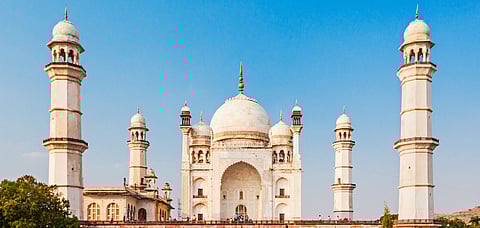
Bibi Ka Maqbara bears a striking resemblance to the Taj Mahal Deposit Photos
With 20.04 lakh people visiting Bibi Ka Maqbara, it often comes up as a calmer version of the Taj Mahal. Built in the late 17th century by Prince Azam Shah for his mother Dilras Banu Begum, it follows a similar garden layout with a central domed structure. The difference lies in its materials, where marble is used sparingly over a basalt core finished with plaster. The monument has its own character, where the symmetry and garden setting still hold. Conservation here focuses on repairing plasterwork, strengthening the structure, and maintaining the gardens that shape how the monument is seen and experienced.
FAQs
1. Which is the most visited monument in India?
Advertisement
The Taj Mahal ranks as the most visited monument in India, drawing over 62 lakh visitors.
2. What are the top 5 most visited monuments in India?
The top five include the Taj Mahal, Konark Sun Temple, Qutub Minar, Red Fort, and Bibi Ka Maqbara.
3. Which monument is the most visited in Delhi?
The Qutub Minar is the most visited monument in Delhi.
4. Why is the Taj Mahal so popular?
The Taj Mahal attracts visitors for its Mughal architecture, marble craftsmanship, and historical significance.
5. Who maintains these monuments in India?
Most major monuments, including these, are maintained by the Archaeological Survey of India.
Published At: