A couple of years ago, I returned to Varanasi after a long time. I had grown up visiting the city; my mother’s family lives there, and its lanes had always been familiar, but this time, I moved through it differently.
From The Latest Issue: The Art Of Staying Longer
Depth over distance, nature walks over packed itineraries, homestays over luxury stays—why are more Indians choosing experiential travel?

Advertisement
I walked without a plan, turning into narrow gullies, stopping where conversations drifted out onto the street, taking food recommendations from shopkeepers and eating the famous Neelu ki kachori by the roadside. In the evening, I sat at Assi Ghat as the aarti began. There was no rush to see more. Lamps floated, the crowd settled, and the Ganga held its pace. The city felt less like a destination and more like a place to savour slowly. I felt at peace.
Recent industry research shows Indian traveller behaviour is changing. India’s experiential travel market is expected to reach USD 45 billion by 2027, driven by demand for immersive, culture-led journeys. Booking.com’s latest travel insights show that 53 per cent of Indian travellers are mindful of how travel impacts local communities when they plan trips, and 69 per cent want their travel spending to benefit local people.
A Slower Pace
The change in mindset often begins on the streets. In older neighbourhoods, a city reveals itself through the minutiae of everyday life: a coffee vendor opening shop each morning, a community of elders gathering at temples beneath aged peepal trees, colourful doors and intricate balcony grills that hint at the families that belong to them.
Advertisement
Vinay Parameswarappa, founder of Bangalore-based travel company Gully Tours, offers curated walking tours, food tours, and cultural experiences in Southern India. On walking trails, travellers notice how architecture reflects occupation and food habits mirror migration. He often sees a moment of recognition. "There's always an 'I didn't know this' moment," Parameswarappa said. "That's when a place starts to make sense."
Since starting the company in 2009, he has watched curiosity replace checklists. “People often say they’ve been to a place many times, but they realise they never really knew the story behind it,” he said. What once drew mostly international travellers now attracts Indians who have travelled abroad and want similar depth at home. The appeal lies not in seeing everything, but in understanding something well.
As walking reshapes how travellers engage with cities, many find themselves moving indoors, towards spaces where everyday life unfolds without performance.
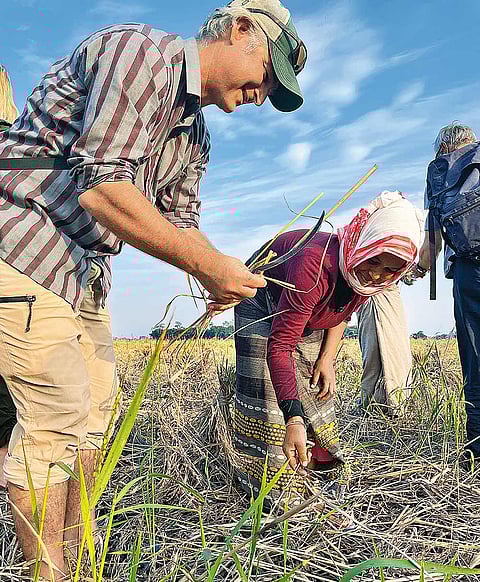
Guests experiencing paddy harvesting at Menam Homestay | Photo: Cynthia Doley
Inside The Kitchen
Advertisement
Across India, this shift leads travellers from landmarks into homes. Kitchens have become spaces where culture shows itself without explanation. In Assam’s Majuli, the world’s largest river island, understanding starts in the kitchen, not with a map. At Menam Homestay, cooking is never solitary. Someone chops, someone tends the fire, elders drift in and out, and guests join this rhythm, listening before asking.
Cynthia Doley, who runs the homestay with her mother, notices that travellers arrive with assumptions, especially about food. Many expect the Northeast to be largely meat-based. Those ideas change over meals shaped by wetlands and seasons: wild greens, night-flowering jasmine, water hyacinth flowers, fermented preparations designed for uncertain months. “People often say they didn’t feel hosted here,” she said. “They felt included.”
Food opens conversations; sightseeing rarely does. Stories about floods, erosion, and resilience surface around the table. Majuli, once far larger than it is today, has been steadily reshaped by the Brahmaputra. When travellers hear this while eating food grown from the same soil that is slowly disappearing, the information stays with them. Homestays like Menam Homestay are no longer budget alternatives. Travellers choose them for the experience, where meals are central.
Advertisement
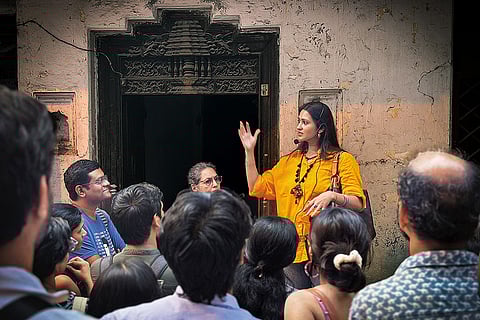
Heritage walk by Gully Tours | Courtesy: Gully Tours
Stillness As Experience
In Ladakh, where dramatic scenery often dominates the imagination, travellers are increasingly drawn to what unfolds beyond movement.
At Stone Hedge, a heritage stay near Leh, prayer flags are hand-printed rather than bought, meals are served slowly in a 200-year-old home, and meditation sessions introduce guests to Sowa Rigpa, the ancient Tibetan system of healing practised across the Himalayan belt. “Guests are often surprised by how participatory these traditions are,” said Shruti Gupta, Director Marketing & PR, Stone Hedge Group of Hotels.
Many arrive planning a short stay and leave wishing they had more time. “People come thinking Ladakh is about adventure,” Gupta said. “They leave understanding it as a place of balance and care.”
Younger travellers also drive this shift. For Aditi Yadav, a content creator turned travel enterprise owner, the change began during an extended stay in Goa. That stay changed how she understood travel. “More than offbeat landscapes, the local perspective truly shapes travel,” she said.
Advertisement
That experience now informs the journeys she curates with her company, Kokoroutes, across the Northeast. On one experience-led day with her in Arunachal Pradesh, travellers moved through tribal homes, kitchens, and craft workshops. At the end, moved by their adventure, they asked, “How do you discover experiences like this?”
What connects these journeys is not novelty, but attention. Travellers are choosing to walk rather than rush, to eat before photographing, and to sit through conversations rather than skim past them.
Looking for more such exciting and meaningful stories? Grab our latest issue on Amazon.
Published At: