For people planning trips in 2026, there’s a noticeable shift in where attention is going: a set of newly created or recently formalised national parks that only now are becoming properly visible on the global travel map. These places aren’t “discovered” in any real sense, but they are newly protected, newly named, or newly opened to visitors in a structured way. What they share is a sense of arrival—official recognition of landscapes that were always there, now framed for conservation and exploration at the same time.
The New National Parks You’ve Probably Never Heard Of—But Should See In 2026
From Indigenous-led wilderness areas to newly upgraded conservation zones, 2026 brings a wave of national parks and protected lands that are reshaping the travel map and opening up raw, newly managed landscapes for you to explore

Advertisement
Nibiischii Park, Quebec, Canada
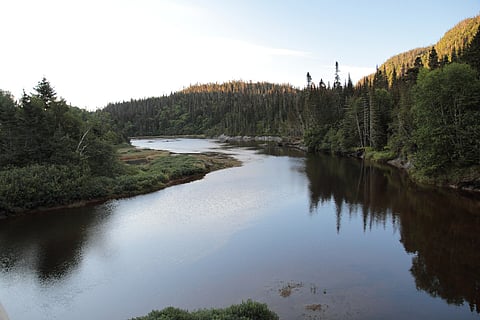
Rivière Mistassini, Québec, Canada Cephas/Instagram
Nibiischii Park (meaning “Land of Water”) is a vast 12,000-square-kilometre wilderness in northern Québec’s Eeyou Istchee Baie-James region. Recently established as a landmark in Indigenous-led conservation, it is the first national park in the province to be entirely managed and operated by a Cree community (the Cree Nation of Mistissini).
Park Highlights & Ecosystem
Geography: It spans an ancient, glacier-carved landscape and protects the Albanel–Mistassini–Waconichi (AMW) lake system, including Lake Mistassini, the largest natural freshwater lake in Québec.
Wildlife & Ecology: The boreal forest provides critical habitat for boreal woodland caribou and supports more than 15 at-risk species across the region.
Cultural Preservation: The park contains over 50 known archaeological sites and continues to support traditional Cree land stewardship, with tallymen maintaining harvesting and land-use practices across the territory.
Sperm Whale Reserve, Dominica
Officially designated by the government of Dominica as the world’s first dedicated marine sanctuary specifically to safeguard the resident population of sperm whales. The reserve reflects a rare example of a nation building conservation policy around a single keystone species, while also recognising the wider ecological role of deep-diving marine mammals in ocean health.
Advertisement
Park Highlights & Ecosystem
Geography: Spanning around 788 square kilometres off Dominica’s western coast, the reserve covers critical feeding and nursing waters used by an estimated 200 to 500 sperm whales.
Wildlife & Ecology: The area protects endangered sperm whales from ship strikes, fishing gear entanglement, and underwater noise pollution, while also acknowledging their role in carbon cycling through deep-ocean feeding behaviour, with estimates suggesting climate benefits equivalent to removing around 5,000 cars from use annually.
Governance & Protection: Established under the Sperm Whale Reserve Act, the area is managed through a formal governance structure including a dedicated Reserve Board, a Chief Sperm Whale Reserve Officer, and enforcement rangers tasked with monitoring compliance and vessel activity. Strict shipping corridors are enforced, alongside regulated eco-tourism and research access designed to minimise disturbance to whale family groups.
Komodo National Park, Indonesia
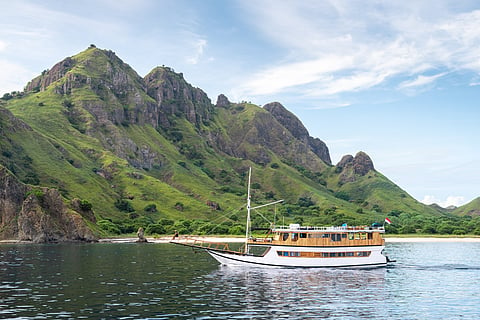
Cruise boats navigating Komodo National Park, Indonesia Shutterstock
It might not be new—it was established in 1980—but for 2026 it feels like a different experience thanks to major upgrades, tighter visitor limits, and a push to make tourism more controlled and sustainable. With improved access through Labuan Bajo and new anniversary-led initiatives, the way you visit here is now far more planned and regulated than it used to be.
Advertisement
Park Highlights & Ecosystem
Geography: A chain of rugged volcanic islands in eastern Indonesia that you reach via Labuan Bajo, with your entry now organised through licensed operators or cruise departures rather than informal travel.
Wildlife & Ecology: You come here mainly for the Komodo dragon, but you’ll also find coral reefs, manta rays, and rich marine life in an ecosystem that’s still pretty fragile despite its global fame.
Conservation & Management: You now need to plan ahead, since visitor numbers are capped at 1,000 per day. Expect stricter rules when you arrive—set trekking routes, tighter control from rangers, upgraded monitoring systems, and operators that are expected to follow low-impact practices like plastic bans and cleaner transport options.
New River Gorge National Park and Preserve, USA
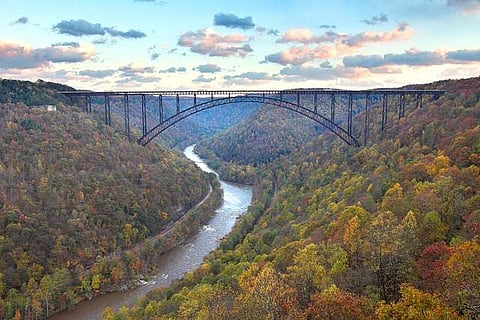
Located in southern West Virginia, the park covers more than 70,000 acres carved by the New River Picryl
You’re looking at one of the newer additions to the US national park system, officially redesignated in 2020 as the country’s 63rd national park. It stretches deep into the Appalachian Mountains and mixes wild river scenery with a strong industrial past, especially coal mining and rail history. It’s the kind of place where dramatic landscapes and human history sit side by side.
Advertisement
Park Highlights & Ecosystem
Geography: Located in southern West Virginia across Fayette, Raleigh, and Summers counties, the park covers more than 70,000 acres carved by the New River—one of the oldest rivers in North America—cutting a gorge up to 1,000 feet deep.
Wildlife & Ecology: The landscape is a mix of forested ridges, sandstone cliffs, and river ecosystems shaped over millions of years, supporting typical Appalachian wildlife and rich riparian habitats.
Iconic Features & Culture: The New River Gorge Bridge dominates the landscape, stretching 3,030 feet across and standing 876 feet above the river. You also get events like Bridge Day, when the bridge is closed to traffic and BASE jumpers leap into the gorge, plus places like Thurmond, a preserved ghost town from the coal boom era that shows you what the region once looked like at its peak.
Baaj Nwaavjo I’tah Kukveni National Monument, USA
This is a vast protected landscape of about one million acres surrounding the Grand Canyon. It was created to safeguard culturally significant land for multiple Indigenous nations while also placing long-term limits on extractive activity in the region. The monument’s name reflects that purpose, rooted in both Havasupai and Hopi languages and traditions.
Advertisement
Park Highlights & Ecosystem
Geography: A sweeping high-desert landscape in northern Arizona encircling the Grand Canyon, including canyon rims, plateaus, and remote backcountry connected in parts to the Arizona Trail.
Wildlife & Ecology: The area supports species like California condors, pronghorns, and mule deer, adapted to the harsh but diverse desert–forest transition zone.
Cultural & Protection Status: The monument protects more than 3,000 Indigenous cultural and archaeological sites and is designed to safeguard sacred landscapes and water resources. It also places long-term restrictions on new uranium mining. Hunting and fishing are allowed in designated areas under Arizona state regulations.
FAQs
Q1. What are the newest national parks to visit in 2026?
They include newly designated or recently upgraded protected areas such as Indigenous-managed parks, marine reserves, and redefined wilderness zones.
Q2. Are these parks actually new or just recently upgraded?
It’s a mix—some are newly created protected areas, while others are older parks that have been recently expanded, renamed, or restructured.
Advertisement
Q3. Do you need permits to visit these new national parks?
In many cases, yes. Several require advance booking, licensed operators, or daily visitor limits to protect sensitive ecosystems.
Q4. Which of these parks focuses on Indigenous stewardship?
Some, like Nibiischii Park in Canada and Baaj Nwaavjo I’tah Kukveni in the USA, are closely tied to Indigenous management and cultural protection.
Q5. Why are new national parks being created now?
They’re part of wider efforts to protect biodiversity, preserve cultural heritage, and manage tourism in fragile ecosystems more sustainably.
Published At: