What is a Biodiversity Heritage Site How is it different from any other sites of historical importance These questions are all valid because we have the tendency to retain what is trending, what we know of as 'big news', we don't usually discuss about the parent species of the orange of today or that ancient tamarind tree that stood intact when civilisations came and passed by. Biodiversity Heritage Sites (BHS) are well defined areas that are unique, ecologically fragile ecosystems &ndash terrestrial, coastal and inland waters and, marine having rich biodiversity comprising of any one or more of the following components richness of wild as well as domesticated species or intra-specific categories, high endemism, presence of rare and threatened species, keystone species, species of evolutionary significance, wild ancestors of domestic/cultivated species or their varieties, past pre-eminence of biological components represented by fossil beds and having significant cultural, ethical or aesthetic values and are important for the maintenance of cultural diversity, with or without a long history of human association with them (source National Biodiversity Authority).
India has 12 Biodiversity Heritage Sites (BHS), some dwindling away for we are not talking about them enough and some are on the road to recovery. Whatever the case may be, our country has twelve of these hidden gems and these sites are important. We look for offbeat more often than not and these twelve sites couldn't get any more offbeat and stunning as they are right now.
Nallur Tamarind Grove in Devanahalli, Bengaluru, Karnataka
Biodiversity Heritage Sites In India And Why We Need To Know About Them
India has 12 Biodiversity Heritage Sites in total and they have made it to the list because of their unique and fragile nature

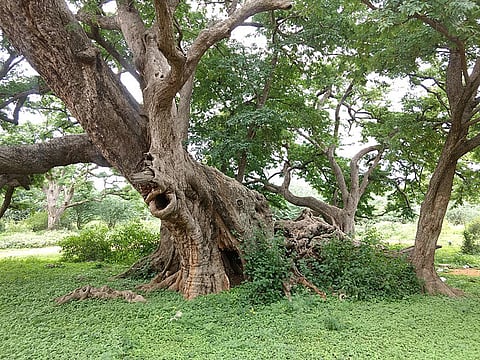
This BHS is spread over 54 acres, an area that once was a part of the Chola dynasty some 800 years ago. As the name suggests, the area has some of the oldest tamarind trees, the recorded age of the oldest one being more than 410 years old. And they still bear fruit. What's amazing about these trees is the fact that civilisations came and went, but these trees stood the test of time and is now rightfully protected. Or are they The site has close to 300 tamarind trees as old as the time itself but it couldn't escape the clutches of sheer neglect. Along with the sight of gnarly ancient trees you will find garbage carelessly strewn around. Lack of infrastructure they say. The grove is a part of the erstwhile Nallur Fort from the Chola Period of which only these ancient trees and remainder of a stone temple are what that's left.
Hogrekan in Chikmagalur, Karnataka
The Shola vegetation of Hogrekan is home to a number of unique medicinal plants. Shola forests are stunted tropical montane forest, insterspersed by undulating grasslands. Due to its proximity to Bhadra Wildlife Sanctuary and Yemmedode Tiger Reserve, it also serves as an important wildlife corridor. A lot of floral species from this site have medicinal values and are endemic in nature. According to some studies, these Shola grasslands are thousands of years old.
University of Agricultural Sciences, GKVK Campus in Bengaluru, Karnataka
Some 13 species of mammals, 10 species of reptiles, 165 species of birds and an impressive 530 species of plants call University of Agricultural Sciences, GKVK Campus in Bengaluru a home. The campus earned its title because of the biological diversity it presents. It is without a doubt one of the greenest areas in the city. Spread over 167 acres of greenery, the campus is a protected biodiversity hotspot.
Ambaraguda in Shimoga, Karnataka
Yet another patch of primitive Shola vegetation with plants species that have stood the test of time. This portion of Western Ghats has precious reserves of unique and endemic plant species which helped earn the status of a Biodiversity Heritage Site. Ambaraguda is located between Sharavathi Wildlife Sanctuary and Someshwara Wildlife Sanctuary.
Glory of Allapalli in Gadhchiroli, Maharashtra
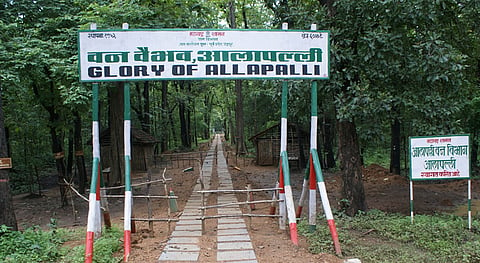
The state's first Biodiversity Heritage Site, Glory of Allapalli is a patch of dense original forest. When we speak of original vegetation, the endemic factor comes to mind. The forest is pristine and so dense that hardly any sunlight reaches the forest floor, meaning, one will hardly find any grass except for few sun-kissed spots here and there. But only few. The trees are dense not only in number but in girth too. From heritage point of view, the forest dates back to hundreds of years ago when it used to be under the care of Nizam of Hyderabad and Maharaja of Aheri, and later British. Great care has been taken to maintain the original forest.
Tonglu Biodiversity Heritage Site under the Darjeeling Forest Division, West Bengal
The 230 hectare site is a Medicinal Plant Conservation Area. Because of its proximity to Nepal border and the porous nature of the border, unchecked foot traffic is one of the main concerns when it comes to Tonglu. Mostly people cross over for the precious medicinal plants, some of which are aconitum, berberis, taxus baccata and podophyllum. These herbs cost a fortune. Measures have been taken to protect the site and a number of herbal nurseries established for the conservation of these plants.
Dhotrey Biodiversity Heritage Site under the Darjeeling Forest Division, West Bengal
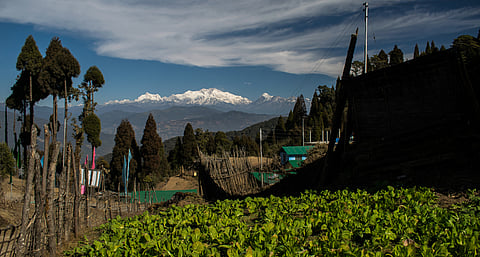
This 180 hectare site lies right next to Tonglu, these two being contigious. Similar to Tonglu in nature and location, the site also faces the threat of unchecked human encroachment. Rich in medicinal plants, Dhotrey is also under the same radar as Tonglu.
Dailong Village in Tamenglong, Manipur
Dailong village is home to the rare and endangered citrus indica or the Indian wild orange. The Indian wild orange is the most primitive ancestor to all cultivated citrus fruits in the world. A total area of 11.35 sq.km has been declared as a Biodiversity Heritage Site. Home to the Rongmei Nagas, Dailong village is one of the oldest villages in Tamenglong district. For many generations, the villagers have been the sole protectors of sacred groves called 'Raengan'. These protected forests are home to many endemic and rare plant species.
Ameenpur Lake in Sangareddy, Telangana
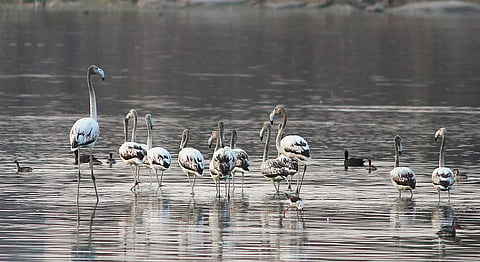
First water body to be recognised as a Biodiversity Heritage Site, Ameenpur Lake is a man-made lake dating more than 300 years old. The lake is home to many resident and migratory birds, such as flamingos, egrets, herons, cormorants, kingfishers, and river terns, to name a few. And because of high number of migratory species, Ameenpur Lake earned the status of a BHS. The site is every birdwatcher's delight.
Majuli in Assam

The 875 sq km site is most popular as the world's largest river island and the first river island to be made into a district. Majuli is here because of its unique ecological and cultural heritage. The river island is home to the Assamese neo-Vaishnavite culture. Since the 16th century, Majuli has been Assam's cultural capital and after preachings of Srimanta Sankardeva, a pioneer of Vaishnavism, came to be known as a leading centre of Vaishnavism.
Gharial Rehabilitation Centre in Lucknow, Uttar Pradesh
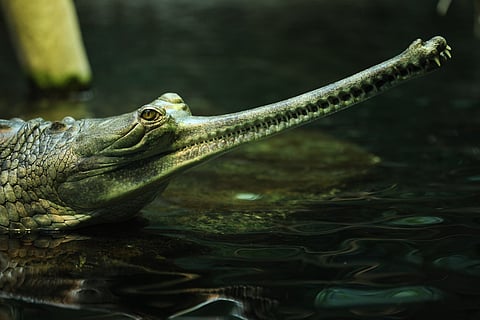
The 10 hectare site is located in Kukrail Reserve Forest of Lucknow district and is a centre established for conservation and rehabilitation of critically endangered species of gharial. Less than 250 wild individuals remain due to loss of riverine habitat, lack of food source (fishes) and human intervention (fishing nets). Measure have been taken to breed gharials in captivity which hopefully will increase the population.
Chilkigarh Kanak Durga in Jhargram, West Bengal
Spread across an area of 55.9 acres, Chilkigarh Kanak Durga Sacred Grove is a small patch of forest ripe with traditional beliefs of local inhabitants. The sacred grove, according to legends, came to being as a result of a dream where Goddess Kanak Durga ordered the construction of a temple in the forest. There are a number of sacred groves in India, protected by certain social and religious beliefs. These sacred groves are not only important because of sentiments but also because they are protected they have rich biodiversity, as in the case of Chilkigarh Kanak Durga. The site is home to 26 species of animals and more than 380 species of plants, out of which, many have medicinal properties.