A clear night in New Zealand can feel almost otherworldly—stars scattered so densely across the sky that it’s easy to forget the modern world. It is precisely this sense of untouched wonder that has helped position the country at the forefront of a growing global fascination with the night sky.
Why New Zealand Is Turning Into The World’s Astro-Tourism Capital
New Zealand is quietly redefining how the world experiences the night sky. From remote Dark Sky Reserves to island sanctuaries and Māori star lore, it offers some of the clearest, most immersive stargazing on the planet

Advertisement
New Zealand is rapidly emerging as the astro-tourism capital of the world due to its pristine, unpolluted skies, pioneering Dark Sky Reserves, and deep integration of indigenous Māori astronomy.
Why New Zealand Leads the Astro-Tourism Boom
New Zealand’s standing as a stargazing destination feels less like marketing and more like geography doing its work. Remote landscapes, careful environmental controls and a long-standing respect for the night sky all come together in a way that makes looking upwards feel different here.
Exceptional sky clarity and minimal light pollution: Much of the country sits far from major urban sprawl, and what lighting does exist is closely managed. The result is a night sky that feels unusually open. The Milky Way doesn’t just appear—it stretches clearly from horizon to horizon, while the Magellanic Clouds and the Southern Cross sit high and distinct, visible to the naked eye in a way that’s increasingly rare elsewhere.
Advertisement
Prestigious Dark Sky Reserves: The country is home to the renowned Aoraki Mackenzie International Dark Sky Reserve, the world’s first Gold Tier certified reserve of its kind. It is joined by protected sanctuaries such as Great Barrier Island where darkness is preserved as carefully as the surrounding landscapes.
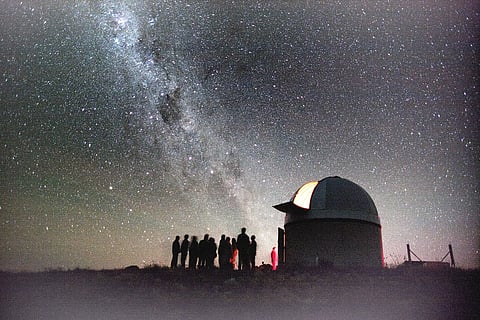
Public outreach in astronomy at Mt John Observatory, New Zealand Maki Yanagimachi/WikiCommons
Rich Indigenous cosmology: In New Zealand, stargazing rarely stops at observation. Māori astronomy—tātai aroraki—adds another layer entirely, with night-sky experiences often guided through stories that have been carried through generations. Rather than sitting apart from science, these narratives sit alongside it, especially when it comes to Matariki, the star cluster that marks the Māori New Year and brings a different rhythm to how the sky is read.
Southern Hemisphere advantage: Being south of the equator opens up a sky that many travellers have never seen before. Some of its most striking moments come with the Aurora Australis—the Southern Lights—spilling across the horizon in shifting bands of green, violet and red. It’s a reminder that the night sky can still surprise you when you’re in the right part of the world.
Advertisement
New Zealand’s Dark Sky Destinations
Across the country, stargazing isn’t confined to remote observatories or specialist tours—it’s built into the landscape itself. From alpine basins to offshore islands, each region offers its own way of experiencing the night sky.
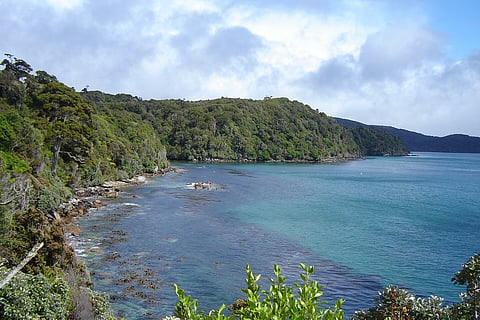
Stewart Island—or Rakiura, as it is known in te reo Māori Wildman NZ/Wiki Commons
Lake Tekapo & Aoraki / Mount Cook (Canterbury): At the heart of the vast Aoraki Mackenzie International Dark Sky Reserve, this alpine region is often considered New Zealand’s stargazing centrepiece. It is home to the Mount John University Observatory, the country’s leading astronomical research facility. Visitors can join guided telescope sessions on the summit or unwind in outdoor hot pools while the sky unfolds above.
Aotea / Great Barrier Island (Auckland): Certified as an International Dark Sky Sanctuary, Great Barrier Island feels deliberately removed from modern light. With no mains electricity grid and a reliance on solar and generator power, darkness here is almost total. The result is a sky that feels startlingly close, with the Milky Way visible in unbroken detail overhead.
Rakiura / Stewart Island (Southland): On Stewart Island / Rakiura, one of the world’s southernmost Dark Sky Sanctuaries, latitude does much of the work. Positioned deep in the Southern Hemisphere, it sits within ideal viewing range for auroral activity. When conditions align, the Aurora Australis can sweep across the horizon in slow, luminous arcs.
Wairarapa (Wellington Region): Just beyond the capital, Wairarapa combines rural darkness with easy access. It is also home to Stonehenge Aotearoa, an open-air astronomical site that links celestial observation with both Celtic-inspired design and Māori navigation traditions, making it as much cultural encounter as stargazing stop.
Otago Peninsula (Dunedin): Around Otago Peninsula, astro-tourism is increasingly shaped by storytelling. Guided experiences often weave in tātai arorangi, explaining how Māori voyagers read the night sky to navigate across the Pacific, turning the constellations into a living map of movement and migration.
Advertisement
New Dark Sky Horizons
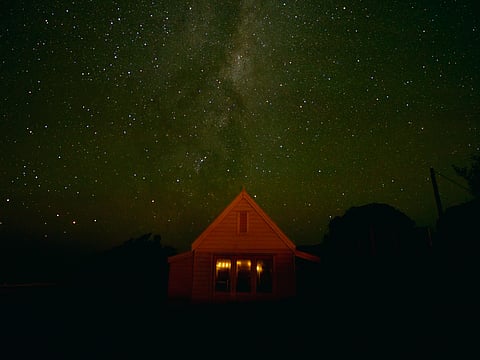
Kaikoura is an International Dark Sky Sanctuary Wiki Commons
New Zealand isn’t standing still on its dark skies. Protection keeps spreading, with more regions being formally recognised and added to the network. It’s part of a broader move towards becoming the world’s first fully accredited Dark Sky Nation, with certification from DarkSky International now reaching into both remote wilderness and more lived-in parts of the country.
Tāhuna/Glenorchy (2025): Recently designated an International Dark Sky Sanctuary, Glenorchy sits in one of the country’s most dramatic alpine settings. Its clear, unbroken skies have already made it a favoured vantage point, and its position along the path of the 2028 total solar eclipse is expected to draw global attention.
Kaikōura (2024): Kaikōura has secured Dark Sky Sanctuary status, with lighting redesigned to keep the night sky intact. Shielded streetlights now limit glare, helping protect both stargazing conditions and local wildlife, including the endangered Hutton’s shearwater.
Kawarau Gibbston & Oxford Forest (2024): Gibbston Valley and the Oxford Forest Conservation Area are now Dark Sky Parks, bringing protected skies closer to well-travelled routes near Queenstown and Christchurch.
Advertisement
Best Time to Visit
Winter (June–August): This is when you’ll get your best shot at the night sky. The nights are long, the air is sharp and dry, and the Milky Way sits right overhead—bright enough that you can pick out detail with the naked eye.
Autumn (March–May): An underrated window. You’ll find the Milky Way rising earlier in the evening, so you don’t need to stay up late to see it properly.
Equinox months (March & September): If you’re hoping for the Southern Lights, this is when you want to be there. Around the equinoxes, solar activity peaks, and you’ve got a better chance of catching the Aurora Australis if the conditions line up.
FAQs
What is astro-tourism?
It’s travel focused on experiencing the night sky in places with dark, clear conditions for stargazing.
Do you need special equipment to stargaze in New Zealand?
Not at all. In many places, you can see the Milky Way clearly with just your eyes, though a basic pair of binoculars will enhance the view.
Advertisement
Can you see the Southern Lights in New Zealand?
Yes—on strong solar activity nights, you may catch the Aurora Australis, especially from southern locations like Stewart Island / Rakiura.
Is stargazing possible year-round?
Yes, but winter generally gives you the clearest and longest viewing windows.
Do guided tours make a difference?
They do. Local guides often combine astronomy with Māori star lore (tātai arorangi), adding context you wouldn’t get just from looking up.
Published At: