Tucked high in the Pyrenees between France and Spain lies Andorra—a country so small it feels almost hidden from the map, yet so striking it feels like it was carved out for postcards.
This Tiny Country Between France And Spain Is A Mountain Dream
Tucked between France and Spain, Andorra has no airport or train station—just winding mountain roads leading into pure Pyrenean beauty. A tiny country of peaks, villages, and alpine air, where the journey itself feels like part of the adventure

Advertisement
Andorra is one of those rare places where isolation becomes its greatest luxury. Cut off from the rush of mass transit, it preserves a slower rhythm—where ski villages glow in winter, hiking trails stretch endlessly in summer, and every view feels like it’s been dialed up in saturation.
Between France and Spain, yet belonging fully to neither, it exists in its own quiet dimension—compact, mountainous, and endlessly scenic.
Things To Do
Winter Activities
Andorra is renowned for top-tier skiing. It offers winter sports from December to March, with Andorra la Vella being Europe's highest capital.
Winter in Andorra is all about fast access to big mountain fun. Grandvalira leads the way as the largest ski area in Southern Europe, with 210 km of slopes and over 140 runs. It’s a mix of wide beginner-friendly pistes, long intermediate cruisers, and freeride zones for advanced skiers. Add in modern, high-speed lifts and the famous El Tarter Snowpark, and the result is a high-energy playground for skiers and snowboarders.
Advertisement
For a more relaxed vibe, Pal-Arinsal is ideal. Linked by cable car, it offers 63 km of slopes suited to families and beginners, along with tree-lined runs and a strong ski school scene. Snowboarders also get a dedicated snowpark and half-pipe, making it a solid all-rounder.
Beyond skiing, both resorts offer snowshoeing, dog sledding, and snowmobiling—easy ways to explore the Pyrenees beyond the pistes.
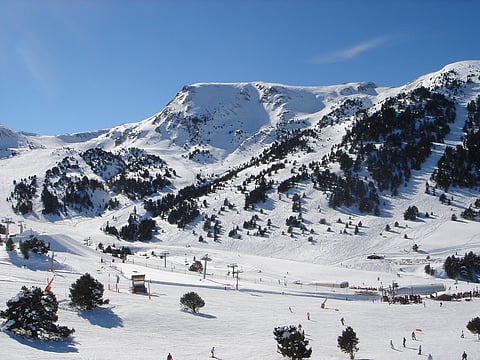
Grandvalira ski resort, Andorra Christof Damian/Wiki Commons
Hiking And Nature
Beyond the snow, Andorra opens into a landscape built for walking—raw valleys, glacial lakes, and high-altitude silence.
The standout is the Madriu-Perafita-Claror Valley, a vast, car-free wilderness covering over 4,000 hectares. Recognised by UNESCO, it preserves a rare balance between nature and traditional mountain life. Trails here range from steep, demanding climbs to long crossings through high plateaus and a deep glacial canyon. Stone huts like Fontverd and de l’Illa still mark the route, giving hikers a sense of how life once moved through these mountains. It’s not a casual walk—it’s a full immersion into untouched Pyrenean terrain.
Advertisement
For something more accessible, the Tristaina Lakes deliver a shorter but striking experience. The 4.4 km circular trail near Ordino-Arcalís winds past three turquoise lakes—Estany Primer, Estany del Mig, and Estany de més Amunt—rising up to around 2,330 metres. The route is steady and well-marked, usually taking a few hours, yet the views feel far larger than the effort required.
Together, these two routes show two sides of Andorra’s outdoors: one wild and demanding, the other calm and highly accessible—both defined by clear air, sharp peaks, and open silence.
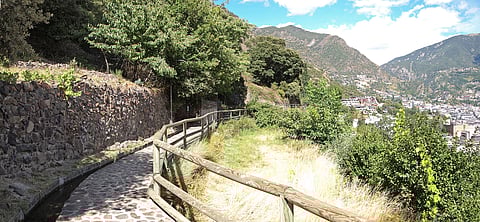
Andorra opens into a landscape built for hiking Tiia Monto/Wiki Commons
Culture And Heritage
In Andorra, culture sits quietly inside stone walls and mountain villages, shaped by Catalan roots and a long Romanesque tradition.
One of the clearest windows into that history is Casa de la Vall. Built in 1580 as a manor house, it later became the seat of parliament in 1702. Inside are simple, timeworn rooms—a courtroom, the old council hall, and the “cupboard of seven keys,” once used to secure important state documents. It feels more like a lived-in home than a government building, which is part of its charm.
Advertisement
Not far away is Sant Esteve Church, dating back to the 12th century. Set in the old quarter, it stands with a plain stone bell tower and quiet interior details that have survived centuries. Across the country, this same Romanesque style repeats in small mountain churches, scattered between valleys and villages, each one slightly different but built from the same local stone and tradition.
The old town of Andorra la Vella adds another layer, with cobbled streets, stone buildings, and a slow, lived-in rhythm that contrasts the modern shopping streets nearby. Museums such as the Thyssen in Escaldes-Engordany bring in a contemporary edge, while guided tours help connect the dots between architecture, religion, and political history.
Andorran culture is not just preserved in buildings but in everyday life—through festivals, food, and traditions that reflect its position between France and Spain, yet firmly distinct.
The Information
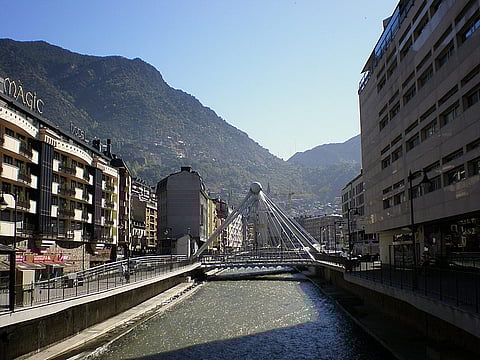
The centre of Andorra la Vella and the Gran Valira river flowing under the Pont de Paris road bridge Jaume Meneses/Wiki Commons
Location: Between France and Spain in the Pyrenees; no airport exists, so it is accessed by road (approx. 2.5–3 hours from Barcelona or Toulouse).
Language: Catalan is official, but Spanish, French, and Portuguese are widely spoken.
Currency & Costs: Uses the Euro (€). As a tax-haven, goods like electronics, tobacco, alcohol, and luxury fashion are significantly cheaper.
Best Time to Visit: December–March for skiing (Grandvalira), May–September for hiking/outdoors.
Connectivity: Crucial Tip: Andorra is not in the EU, and standard international roaming often does not apply, making it expensive to use data; keep phones in airplane mode or get a local SIM.
Advertisement
Practical Tips for Visitors
There is no airport. Travelers usually fly into Toulouse (France) or Barcelona (Spain) and drive (~2.5–3 hours) into the country.
Roads are winding and steeply climb into the Pyrenees.
International roaming is generally not included in standard European plans, so check in advance.
Known for tax-free, affordable shopping.
FAQs
Is Andorra easy to reach?
There’s no airport or train station. Most visitors arrive by road from France or Spain, usually from Toulouse or Barcelona.
What is Andorra best known for?
Skiing, mountain landscapes, tax-free shopping, and scenic hiking routes.
When is the best time to visit?
December to March for snow sports, and June to September for hiking and nature trips.
Is Andorra expensive?
It’s generally mid-range. Ski areas and hotels can be pricey in peak season, but shopping and dining are often more affordable than nearby France or Spain.
Do people speak English in Andorra?
Yes, especially in tourist areas. The official language is Catalan, but Spanish and French are widely understood.
Advertisement
How many days are enough?
2–3 days for a short trip, 5–7 days if you want skiing, hiking, and exploring villages at a relaxed pace.
Published At: