In southern Spain, the landscape shifts from sun-baked plains to rugged mountains dotted with dazzling white villages. Known as the Pueblos Blancos, these settlements seem to glow under the Andalusian sun. Their houses are coated in limewash, a centuries-old tradition that reflects heat and keeps interiors cool during the region’s scorching summers.
Spain’s White Villages Trail: A Journey Through Andalusia’s Most Charming Rural Escapes
Follow Andalusia’s famous White Villages trail through hilltop towns, Moorish streets, and mountain landscapes. Discover what to see, what to do, and where to stay while exploring rural Spain at its most enchanting

Advertisement
Today, these villages form one of Spain’s most captivating rural tourism routes. Winding through the provinces of Cádiz and Málaga, the trail leads travellers across olive groves, limestone peaks, and quiet valleys where time slows down. Each village feels intimate and lived-in, with narrow streets, flower-filled balconies, and viewpoints that open onto sweeping mountain panoramas. Exploring them is less about ticking off sights and more about stepping into the rhythms of rural Andalusia.
Beginning The Trail: Arcos de la Frontera And The Gateway To The Pueblos Blancos
Many travellers begin the White Villages trail in Arcos de la Frontera, often considered the gateway to the route. Perched above the Guadalete River, the town rises like a white fortress on a rocky ridge. The historic centre is a maze of narrow lanes, steep alleys, and quiet plazas framed by churches and traditional houses with shaded courtyards.
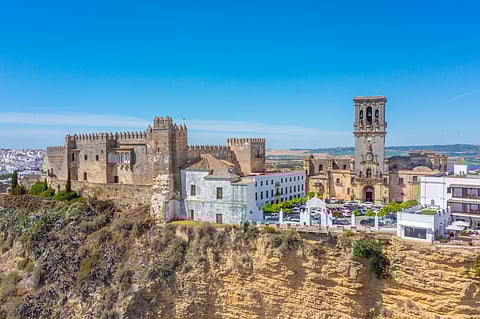
Castle at Arcos de la Frontera in Spain Shutterstock
You can feel history in the streets as you walk here. The streets were designed with Moorish influence, and the Christian monuments are next to houses that have stood for centuries. As you start your day, take a leisurely stroll through the old town. Make sure to stop at many of the scenic overlooks to appreciate the view of the rolling hills and farmland of Andalusia.
Advertisement
Once you leave the town, the road will climb through the mountains and into the heart of the Sierra de Grazalema Natural Park. The scenery in this area along the hiking path is some of the most spectacular you'll ever see. You will walk through forests and limestone cliffs, then come around a curve to a quiet village.
One of the most picturesque stops is Zahara de la Sierra. The village sits beneath the ruins of a medieval castle and overlooks a brilliant turquoise reservoir. Climb the steep streets to the castle for a view that stretches across mountains and water. Afterwards, settle into a terrace café and try local dishes like hearty stews or tapas made with olive oil produced in nearby groves.
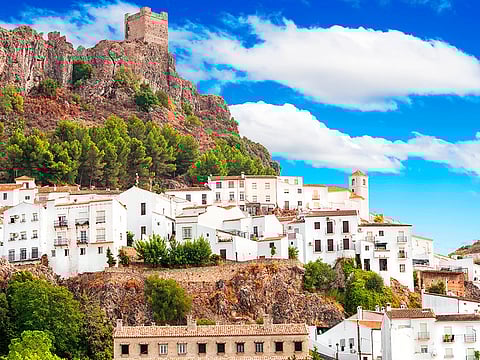
Zahara de la Sierra Turespaña
For travellers looking to stay overnight, many houses have been converted into small rural guesthouses known as casas rurales. These intimate lodgings often feature whitewashed courtyards, terracotta floors, and terraces that look out over the surrounding mountains.
Advertisement
Along The Mountain Roads: Setenil de las Bodegas And Ronda
Continuing along the route, the landscape grows more dramatic. Olive groves blanket the hillsides while rocky cliffs tower above the road. Soon, the trail reaches one of the most unusual villages in Spain.
Setenil de las Bodegas appears almost hidden beneath the rock itself. Instead of building houses on the mountain, locals carved homes directly into the limestone cliffs. Entire streets lie under massive stone overhangs that serve as natural roofs.
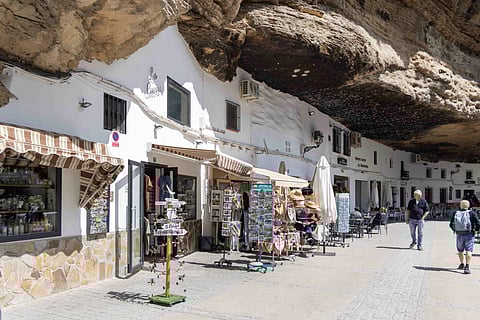
Setenil de las Bodegas, Spain Shutterstock
Walking through these streets feels surreal. Cafés and restaurants line the rock-covered lanes, and the shade makes it one of the coolest places to wander during summer afternoons. Spend some time exploring Calle Cuevas del Sol and nearby streets where the rock formations dominate the skyline.
A short drive away lies Ronda, one of Andalusia’s most iconic hilltop towns. The town stands dramatically above the El Tajo gorge, which splits it in two. The 18th-century Puente Nuevo bridge connects both sides, offering views straight down into the canyon below.
Advertisement
Ronda rewards slow exploration. Walk through the old Moorish quarter, visit historic palaces, or step inside the town’s famous bullring. Interestingly, ‘The Seven Dials Mystery’ on Netflix was filmed here. By evening, the golden light over the gorge creates one of the most memorable views in southern Spain. Many travellers choose to stay the night here, as boutique hotels and historic guesthouses overlook the dramatic landscape.
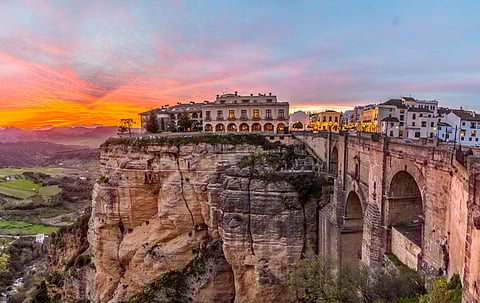
Ronda, Spain Turespaña
Hidden Corners Of Rural Andalusia
The White Villages route of southern Spain is packed with charming locations, most of which have been bypassed by those travelling to the area.
Along the route are villages such as Olvera, which rises on hilltops crowned by medieval castles, while others sit tucked into valleys surrounded by olive trees. Olvera itself stands on a ridge marked by a Moorish castle and an elegant church that dominates the skyline.
Further north, in the province of Córdoba, villages like Zuheros seem almost sculpted into the mountain. Its castle clings to the rock face above a cluster of white houses, while nearby caves draw visitors interested in hiking and speleology.
Advertisement
Iznájar is yet another of the peaceful places located along this route. The village is composed of white homes cascading down the hillside into an enormous blue lake, and it gives you the opportunity to view the largest lake in southern Spain.
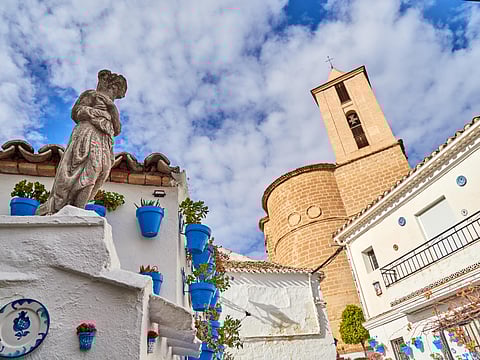
Iznajar village Shutterstock
These towns are special to visitors not only for their visual appeal. Start your morning with a cortado in one of the little plazas, then spend your afternoon sleeping or relaxing in the shade of an orange tree before going home for dinner (or back to the taverns) in the evening, enjoying the sounds of people conversing.
Many travellers choose to base themselves in one village and explore the surrounding countryside by car. Others follow the trail slowly over several days, staying in small guesthouses or restored farmhouses. Rural hotels often occupy centuries-old buildings and offer panoramic terraces where you can watch the sun sink behind the mountains.
Advertisement
If you’re holidaying along the Costa del Sol in the province of Málaga, it’s worth setting aside a few days to explore the white villages tucked inland, beyond the beaches and coastal towns.
Among the most notable stops is Frigiliana, where narrow, winding streets echo its Moorish past. The village is also home to Europe’s only traditional molasses factory, with sweeping Mediterranean views in the distance.
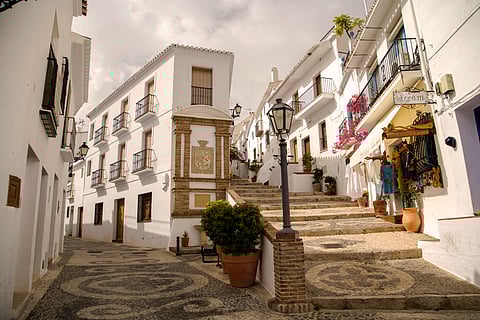
Frigiliana Turespaña
In Casares, climb up to the Arab castle for a sense of its layered past, shaped by Iberians, Phoenicians, and Romans.
Then there is Ronda, often counted among Spain’s most beautiful towns. Its 98-metre-high bridge offers unforgettable views, and over the years it has drawn admirers like Ernest Hemingway, Orson Welles, and Rainer Maria Rilke.
All three villages are within easy driving distance of Málaga, making them ideal for a short inland escape.
The White Villages trail reveals a side of Spain that feels far removed from crowded beaches and bustling cities. Here, the country’s rural traditions remain visible in everyday life. While here, you can go on a tour of olive oil presses. Serranía de Ronda, LA Almazara LA Organic, for example, welcomes visitors to explore its olive groves, organic gardens, and on-site museum.
Advertisement
When you travel through Andalusia’s Pueblos Blancos, you wander eagerly; you will find secret places to enjoy—unhurried locations with breathtaking views, places that have seen both time and human activity. You will leave these mountains with memories of a whitewashed mountain village at sunset, a faint fragrance of jasmine wafting through a narrow alley, and the realisation that Spain’s most timeless scenery awaits you to discover in the sierras.
For more information, visit Spain Tourism's website
FAQs
1. What is Spain’s White Villages Trail?
It is a scenic travel route through Andalusia featuring traditional whitewashed villages, mainly in Cádiz, Córdoba and Málaga provinces.
2. Why are the villages painted white?
The limewash reflects sunlight and helps keep homes cool during Andalusia’s hot summers.
3. Which villages are must-visits on the route?
Arcos de la Frontera, Zahara de la Sierra, Setenil de las Bodegas, Ronda, and Frigiliana are among the most popular stops.
Advertisement
4. How can you explore the White Villages?
Most travellers explore by car over a few days, staying in small guesthouses or “casas rurales” along the route.
5. When is the best time to visit Andalusia’s White Villages?
Spring and early autumn are ideal, offering pleasant weather and fewer crowds compared to peak summer months.
Published At: