As Greece strengthens its tourism relationship with India, the country is making a clear statement: it no longer wants to be seen as just another summer escape focussing only on its sunny shores. With the launch of the first-ever direct flights between India and Greece in January, the Mediterranean nation is actively positioning itself as a year-round destination, not just offering its most popular cities but also its often overlooked culture, nature, luxury, weddings, and sustainable travel experiences that extend far beyond its peak season.
Not Just Santorini: How Greece Is Opening Up New Experiences For Indian Travellers
As direct flights bring India and Greece closer, Tourism Minister Olga Kefalogianni outlines how the country is repositioning itself as a 365-day destination for Indian travellers—spanning weddings, sustainability and experiential tourism

Advertisement
Speaking in New Delhi to Outlook Traveller, Greece’s Minister of Tourism, Olga Kefalogianni, described the moment as historic for both countries. She had arrived on the inaugural IndiGo flight from Athens, marking the first direct air connection between India and Greece, linking Athens with Delhi and Mumbai.
“This is the starting point of a new era in our tourism collaboration,” she said, adding that enhanced air connectivity is not only about travel, but also about deeper economic and political ties between the two nations.
Repositioning Greece as a 365-Day Destination
While Greece’s islands and coastline continue to dominate global imagination, the country is now actively promoting its lesser-known strengths across all seasons. According to Kefalogianni, cultural tourism, nature-based experiences, wellness travel, gastronomy, events, and luxury hospitality form the backbone of this shift.
“Greece is equally beautiful throughout the year,” she said. “Beyond summer, there are incredible opportunities to explore our cities, mainland regions, mountains, and natural landscapes.”
Advertisement
For Indian travellers in particular, Greece is being positioned as a safe and welcoming destination, including for solo women travellers. The country is also tapping into the growing appetite among younger travellers for experiential travel—think trekking, rafting, and outdoor adventures in scenic mountain regions, far removed from the crowded island hotspots.

Olga Kefalogianni, Minister of Tourism, Greece
Luxury travel, too, remains a strong pillar. Greece hosts several internationally recognised hospitality brands and high-end venues, catering to travellers seeking refined, immersive experiences. Combined with world-renowned Greek gastronomy—rich in seafood, fresh produce, vegetarian-friendly dishes, and local recipes—the destination aligns naturally with Indian tastes and preferences.
Tapping into India’s Love for Destination Weddings
One of the most promising growth segments for Greece is wedding tourism, especially from India. Kefalogianni acknowledged the scale and complexity of Indian weddings, noting that Greece already has experienced planners capable of handling large-scale, multi-day celebrations.
“We Greeks also celebrate weddings, and we have well-established wedding planners who understand the logistics of big events,” she said.
Advertisement
To strengthen this segment, Greece plans to actively connect Indian wedding planners with their Greek counterparts. The Greek National Tourism Organisation is working on hosting a dedicated event in Greece, inviting Indian wedding specialists to experience venues firsthand—from iconic locations like Santorini to lesser-known but equally romantic destinations across the country.
On the policy front, Greece is exploring ways to simplify group travel logistics, particularly around visas. While bound by Schengen regulations, the government is examining options for special facilitation for groups travelling for weddings, MICE events, or film productions, in coordination with the Ministry of Foreign Affairs.
Sustainability at the Core of Tourism Growth
With over 40 million visitors annually and a population of just 10 million, Greece is acutely aware of the pressures tourism places on infrastructure, communities, and the environment. Sustainability, Kefalogianni stressed, is not optional—it is central to the country’s tourism strategy.
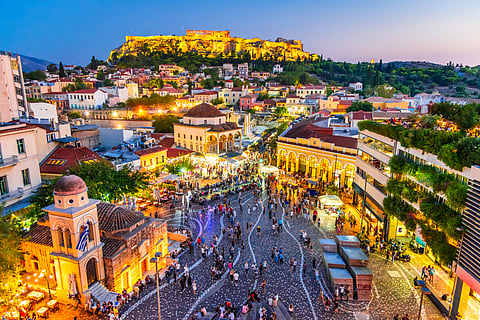
Night view of Athens ecstk22/Shutterstock.com
“We are focusing on qualitative growth rather than quantitative growth,” she said, explaining that Greece is actively promoting off-season travel and lesser-known destinations to distribute tourist flow more evenly.
Advertisement
Concrete measures are already in place. Greece has introduced its first-ever sustainability classification for hotels, evaluating waste management, water usage, and energy consumption. The goal is to incentivise responsible practices across the hospitality sector—a model Greece is also proposing at the European Union level.
In high-pressure destinations like Santorini, stricter controls are being introduced. From 2025, daily limits on cruise passengers disembarking on the island will be enforced, along with additional charges directed back into local infrastructure and sustainability projects. Similar regulations apply to short-term rentals in Athens and other major cities to protect local communities.
“When we see pressure building, we act,” Kefalogianni said. “Our responsibility is to preserve our natural and cultural resources for future generations.”
Film Tourism, MICE, and Connectivity with India
Greece’s cinematic landscapes have long attracted international productions, and film tourism is increasingly part of its global strategy. While specific India-focused film incentives are still evolving, the government is examining visa facilitation and logistical support for group travel tied to filmmaking and corporate events.
Advertisement
India is also emerging as a strong source market for MICE tourism, and Greece is promoting cities such as Athens, Thessaloniki, and select island destinations as conference-ready hubs, blending business with culture and leisure.
Connectivity, however, remains the real game-changer. Beyond IndiGo’s direct flights, Kefalogianni highlighted IndiGo’s codeshare agreement with Aegean Airlines, which opens up seamless connections from Athens to destinations across Greece and Europe.
More significantly, Aegean Airlines is set to launch its first-ever long-haul route, starting with India. If timelines hold, this could begin by late 2026—marking a major leap in bilateral air connectivity.
“We are truly excited,” she said. “India is a key market for Greece, and we want Indian travellers to see Greece not just as a summer holiday, but as a destination they can return to again and again, throughout the year.”
FAQs
Q1: Is Greece a year-round destination for Indian travellers?
Yes. Greece is actively promoting cultural, experiential, luxury and nature-based travel beyond the summer months.
Advertisement
Q2: Are there direct flights between India and Greece?
Yes. Indigo has launched direct flights connecting New Delhi and Mumbai to Athens, with more connectivity planned.
Q3: Is Greece suitable for destination weddings from India?
Absolutely. Greece offers experienced wedding planners, scenic venues and is working on smoother group visa processes.
Q4: How is Greece addressing sustainable tourism?
Through visitor caps, sustainability classifications for hotels, cruise quotas and incentives for eco-friendly practices.
Q5: Which Greek destinations appeal most to Indian travellers?
Beyond Santorini, mainland Greece, cultural cities and nature-rich regions are increasingly being promoted.
Published At: