Getting to Khukh Nuur is part of the story. The road from Ulaanbaatar runs deep into Khentii Province, across rough tracks, open grasslands and stretches where the nearest settlement can feel very far away. Then, after hours on the road, a blue lake appears beneath the wooded slopes of Khar Zurkh Mountain. This is where Temüjin, the future Genghis Khan, was proclaimed khan in 1189, according to the Secret History of the Mongols. Today, Khukh Nuur remains one of Mongolia’s lesser-visited landscapes, where history, horse culture and life on the steppe can be experienced without the crowds of the country’s better-known destinations.
Khukh Nuur, Mongolia: A Journey To The Blue Lake At The Heart Of Genghis Khan’s Story
At Khukh Nuur in Mongolia’s Khentii Province, history, forested mountains, and nomadic life come together around a remote blue lake. Here’s what to see, eat and experience, and where to stay nearby

Advertisement
The remoteness is part of the attraction. There are no polished tourist facilities waiting at the lakeshore, and a proper visit is less about ticking off attractions than spending time outdoors, meeting nomadic families and understanding why this corner of Khentii still feels far removed from Mongolia’s better-known tourist circuit.
Walk Around Khukh Nuur And Trace The History Of Genghis Khan
The first thing to do is simply walk. Khukh Nuur consists of two interconnected freshwater lakes surrounded by meadows, wooded slopes and the Khar Zurkh range. The lake lies about 220 kilometres from Ulaanbaatar, with the final stretch involving rough roads, so a capable 4WD and an experienced driver are essential.
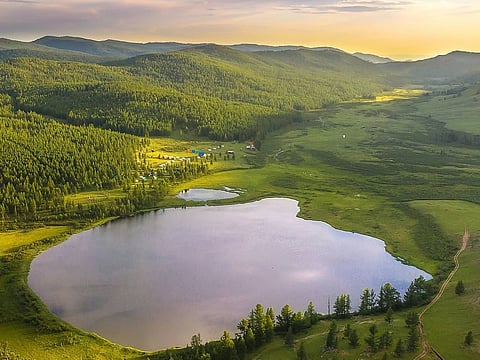
Khar Zurkhnii Khukh Nuur (Blue Lake of Black Heart) Instagram/batsukh_photographer
For history enthusiasts, the southern shore is the main draw. A roughly 15-metre-wide stone outline is believed to mark the remains of a ger associated with Temüjin. Nearby, a memorial complex commemorates the connection between the lake and the rise of Genghis Khan. Thirty-six carved wooden figures representing descendants of the great khan stand around the memorial, while figures of his parents and wife Börte occupy the centre. Nine more carvings representing his generals guard the entrance.
Advertisement
The historical claim deserves some nuance. Sources differ on the precise circumstances and date of Temüjin’s elevation, with 1189 and 1206 both appearing in travel literature. The "Secret History of the Mongols" is the key historical source connecting Temüjin, Khukh Nuur, and Khar Zurkh Mountain, while modern travel accounts sometimes conflate the 1189 proclamation with his later recognition as the founder of the Mongol Empire.
Beyond the memorial, hike the surrounding slopes for views of the lake and forest. Birdwatching is another rewarding reason to linger: the region attracts migratory and resident birds, while the wider Khentii landscape is home to species including cranes, geese, raptors, and other steppe and forest birds. Carry binoculars if you have them.
Ride Horses, Meet Nomads, And Eat Like A Local
Khukh Nuur is best experienced at the pace of the landscape. Horse riding can be arranged through local camps and guides, taking you beyond the immediate lakeshore and into the surrounding valleys. Hiking is similarly straightforward, although trails are informal rather than marked. The combination of open grassland, pine-covered hills and distant mountain ridges makes even a short walk worthwhile.
Advertisement
Then there is Mongolia’s most memorable travel experience: spending time with a nomadic family. Khentii remains strongly associated with pastoral life, and families move seasonally with their livestock. Depending on your itinerary and guide, you may be able to visit a family, learn about herding, help with everyday chores or simply sit inside a ger over tea. A genuine invitation into a family home can reveal more about the landscape than any monument can.
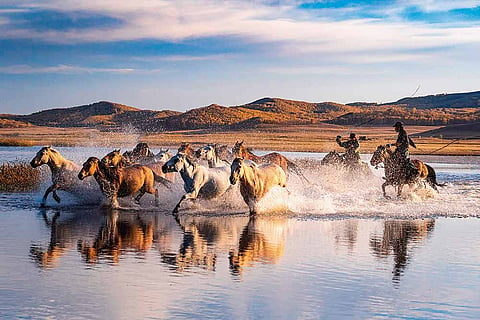
"A Mongol without a horse is like a bird without wings," goes the traditional saying. Here, Mongolian horses, famed for their hardiness, take to the water in a display of power and freedom Shutterstock
Food at Khukh Nuur is similarly rooted in practicality. There are no restaurants at the lake, so meals are generally prepared at camps, by tour cooks or by host families. Expect buuz, steamed meat dumplings; khuushuur, crisp fried meat pastries; and tsuivan, hand-cut noodles stir-fried with meat and vegetables. Khorkhog, in which mutton and vegetables are cooked with heated stones inside a sealed metal container, is another dish to look for when travelling through Khentii.
Breakfast may include bread, eggs and dairy, while suutei tsai, Mongolia’s salty milk tea, is a staple. If you are invited into a nomadic ger, you may also encounter homemade yoghurt, cheese, and other dairy products. Travellers should mention dietary restrictions before setting out because food choices are limited once you are deep in the countryside.
Advertisement
Extend The Journey Into Khentii’s Wilderness
Khukh Nuur makes more sense as part of a wider Khentii itinerary than as a standalone day trip. One natural extension is Baldan Bereeven Monastery, a historic Buddhist site surrounded by striking mountains and rock formations. The monastery was once a major religious centre with numerous temples and thousands of affiliated monks before the destruction and persecution of the 1930s. Parts of the complex have since been restored.
You can also continue towards Dadal, an important destination in the historical landscape associated with Genghis Khan, and explore the Onon-Balj region. The area combines rivers, forests, open pasture, and small settlements, making the drive itself part of the experience. Some itineraries also include Deluun Boldog, traditionally associated with the birthplace of Genghis Khan, although claims surrounding his exact birthplace should be treated as historical traditions rather than settled fact.
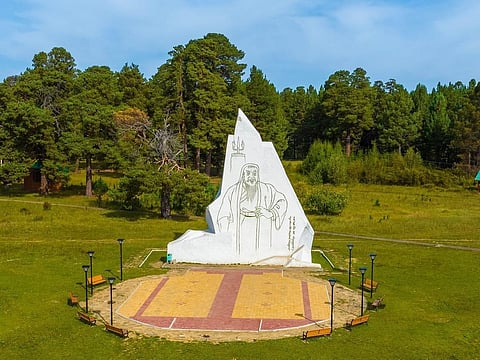
Deluun Boldog is considered to be the birthplace of Genghis Khan Instagram/ganulzii_photographer
For travellers who want more wilderness, Khan Khentii Strictly Protected Area is another possibility. The protected landscape extends across forests, river valleys and steppe, with opportunities for hiking, horse riding, kayaking and rafting depending on the season and location. Jalman Meadows, on the edge of the protected area, is particularly suited to travellers who want to pair Khentii exploration with a more comfortable wilderness camp.
Advertisement
When To Go And Where To Stay
The practical season for Khukh Nuur is the warmer months, particularly June to September. Summer brings greener pastures and better access, although rain can make dirt roads difficult. The area has limited infrastructure, patchy connectivity and few opportunities to buy supplies, so arrive prepared with water, medicines, warm layers and food for travel days.
For a premium stay, Jalman Meadows Wilderness Ger Camp is one of the more compelling options in the wider Khentii region. Located beside the Tuul River on the edge of Gorkhi-Terelj National Park and the Khan Khentii Strictly Protected Area, its low-impact gers provide a comfortable base for hiking, horse riding, kayaking and river activities. Princess Lodge near Gorkhi-Terelj is another option, with four luxury gers alongside standard accommodation and guided horseback and wilderness experiences. For travellers who prioritise a more polished stay while exploring the region, Juulchin Terelj Resort provides deluxe gers with private bathrooms in Gorkhi-Terelj National Park, although it is farther from Khukh Nuur and works better as part of a broader Khentii itinerary.
Advertisement
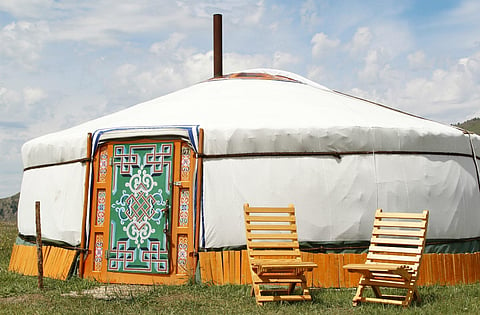
Jalman Meadows Wilderness Camp Tripadvisor
At Khukh Nuur, however, the accommodation is almost beside the point. The reward is waking to a landscape where the road disappears into grassland, horses graze beyond the ger, and a blue lake sits beneath forested mountains, with very little between you and the immense Mongolian sky.
FAQs
1. Where is Khukh Nuur in Mongolia?
Khukh Nuur is in Khentii Province in northeastern Mongolia, around 220 kilometres from Ulaanbaatar. The lake lies near Khar Zurkh Mountain and is reached by rough roads through the steppe.
2. Why is Khukh Nuur associated with Genghis Khan?
Khukh Nuur is associated with Temüjin, the future Genghis Khan, and his elevation as khan. The "Secret History of the Mongols" connects Temüjin with Khukh Nuur and Khar Zurkh Mountain, although historical accounts differ on the precise date and circumstances.
3. What can you do at Khukh Nuur?
Travellers can hike around the lakes and surrounding hills, go horse riding, explore historical sites, watch birds and visit nomadic families. The wider Khentii region also allows opportunities for river activities and wilderness excursions.
Advertisement
4. What is the best time to visit Khukh Nuur?
June to September is the most practical period to visit Khukh Nuur. The warmer months bring greener landscapes and generally better road access, although rain can make unpaved roads difficult.
5. Where can you stay near Khukh Nuur?
Accommodation around Khukh Nuur is limited. Premium options in the wider Khentii region include Jalman Meadows Wilderness Ger Camp, Princess Lodge near Gorkhi-Terelj and Juulchin Terelj Resort.

Published At:
Tags