Tucked deep in the misty folds of Shikoku’s Iya Valley, Nagoro feels like a place where time has slipped quietly away. Wooden houses dot the mountainside, cedar forests rise steeply into the sky, and a clear river winds through the valley below. On first glance, the village seems like many other rural hamlets in Japan — quiet, sparse, and shaped by the rhythms of farming life. But a second look reveals Nagoro’s secret: the “villagers” you see tending crops, waiting for a bus, or laughing in the schoolyard are not people at all. They are dolls.
In This Japanese Village, Life-Size Dolls Outnumber Residents
In Nagoro, a remote hamlet in Shikoku’s Iya Valley, dolls outnumber people 14 to one. Handcrafted by a returning villager, these life-sized figures keep memories alive while highlighting Japan’s rural depopulation

Advertisement
More than 350 life-sized scarecrows, known as kakashi, now inhabit this tiny settlement of just over two dozen residents. They lean on fences, perch on benches, and fill long-empty classrooms. At times eerie, at times oddly comforting, they are the work of one woman who turned her needle and thread into a way of keeping her community alive.
A Village That Emptied Out
Japan’s shrinking population is one of the country’s greatest challenges. By 2050, nearly 40 per cent of its citizens are expected to be over 65. Cities absorb the young with jobs and opportunity, while villages like Nagoro are left with dwindling populations and fading infrastructure. Once home to around 300 people, Nagoro hasn’t welcomed a newborn in more than 20 years. The elementary school closed in 2012 after its last two students graduated, and the nearest hospital or supermarket now lies a 90-minute drive away along twisting mountain roads.
Advertisement
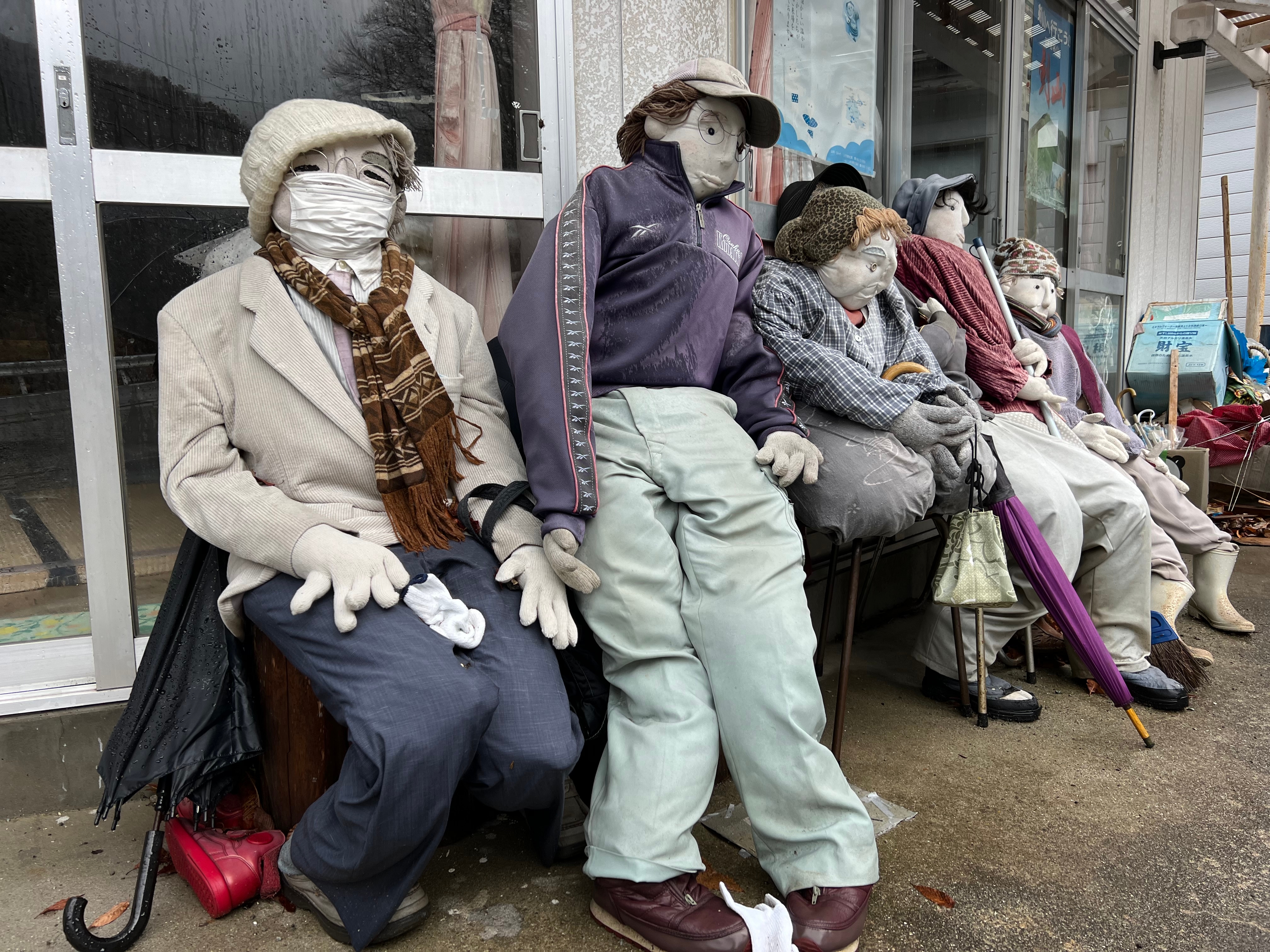
Silent villagers of Japan’s Scarecrow Village wait at a bus stop. Shutterstock
It’s a familiar story across rural Japan. Without children, schools shut down. Without customers, shops close. Eventually, train lines and bus routes are cut, making daily life even more difficult. For those who stay behind, the isolation can be overpowering.
Yet Nagoro has avoided becoming just another forgotten dot on the map. Thanks to one woman’s unconventional project, the village is known around the world as Japan’s “Scarecrow Village.”
From Scarecrow To Storyteller
The unlikely revival began when Ayano Tsukimi, a Nagoro native, returned home from Osaka to care for her ailing father. Birds were pulling up the seeds in her vegetable patch, so she made a scarecrow — but instead of a simple cross with rags, she crafted a full figure in her father’s likeness.
The resemblance was so uncanny that neighbours mistook it for him, greeting the scarecrow as if he were up early at work. Amused, Tsukimi began making more. Soon, her creations populated fields, porches, and roadsides. What started as a practical solution grew into a community-wide installation.
Advertisement
She once explained that she wished there were more children in the village to make it livelier, so she decided to create them herself.
Her dolls now sit in classrooms wearing uniforms of students long grown up, or gather outside the closed-down shop that once sold snacks to local families. Each one is stitched with distinct facial expressions, clothing, and sometimes even a backstory. Tsukimi doesn’t just make dolls; she resurrects fragments of Nagoro’s past.
A Living, Breathing Illusion
Walking through the village can feel surreal. At the abandoned school, dolls peer from stairwells or huddle at desks as if waiting for their teacher. Farmers appear to pause mid-hoe in the fields, construction workers take smoke breaks on the roadside, and elderly figures rest on benches as though caught mid-conversation.
What could have been morbid becomes strangely heartwarming. Visitors often remark on how the dolls soften the silence of the place, replacing emptiness with a gentle reminder of the community that once thrived here. Some even find them playful — a French traveller described the experience not as creepy, but as “a beautiful way to make the village alive again.”
Advertisement
Festivals Of Memory
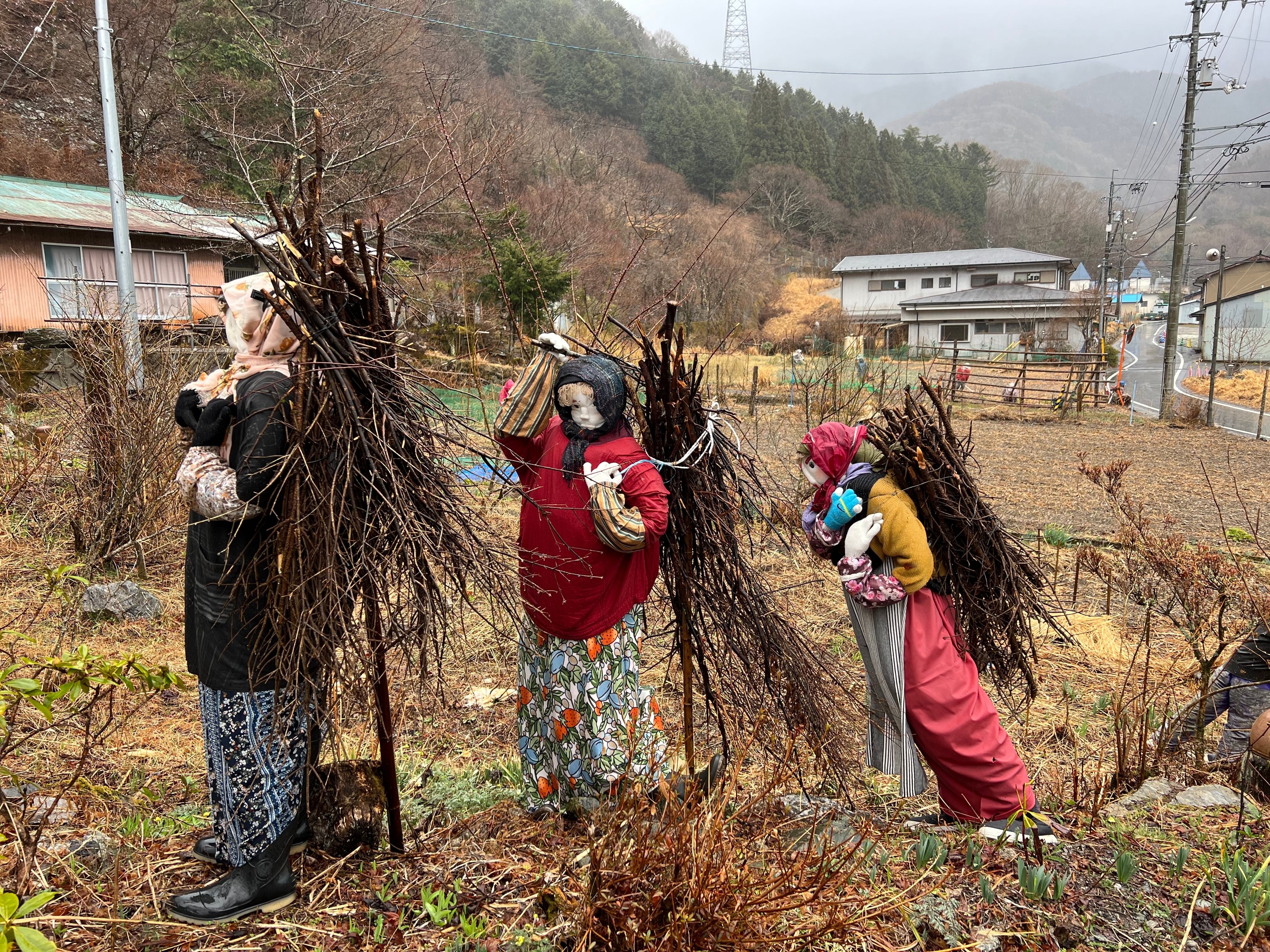
Ayano Tsukimi’s handmade dolls keep Nagoro’s stories alive. Shutterstock
Each year, Tsukimi organises an undokai, a school sports day. In scenes both touching and bittersweet, child-sized dolls line up for races, perch on swings, or tug on ropes in mock competitions. Real villagers and visitors join in, and the air fills with the sounds of laughter, cheering, and sizzling yakisoba from food stalls.
For a moment, Nagoro feels bustling again — not just with dolls, but with the echoes of life they represent.
Ayano often reflected that before the scarecrows, Nagoro was simply an ordinary village that drew little notice. That remained the case for some time, even after the dolls began appearing, until German filmmaker Fritz Schumann released a short 2014 documentary titled Valley of Dolls. His film cast a global spotlight on Ayano’s work and brought international curiosity to the quiet hamlet in Tokushima Prefecture.
A Mirror Of Rural Japan
Nagoro’s story resonates far beyond its borders. The village is both an artwork and a downright reflection of Japan’s demographic reality. Government efforts to revive rural communities—from childcare subsidies to new school facilities—often fail to lure back young families. Even nearby schools with multimillion-yen campuses count fewer than 40 students.
Advertisement
For residents, the challenges are personal as well as social. Tsukimi herself finds solace in her creations. She keeps a doll modeled after her grandmother in the passenger seat of her car. On the long drive to buy groceries, she says, she never feels alone.
Why Travellers Come
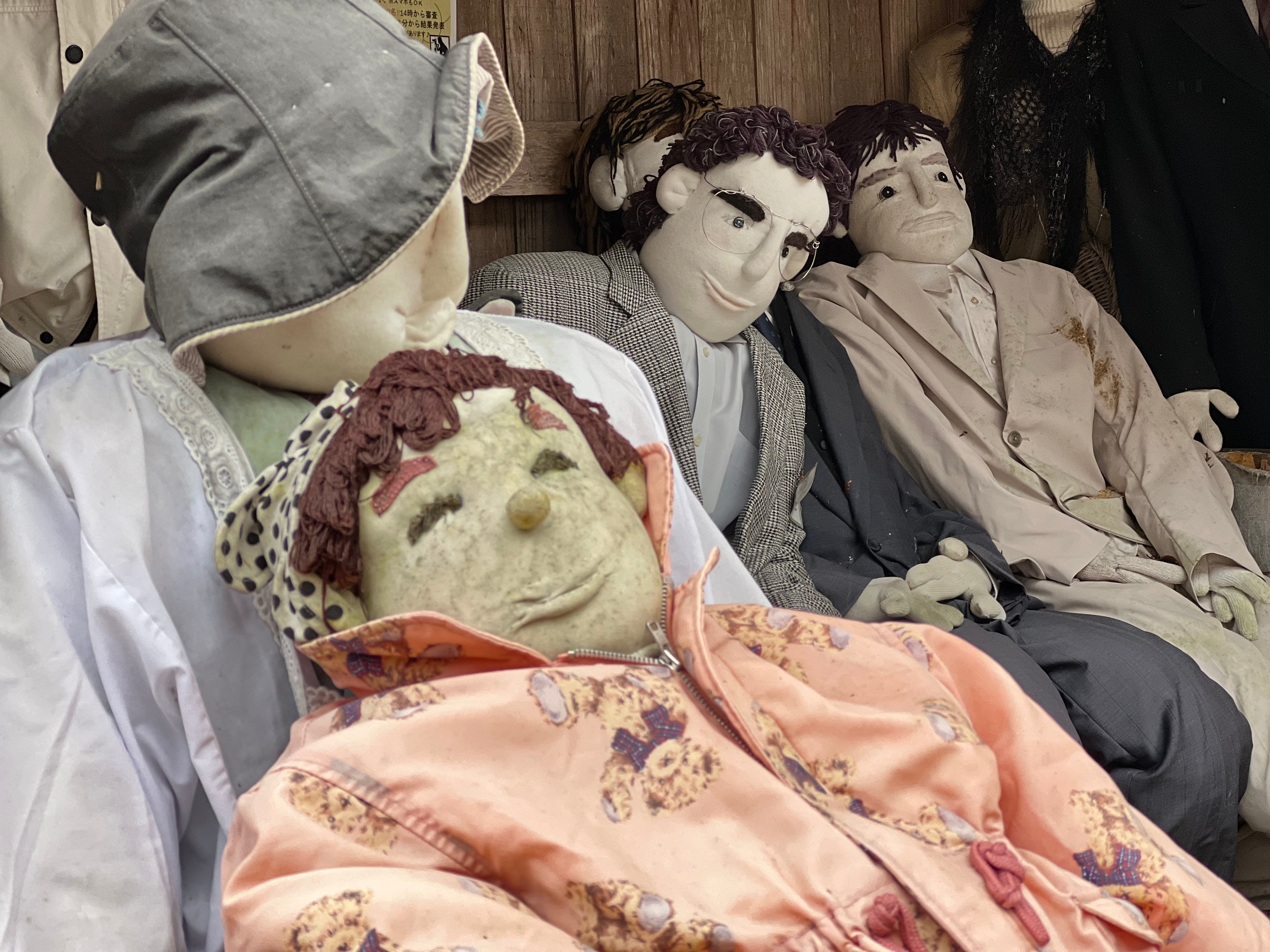
The dolls of Nagoro recreate the bustle of daily life Shutterstock
Today, Nagoro has become an unexpected destination for travellers seeking something beyond Japan’s heaving cities and ancient shrines and temples. The dolls, scattered across fields and tucked into corners, turn the village into a living open-air gallery.
Inside Nagoro’s spacious gymnasium, scarecrows crafted by Ayano and fellow villagers line the walls like a silent audience. On the stage, an unusual scene unfolds: a wedding party dressed in both Western gowns and traditional Japanese attire, flanked by six small boys in potato sacks standing beside the formally dressed figures.
For visitors eager to go beyond observation, Ayano offers a scarecrow-making workshop on the fourth Wednesday of each month from April through November. Participants are encouraged to bring their own sewing kits and clothing for the figures, turning the experience into a hands-on memory.
Advertisement
During these sessions, Ayano shares her creative process. Each doll begins with wooden slabs for the base, cotton for the head, elastic fabric for the skin, and buttons for the eyes. Wires give structure, while nearly 80 tightly rolled sheets of newspaper form the skeleton at the core of every figure.
Visitors wander its lanes with cameras, often posing beside the figures in playful mimicry. Some leave reflective notes on chalkboards inside the old school: Where are the living?
A Village That Won’t Be Forgotten
Nagoro’s future remains uncertain. One day, its last residents may leave or pass on. But thanks to Ayano Tsukimi’s needle and imagination, the village has already secured its legacy. The scarecrows stand as quiet guardians of memory, companions for the living, and unlikely hosts for the many who come to see them.
And for travellers winding their way into the secluded Iya Valley, this small mountain hamlet offers more than an unusual photo stop. It offers a meditation on time, loss, and the human desire to keep our communities alive, even in the most unexpected forms.
Advertisement
FAQs
1. What is Nagoro Scarecrow Village in Japan?
Nagoro, a small village in Shikoku’s Iya Valley, is famous for its life-size scarecrows, or kakashi, which outnumber the human residents more than 10 to 1.
2. Who created the scarecrows in Nagoro?
The dolls were created by Ayano Tsukimi, a villager who began making them to replace lost neighbors and preserve memories of the community.
3. How many scarecrows are there in Nagoro?
There are more than 350 life-size scarecrows scattered across fields, classrooms, and public spaces in the village.
4. Why do people visit Nagoro?
Travellers visit Nagoro to see its eerie yet touching display of dolls, experience rural Japan, and reflect on the issue of depopulation.
5. How can tourists reach Nagoro Scarecrow Village?
Nagoro is located in Tokushima Prefecture on Shikoku Island. The village is accessible by bus or car from nearby cities, though it remains remote and off the main tourist trail.
Advertisement

Published At:
Tags