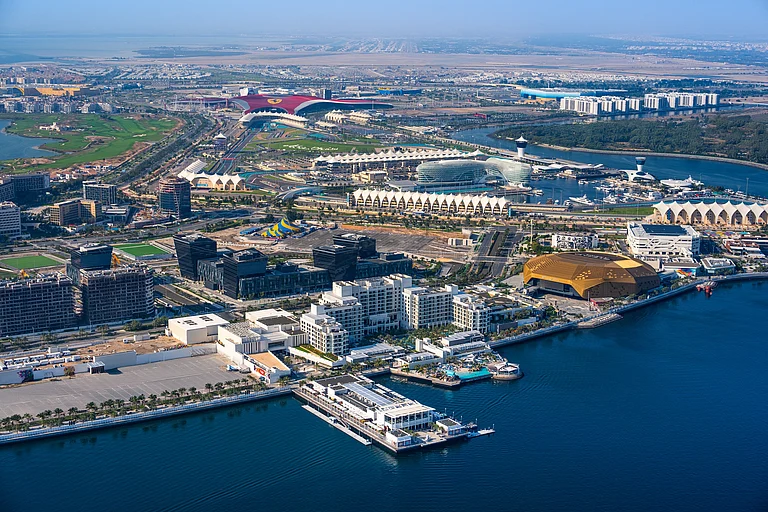
At a time when global travellers are seeking experiences that go beyond leisure and luxury, Abu Dhabi is responding with clarity and confidence. The opening of the Natural History Museum Abu Dhabi marks a significant moment in the emirate’s cultural tourism journey, reinforcing its position as a global hub for culture, science, and discovery. Long known for its high-end hospitality and leisure offerings, Abu Dhabi is now sharpening its appeal to travellers who value authenticity, education, and immersive storytelling. The new museum is a key pillar in the Department of Culture and Tourism – Abu Dhabi’s (DCT Abu Dhabi) long-term vision to place culture at the heart of the emirate’s tourism strategy. Its launch further strengthens the standing of Saadiyat Cultural District, Abu Dhabi, as a world-class cultural ecosystem—one designed to attract global audiences while offering meaningful engagement with history, science, and heritage.
Abu Dhabi Makes Global Waves With Natural History Museum Opening
The emirate strengthens its cultural tourism ambitions with a landmark institution at Saadiyat Cultural District

A DEFINING MOMENT IN CULTURAL TOURISM
The Natural History Museum Abu Dhabi opened its doors to the public on November 22, last year, instantly establishing itself as a major new global destination for science and education. Its debut was closely followed by the opening of the Zayed National Museum on December 2, creating an unprecedented moment in which two world-class museums launched within weeks of each other on the same island. Together, they signal a decisive shift in Abu Dhabi’s cultural positioning on the world stage. For the international travel trade, the museum represents a significant new tourism product. It offers visitors an immersive journey through 13.8 billion years of Earth’s history, making it both a powerful standalone attraction and a compelling addition to wider itineraries.
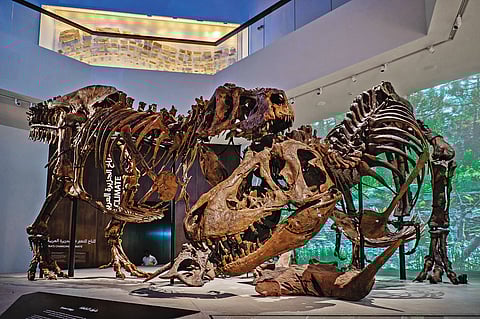
Designed to engage audiences of all ages, the museum blends large-scale spectacle with scientific depth, creating experiences that are as visually striking as they are educational. From the moment visitors step inside, the museum asserts its global stature. A herd of five colossal sauropod dinosaurs—towering at an extraordinary 75 feet—greets guests at the entrance, immediately setting the tone for a journey defined by scale and wonder. Deeper inside, another gallery presents a dramatic face-off between two Tyrannosaurus rex skeletons, including the famed 67-million-year-old specimen, Stan, frozen in an eternal battle. These exhibits create unforgettable visual moments and rich storytelling opportunities for tour operators and itinerary designers alike. The museum is also home to Lucy, the world’s most famous human fossil, dating back 3.2 million years, further underlining its international significance.
A GLOBAL STORY THROUGH AN ARABIAN LENS
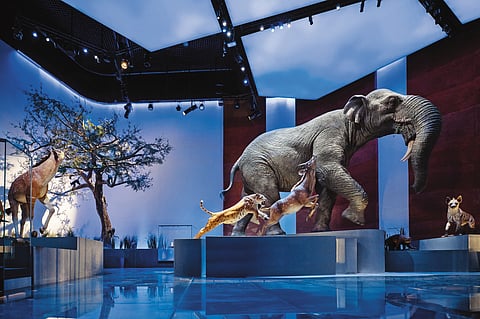
While the scale of the museum’s displays is impressive, what truly sets the Natural History Museum Abu Dhabi apart is how it tells a global story through a distinctly Arabian perspective. As it traces the evolution of life on Earth, the museum places special emphasis on the natural heritage of the Arabian Peninsula, inviting visitors to explore the region’s unique role in the planet’s history. Among its most significant treasures are the remains of the extinct four-tusked elephant, Stegotetrabelodon emiratus, discovered in Abu Dhabi. This rare find provides a tangible link to the emirate’s ancient past and anchors the global narrative firmly in local soil. By highlighting such regional discoveries, the museum delivers the sense of place that modern travellers increasingly seek— offering not just knowledge, but context and connection.
This balance between global storytelling and regional relevance allows visitors to engage with science and history in a way that feels both expansive and grounded. It is this approach that positions the museum as more than a collection of exhibits, but as a destination that reflects Abu Dhabi’s identity and ambition.
ELEVATING SAADIYAT CULTURAL DISTRICT ABU DHABI
The opening of the Natural History Museum further cements Saadiyat Cultural District Abu Dhabi’s status as one of the world’s most concentrated cultural hubs. The museum joins an already prestigious lineup that includes Louvre Abu Dhabi, teamLab Phenomena Abu Dhabi, and the recently opened Zayed National Museum, with Guggenheim Abu Dhabi set to follow. Together, these institutions form a carefully master-planned ecosystem that allows visitors to explore art, history, science, and immersive experiences within a single walkable destination. For travel professionals, this presents the opportunity to curate multi-day cultural journeys where travellers can move seamlessly between world-class attractions, deepening both their stay and engagement.
This diversity strengthens Abu Dhabi’s competitive position within the global tourism landscape, broadening its appeal across markets and audience segments—from families and educators to cultural explorers and high-value travellers.
BUILT ON PROVEN DEMAND
DCT Abu Dhabi’s focus on cultural tourism is grounded in clear demand. Cultural sites across the emirate have recorded a year-to-date footfall of 5.9 million visitors, underscoring a growing appetite for meaningful and memorable experiences. The Natural History Museum Abu Dhabi is well-positioned to build on this momentum, reinforcing Abu Dhabi’s reputation as a year-round destination where heritage and innovation converge. With its world-class exhibits, regional storytelling, and strategic location within the Saadiyat Cultural District, Abu Dhabi, the museum is poised to become a must-visit highlight on the global tourism map, offering an inspiring journey through time for visitors.