West Bengal has emerged as a major destination for international travelers, ranking second in India after Maharashtra, according to the Union Tourism Ministry’s India Tourism Data Compendium 2025. The state received 31 lakh foreign visitors in 2024, marking a 14.8 percent increase over 27 lakh in 2023. In the first half of 2025 alone, more than 27 lakh international tourists had already arrived, underscoring sustained growth.
West Bengal Ranks Second In India For International Tourists: Experts Cite Culture, Durga Puja, And Tagore’s Legacy
West Bengal has emerged as India’s second most popular destination for international tourists, welcoming 31 lakh visitors in 2024—a 14.8 percent rise from 2023—with over 27 lakh arrivals in the first half of 2025, highlighting sustained growth

Advertisement
Chief Minister Mamata Banerjee attributed this rise to the state’s diversified tourism initiatives, including festival tourism, religious tourism, and MICE (Meetings, Incentives, Conferences, and Exhibitions) tourism, which aim to attract a broader range of visitors from around the world.
Durga Puja And Tagore Boost Tourism
The surge in international tourism has not gone unnoticed by experts in the Bengal tourism sector, who point to both cultural richness and strategic promotion as key drivers of growth. “Yes, there has been a rise in interest,” says Tathagata Neogi, CEO of Immersive Trails, a global experiential travel company that offers expert-led tours and workshops. Originally focused on Kolkata’s history and culture, the company is now expanding its offerings to include experiences across the world.

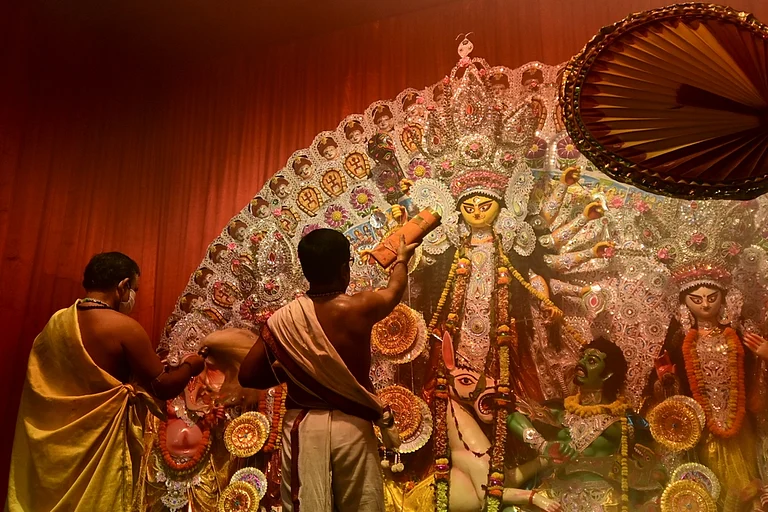
Kolkata's Durga Puja is now one of the biggest festivals in India Shutterstock
“We are getting more inquiries from different parts of the country and internationally about visiting Bengal. Earlier, it was mostly tourists from Britain or Commonwealth countries exploring colonial history. Now, Europeans and Southeast Asians are coming to engage with Bengal’s postcolonial present.”
Advertisement
Neogi credits Durga Puja’s inclusion on the UNESCO World Heritage list for raising awareness of the state’s vibrant religious and cultural life. He also highlights the global appeal of Tagore’s legacy, Bengal’s music, handicrafts, and immersive cultural experiences. “Visitors love the Bengali food, the warmth of local hospitality, folk music traditions, diverse crafts, and the charm of the Bengal countryside,” he adds.
Bengal Finds Its Tourism Identity
Echoing the pull of culture and Durga Puja, Swarojit Roy, founder of 100 Miles, believes West Bengal has long had extraordinary cultural and natural assets, but its tourism narrative was scattered. “We tried to position Bengal as a state that offers everything — mountains, sea, forests, mangroves — which unintentionally placed us in the same bracket as several other Indian destinations. What was missing was a clear identity marker that made Bengal unmistakably Bengal.”

The Sunderbans Delta Shutterstock
Small Players, Big Impact
Much of Bengal’s tourism momentum now comes from small, meaningful travel outfits, heritage enthusiasts, and local entrepreneurs. These boutique operators are showcasing the state’s cultural roots, hidden gems, and immersive experiences, proving that tourism doesn’t have to rely on mass-market attractions. “As their numbers grow, so too does a new image of Bengal: not just as a place to visit, but as a place to experience and understand,” says Roy.
Advertisement
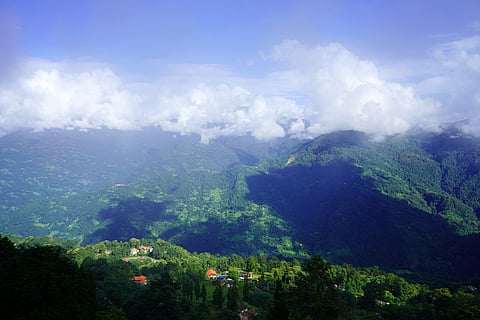
Kalimpong in West Bengal Shutterstock
"There are now more structured promotions," says Neil Law, who runs Himalayan Footprints, an organisation offering adventure tourism and parks in Bengal. "Branded organisations like Taj, Ramada, and Sonar Bangla have set up hotels in remote destinations, increasing the inflow of tourists," he says. "And it is the diverse ecosystem and culture across Bengal that offer experiences which create recurring motivations and lasting impressions for visitors."
Cultural Recognition And Global Appeal
Roy highlights the UNESCO inscriptions of Durga Puja and Santiniketan as key milestones. “These recognitions have not only sparked curiosity but positioned the state internationally as a place where living traditions, artistic modernism, and community celebration coexist in rare harmony.” He notes that visitors from the US, UK, Europe, and even Russia are now seeking intimate, local, and purposeful journeys.

Upasana Griha in Shantiniketan WikiCommons
Roy points out infrastructure challenges: “With stronger air connectivity to Europe and the US, this momentum could grow exponentially. Our biggest challenges continue to be road infrastructure and intra-state travel speed, both of which need urgent attention.”
Advertisement
Questioning Quantity Over Quality
However, some are questioning the report and calling for more context. Anirban Dutta of Darjeeling Walks, a community travel organisation offering handwoven walking experiences with local experts, raises concerns about the quality and authenticity of the data. He asks whether the focus should be on quantity or quality, and how much of the reported growth genuinely reflects the “real Bengal” delivered, and whether the data is with honesty and integrity.
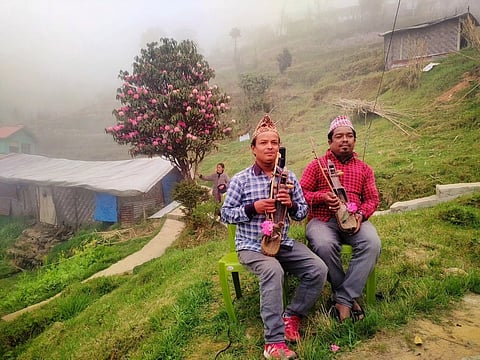
Experience local music as part of the immersive experience with Darjeeling Walks Image courtesy / Darjeeling Walks
Dutta points out that popular destinations such as Kolkata, Purulia, Malda, Shantiniketan, Bolpur, Darjeeling, and Kalimpong are gradually losing their authenticity. Drawing a comparison with Cambodia, he notes how, during a 2017–18 visit, he saw that Siem Reap airport and its welcoming experience were carefully designed to align with the city’s ancient history. By contrast, Kolkata’s airport and city development are evolving in ways that compete with other major cities but risk erasing the city’s cultural charm, he notes.
Advertisement
He believes Bengal should focus on its cultural ethos and the multicultural essence, rather than flashy, data-driven tourism initiatives. “This data honestly doesn’t matter much to people like us because I see the wrong kind of tourism happening every other day, and in large numbers,” he adds.
Reflecting on recent events, Dutta says, “I was recently at a fair called Travel East — I was really disappointed. The Bengal stall was so dull. Whereas other states focused on their real history, one of the largest photographs at our stall was of the new temple built in Digha by our honourable chief minister. That is being showcased as a tourism initiative. Maybe people are coming to see the new temple, but again, the question rises — is it authentic? Is this the change we want to introduce?” He concludes that without intentional efforts to preserve Bengal’s original character, increasing visitor numbers alone cannot be considered a sign of success.
Advertisement
FAQs
How popular is West Bengal among international tourists?
West Bengal ranks second in India for international tourism, after Maharashtra, according to the Union Tourism Ministry’s India Tourism Data Compendium 2025.
How many foreign tourists visited the state recently?
The state received 31 lakh international visitors in 2024, a 14.8% increase from 27 lakh in 2023. Over 27 lakh foreign tourists had already arrived in the first half of 2025.
What drives international tourists to West Bengal?
Experts cite Bengal’s rich cultural heritage, Durga Puja (recently recognized by UNESCO), Tagore’s legacy, music, handicrafts, festivals, and immersive experiences as major attractions.
What types of experiences are attracting travelers?
Visitors are drawn to cultural festivals, heritage sites, literature, crafts, music, regional cuisine, river culture, and boutique, immersive experiences.
Published At: