Holi reminds us of “Balam Pichkari” playing in the background while a riot of colourful gulaal hangs mid-air—laughter echoing through streets, white kurtas turning pink, yellow and blue within seconds. It’s that one day when India loosens up. When strangers smear colour on each other and become friends. When temples ring with chants in the morning and rooftops pulse with music by noon.
Planning A Holi Getaway? Here’s Where To Celebrate Across India In 2026
Want Holi with meaning, music or a little madness? These six Indian destinations promise colour, culture and chaos

Advertisement
Beyond the Bollywood montages and Instagram reels, Holi has a deeper meaning. It celebrates the start of spring, how good wins over evil, and forgiving others. It's about forgetting old wrongs and enjoying the moment. The celebration starts with Holika Dahan, a bonfire, and ends with Rangwali Holi, where people smear each other with colours to show happiness.
If you want to travel for Holi in 2026 (on March 4, with Holika Dahan on March 3), here are six places for great experiences, whether you want to see temple customs, royal events, or lakeside views.
Mathura & Vrindavan, Uttar Pradesh
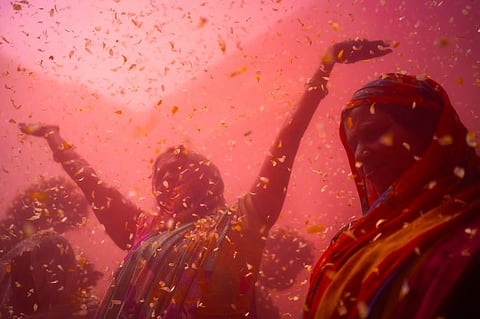
Holi in Braj unfolds over nearly ten days, each rooted in Krishna lore and temple tradition roshagulla/Instagram
Braj evokes a sense of tangible history, beyond merely being a festivity. Many believe it's Krishna's land. Here, Holi lasts for days or weeks with temple events, songs, and special things like Phoolon Ki Holi, where flower petals fall instead of coloured powder. The Banke Bihari Temple in Vrindavan is the main spot, with many people singing as priests throw flowers and colors. In Mathura, the Krishna Janmabhoomi temple and Vishram Ghat have shows and religious excitement. It’s exciting, busy, touching, and something you'll never forget.
Advertisement
What to experience:
Phoolon Ki Holi at Banke Bihari Temple
Holika Dahan at Vishram Ghat
Temple processions and Braj folk songs
Pro Tip:
Arrive at least 3-4 days early. Celebrations begin well before the main date, and accommodations sell out fast. Stay in Mathura for better connectivity and do day trips to Vrindavan and Barsana.
Barsana, Uttar Pradesh
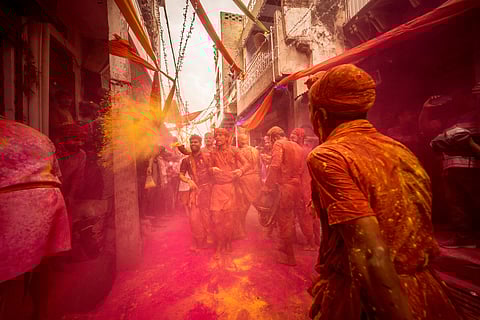
Barsana is famous for its Lathmar Holi Shutterstock
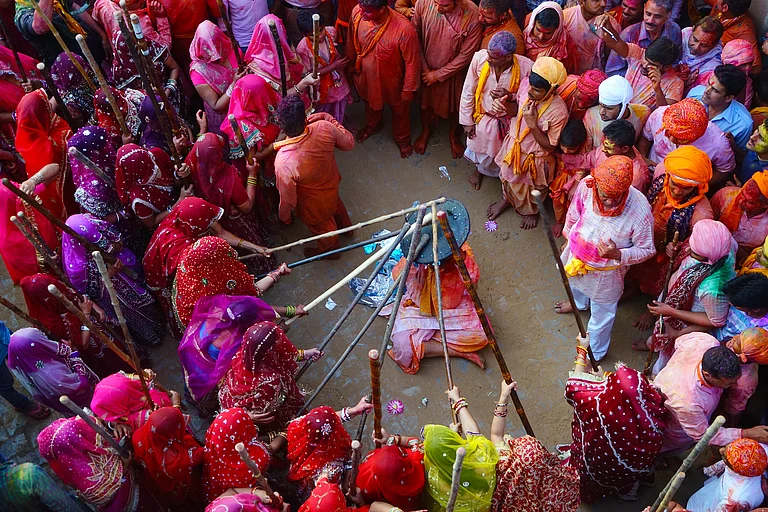
Barsana’s Holi is theatrical, playful and deeply rooted in folklore. Known for the famous Lathmar Holi, this tradition re-enacts the legend of Krishna teasing Radha and her friends—with women playfully striking men with sticks while they shield themselves. It’s dramatic, symbolic and one of India’s most photographed Holi events.
The celebrations take place at the Radha Rani Temple and spill into the narrow streets. Crowds are massive, energy levels sky-high, and the atmosphere electric. This is not a soft, pastel celebration—it’s loud, vibrant and wonderfully chaotic.
What to experience:
Lathmar Holi at Radha Rani Temple
Braj folk music and dance
Local sweets like gujiya and thandai
Pro Tip:
Stand at an elevated vantage point if possible. The main square gets extremely packed. Book accommodation months in advance or base yourself in Mathura.
Advertisement
Jaipur, Rajasthan
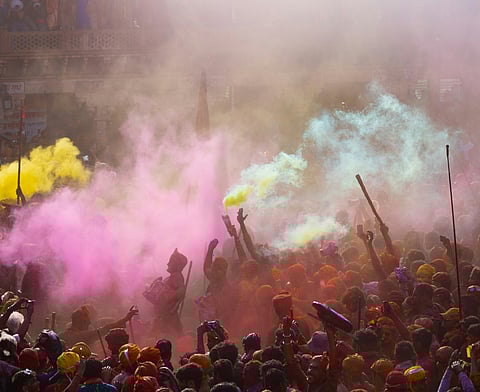
A riot of colours in Jaipur Unsplash
If you want colour without complete chaos, Jaipur offers a structured yet spirited Holi. Jaipur, also known as the Pink City, combines its royal past with lively community celebrations, drawing many visitors. You can see folk dances like Ghoomar, enjoy live music with amazing colorful scenes. The old city has active street plays, and many visitors prefer going to events at older properties for a more relaxed experience.
What to experience:
Holika Dahan ceremonies
Cultural performances in palace settings
Shopping for traditional Gulaal Gota (lac colour balls)
Pro Tip:
Choose ticketed or hotel-hosted celebrations for a safer, more controlled environment—especially if you’re travelling with family.
Udaipur, Rajasthan
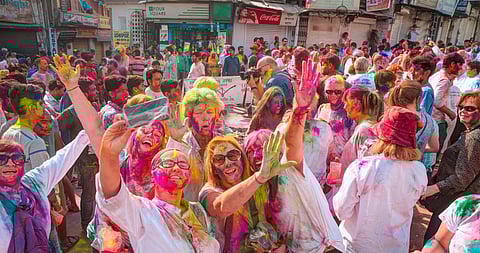
Holi celebrations in Udaipur Shutterstock
Udaipur is known for its ceremonial style of celebrating Holi. The Mewar royal family usually has a large Holika Dahan at the City Palace, including parades and torch rituals. Celebrations continue into the old city and around Gangaur Ghat the next day, with Lake Pichola in the background. Many hotels have private Holi brunches and color events, perfect for couples or those who want a fancier experience.
Advertisement
What to experience:
Royal Holika Dahan at City Palace
Colour play near Gangaur Ghat
Sunset boat rides on Lake Pichola
Pro Tip:
Secure invitations or tickets in advance if you want access to palace events. For a quieter escape, book a lakeside hotel celebration instead of joining street crowds.
Varanasi, Uttar Pradesh
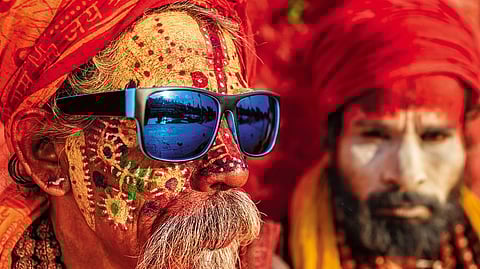
Colour, chants and raw energy unfold along the sacred ghats of Varanasi Shutterstock
Holi in Varanasi is not polished, it’s immensely powerful. The ghats turn into clouds of colour, drums echo through narrow lanes, and chants of “Har Har Mahadev” blend with laughter. Celebrations often begin right after morning prayers and continue until the city is drenched in pink and red. A unique aspect here is Masan Ki Holi, played near Manikarnika Ghat, where ash symbolically replaces colour, which is a reminder of life’s impermanence. It’s philosophical, intense and deeply rooted in the city’s spiritual character.
What to experience:
Holi at Assi and Dashashwamedh Ghats
Masan Ki Holi
Evening Ganga Aarti after a day of colour
Pro Tip:
Stick to daytime celebrations and move in groups. Varanasi’s Holi is immersive but can get overwhelming for first-timers.
Advertisement
Shantiniketan, West Bengal
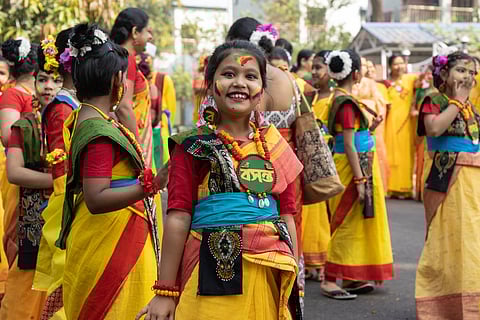
The colours of Holi light up faces in Shantiniketan Shutterstock
If your idea of Holi leans more towards poetry than party, Shantiniketan’s Basanta Utsav offers a beautifully restrained alternative. Introduced by Rabindranath Tagore, this spring festival is celebrated at Visva-Bharati University with music, dance and cultural performances.
Students dressed in yellow and saffron sing Rabindra Sangeet and apply dry abir gently rather than throwing water or colour aggressively. The vibe is intimate, aesthetic and deeply cultural—perfect for travellers who want meaning over madness.
What to experience:
Basanta Utsav performances
Rabindra Sangeet and dance recitals
Local handicraft markets
Pro Tip:
Arrive early to secure a good viewing spot near the university campus. Wear yellow to blend in with the spring theme.
FAQs
1. When is Holi 2026 in India?
Holi will be celebrated on 3 March 2026, with Holika Dahan taking place on 2 March 2026.
2. Which city is best for a traditional Holi experience?
Mathura and Vrindavan offer the most traditional and devotional Holi celebrations rooted in Krishna lore.
Advertisement
3. Where can I celebrate a safer, more organised Holi?
Jaipur and Udaipur are ideal for curated, hotel-hosted or palace-style celebrations.
4. Is Holi safe for tourists in India?
Yes, especially in organised events and popular destinations — just stick to daytime celebrations and travel in groups.
5. What should I wear and carry for Holi?
Wear old cotton clothes (preferably white), oil your hair, protect electronics with waterproof pouches, and carry minimal valuables.
Published At: