In the quiet plains of Maharashtra lies Lonar Crater, a relic of a cosmic encounter some 570,000 years ago. Carved into solid basalt, the crater forms a near-perfect bowl, 1.8 kilometres across and 150 metres deep, now filled by a lake that is both salty and alkaline. Its waters are unusual: divided into layers that refuse to mingle, they occasionally take on a soft pink hue, a subtle signal of the lake’s complex chemistry. Scientists, birdwatchers and wandering travellers alike are drawn here, intrigued by a landscape where geology and life converge in unexpected ways.
Lonar Crater: Trek, Temples And Tales Of A Cosmic Impact
Lonar Crater in Maharashtra marks the site of a meteorite impact, forming a vast basalt bowl now filled with a rare saline and alkaline lake. Its waters, known to occasionally blush pink, continue to intrigue scientists and travellers alike

Advertisement
Visiting Lonar Crater in Maharashtra is a chance to walk through both time and terrain. Trails lead down to the salty, alkaline lake at the crater’s base, while scattered temples such as Daitya Sudhan offer glimpses of centuries-old stonework. The area also draws those who enjoy watching birds among the rim’s trees or staying late to watch the stars wheel overhead. Here is a primer to the site.
About The Lonar Crater
Lonar Crater formed during the Pleistocene Epoch, when a meteorite or comet struck this part of the Deccan Traps with immense force. The collision carved a deep, nearly circular depression in the basaltic rock, leaving behind a record of an event that is both rare and remarkably well-preserved.
The Rock Beneath
Unlike most impact sites, Lonar is the only known crater on Earth to be cut into basalt. These dark volcanic flows of the Deccan Traps provide a stark, almost otherworldly landscape, their layers tilted inward along the crater walls and scattered as ejecta around the rim.
Advertisement
The violent encounter left unmistakable traces. Scientists have identified shock-metamorphosed material such as maskelynite, coarse breccia, and tiny glassy spherules—all hallmarks of a high-velocity impact. Each piece tells a story of extreme heat and pressure, frozen in the rock.
Measured from rim to rim, the crater stretches roughly 1.8 kilometres across, with the lake at its centre spanning 1.2 kilometres. At around 137 metres deep, the bowl is encircled by a raised rim, with basalt flows leaning inward like the pages of a closed book. The surrounding debris and ejected rock hint at the colossal energy that created this formation.
The Lake
The lake at the heart of the crater is both saline and alkaline, hosting an unusual ecosystem where algae such as spirulina thrive. Its water levels have shifted over time, with occasional rapid rises threatening nearby 12th-century temple ruins. Chemically, the lake is studied as an analogue for Martian conditions, offering insights into how life might endure in extreme environments.
Advertisement
Scientific and Cultural Significance
Lonar is officially recognised as a National Geo-Heritage Monument, valued not only for its unique geology but also for the window it offers into planetary impacts. Researchers examine it to understand impact processes, astrobiology, and the resilience of life in challenging settings—while visitors can glimpse a landscape shaped by forces both ancient and cosmic.
Temples At The Edge Of Time
The basaltic landscape of Lonar Crater is not only a record of cosmic violence but also a canvas of human devotion. Scattered around the crater and along its rim are ancient temples, mostly dating from the 11th and 12th centuries, their stone walls entwined with local legend. At the heart of the mythology is the demon Lonasura, said to have been defeated by Lord Vishnu, whose triumph is commemorated in several shrines here.
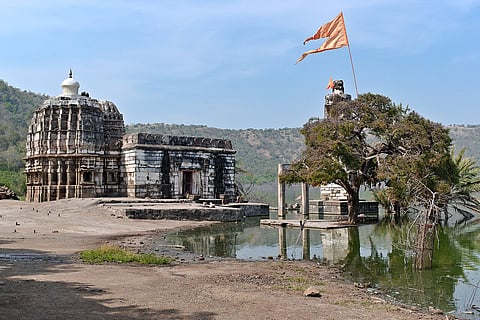
Kamalja Devi Temple Rohit14400/Wiki Commons
Daitya Sudhan Temple
The Daitya Sudhan Temple in Lonar town is the most prominent. Built in the Hemadpanti style, its basalt structure bears intricate carvings reminiscent of the Khajuraho temples, including a striking depiction of Vishnu slaying Lonasura. Though centuries old, it retains a sense of vitality, as if the story it enshrines still echoes through the halls.
Advertisement
Gomukh Temple
Perched at the crater’s edge, the Gomukh Temple—also known as Sita Nahani—is celebrated for a stream that flows continuously from a stone cow’s mouth, a small yet extraordinary feature that draws both pilgrims and curious travellers alike.
Kamalja Devi Temple
Located among trees beside the lake, the Kamalja Devi Temple honours the goddess Kamalja. Its serene setting contrasts with the crater’s dramatic geology, offering a quiet space for reflection amid the volcanic landscape.
Other Notable Shrines
The area also holds the Papahareshwar Temple, a Shiva shrine with a stepped tank and ornate Nandimanḍapa; Yajñeshwar Temple, noted for its intricate carvings; and the Motha Maruti Temple, where Hanuman is portrayed in a rare reclining pose. Further scattered temples—including Kumareshwar, Amberkhana (Sun Temple), Mungala Mahadeo, Chopda Mahadeo, and Wagh Temple—range from well-preserved to ruined, each offering a glimpse into centuries of religious practice and regional craftsmanship.
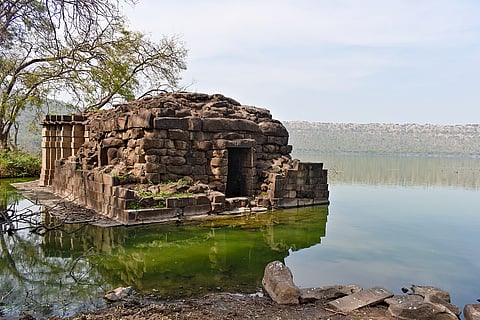
The Mor Mandir at Lonar Rohit14400/Wiki Commons
Living History in Stone
Advertisement
Most temples are constructed from the same basalt that forms the crater walls, linking human endeavour directly to the geology of the site. Maintained by the Archaeological Survey of India or left in partial ruin, they provide a mix of architectural exploration, spiritual significance, and a tangible connection to the myths that shaped this landscape. Visitors here can wander between legends and layers of rock, feeling the slow passage of both cosmic and human time.
Things To Do Around Lonar Crater
Trek to the Crater Base
A walk down from the rim brings you face-to-face with the crater lake, its salty, pink-tinged waters framed by basalt walls. The descent takes you through unusual rock formations and patches of scrub, offering a quiet immersion in the crater’s unusual ecosystem.
Birdwatching and Wildlife
The crater supports a surprising variety of wildlife. Peacocks strut along the rim, monkeys leap between rocks, and owls and migratory birds can be glimpsed among the trees, making it a rewarding spot for anyone with binoculars or a camera.
Advertisement
Viewpoints and Photography
Walking the 8-kilometre rim reveals ever-changing perspectives of the crater. The area around Gomukh Temple, in particular, provides sweeping views of the lake and surrounding plains, perfect for photography or simply taking in the scale of the impact.
Stargazing and Camping
With little light pollution, Lonar is ideal for watching the night sky. Camping near the lake, either independently or as part of an organised astrotour, allows visitors to enjoy a silent, starlit landscape few other places can match.
Day Trips to Nearby Attractions
For those looking to extend their visit, the famed Ajanta and Ellora Caves are within reach by car, offering a chance to explore more of Maharashtra’s remarkable history and artistry in a single day.
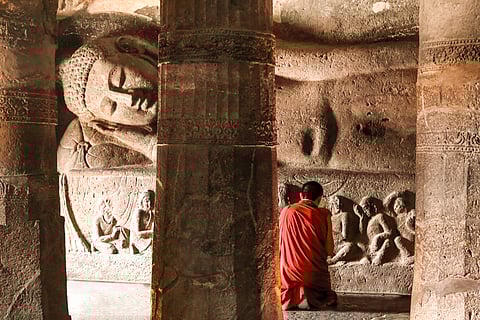
Ancient statue of reclining Buddha at Ajanta Caves, Aurangabad Matias Planas/Shutterstock
Where To Stay
For those visiting the Lonar Crater, staying in Lonar town is the most convenient option, placing you close to the site. The MTDC (Maharashtra Tourism Development Corporation) guest house is particularly popular, situated just a five-minute drive from the lake entrance and offering reliable, basic amenities. Several small private hotels and guest houses in Lonar also provide comfortable stays for travellers. For those seeking more options, the nearby town of Mehekar, around 12 km from the crater, has additional hotels and guesthouses, making it an alternative option, if Lonar’s accommodations are fully booked.
Advertisement
The Information
Best Time to Visit
The ideal period is from October to March, when the weather is cool and comfortable for trekking and sightseeing. Temperatures during these months make walking along the rim or exploring the crater base much more enjoyable. November to February is particularly suited for visiting the temples and observing the lake’s unusual saline-alkaline ecosystem. Between June and September, trails can become slippery, and leeches may appear, making trekking more challenging.
Guides: Local guides are available and can provide fascinating insights into the crater’s geological history, as well as the myths and stories surrounding the ancient temples.
Getting There
The nearest airport to Lonar Crater is Aurangabad Airport (IXU), around 135–140 km away. The closest major railway stations are Jalna (90 km) and Malkapur (90–100 km). From either station or the airport, private taxis and state-run MSRTC buses provide a 2–3 hour journey to the crater.
Advertisement
FAQs
Where is Lonar Crater located?
Lonar Crater is in the Buldhana district of Maharashtra, India.
What makes Lonar Crater unique?
It is the world’s only hyper-velocity impact crater formed in basaltic rock, making it geologically significant.
How large is the crater?
Lonar Crater is about 1.8 km in diameter and approximately 150 metres deep.
Why does the lake change colour?
The lake can turn pink due to high salinity and the presence of haloarchaea microorganisms.
When is the best time to visit?
The best time to visit is between October and March, when the weather is more comfortable.
Are there any travel tips to keep in mind?
Be prepared for a steep trek down uneven steps to reach the lake. Carry sufficient water and food, as the area is relatively secluded.

Published At: