Sawantwadi is a small Konkan town with a notably grand inheritance. Set on India’s mid-western coast in Maharashtra’s Sindhudurg district, it was once the capital of the Sawant Bhonsle kingdom and retains the imprint of that past. Its 18th-century Royal Palace still overlooks Moti Talao, the lake at the town’s centre, while workshops continue to produce the painted wooden toys and Ganjifa playing cards for which it is known. With the Arabian Sea on one side and the Western Ghats on the other, it also serves as a convenient base for exploring Amboli Ghat and the quieter beaches at Kondura and Shiroda.
Konkan’s Quiet Gem: A Guide To Sawantwadi
In Sawantwadi, a former royal capital in Sindhudurg, palace grandeur meets living craft traditions. Painted wooden toys, hand-made Ganjifa cards, misty ghats and quiet Konkan beaches together shape this small town’s outsized legacy

Advertisement
THINGS TO SEE AND DO
Visit Sawantwadi Palace
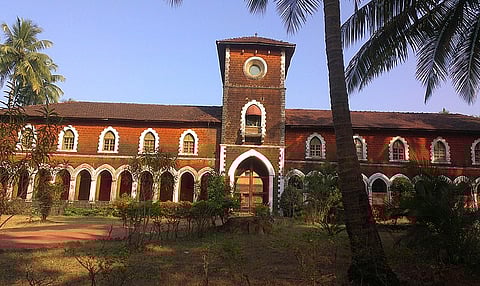
Sawantwadi Palace was built between 1755 and 1803 during the reign of Khem Sawant III Wikimedia Commons
Start at Sawantwadi Palace, built between 1755 and 1803 during the reign of Khem Sawant III. Part of it remains the royal family’s residence, while the Taisaheb Wada—constructed in the nineteenth century by Raghunath Sawant for the five queens and closed for nearly 30 years—has been restored as a boutique art hotel by Yuvrani Shraddha Lakham Sawant Bhonsle and Yuvraj Lakham Sawant Bhonsle.
Inside, you can walk through rooms displaying coronation memorabilia, family portraits and traces of court life. Another wing serves as a heritage stay and working studio, where you can watch craftspeople carve chess sets, shape wooden toys and paint Ganjifa cards. The work continues regardless of who is watching. Afterwards, step out to Moti Talao and see the façade mirrored in the water.
Explore Amboli Ghat

Amboli hills in the monsoon season Shutterstock
From Sawantwadi, drive up to Amboli Ghat, located about 700 metres above sea level in the Sahyadri range. It is the last hill station before the road drops towards Goa. The area is recognised as an ecological hotspot, receiving some of the state’s heaviest monsoon rainfall. Between June and September, waterfalls gather force, particularly the main Amboli Waterfall, which draws steady crowds. Kavalshet Point offers wide views across the valley. Even outside the rains, the plateau’s forested slopes and winding roads make the climb worthwhile.
Advertisement
Discover Sawantwadi’s Living Crafts
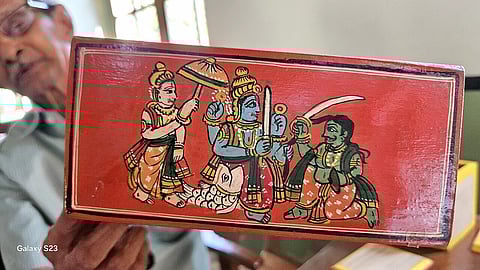
A ganjifa box with Ramayana scene Art Projects MKCL KF/Wiki Commons
Sawantwadi’s artisan traditions date back to the seventeenth and eighteenth centuries, when Brahmin communities from Andhra and Telangana brought lacquerware and Ganjifa with them. Ganjifa cards—circular, hand-painted decks of cards of Persian origin—were gradually adapted to Indian themes, depicting the Dashavatara, zodiac signs, or epic tales. Each set of 120 cards is still painted by hand, a painstaking process preserved by only a few artisans.
The town’s wooden toys tell a parallel story. Carved from Indian coral tree wood and finished with lacquer, they once taught children household roles, depicted Maratha soldiers, or illustrated village life and festival rituals. Today, craftsmen continue these techniques, producing chess sets, figurines and kitchen miniatures that remain distinctly Konkan in style.
Shop For Local Crafts
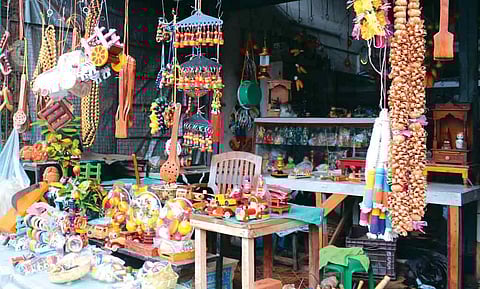
Wooden toys in a shop in Sawantwadi Culture Aangan
A short uphill walk from Moti Talao leads to Chitar Ali, where the Chitari community has worked with wood for generations. The lane is lined with modest shops stacked with painted toys, from chess sets to kitchen miniatures. Look closely at the carved fruits; the lacquered skins and careful shading can easily mislead the eye. Yet the craft is under strain from cheaper factory-made imports. As you browse, step into the adjoining provision stores and ask for Malvani spice blends, still ground and packed locally.
Advertisement
Unwind Along the Konkan Coastline
Sawantwadi is like a gateway to some of the Konkan region’s cleanest and least crowded beaches. Just south, Shiroda Beach is considered one of the area’s most unspoilt stretches, with quiet sands and swaying palms. Velagar Beach, about 19 km from Vengurla, has long stretches of white sand. Then there is Sagareshwar Beach, which remains largely uncrowded. Slightly further afield, Tarkarli Beach in Malvan is known for clear waters and water sports, and Vengurla Port Beach offers scenic views near the historic port. These beaches are ideal for long walks, leisurely relaxation, and taking in the coastal scenery away from the usual tourist crowds.
Step Into Craft Traditions
Shilpgram in Sawantwadi is a government-supported craft village established to preserve traditional arts such as Ganjifa cards and lacquerware. You can find local artisans making and selling hand-painted playing cards, lacquered items, earthenware, and hand-knit accessories. The site also includes the Shilpgram Heritage Resort, a great stay option with eco-friendly red-stone villas, a pool with a jacuzzi, and Malvani cuisine.
Advertisement
Experience Sawantwadi’s Spiritual Heritage
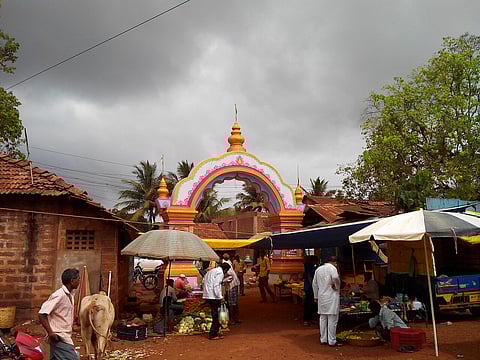
The 500-year-old Ravalnath Temple in Satarda panoramio/Wiki Commons
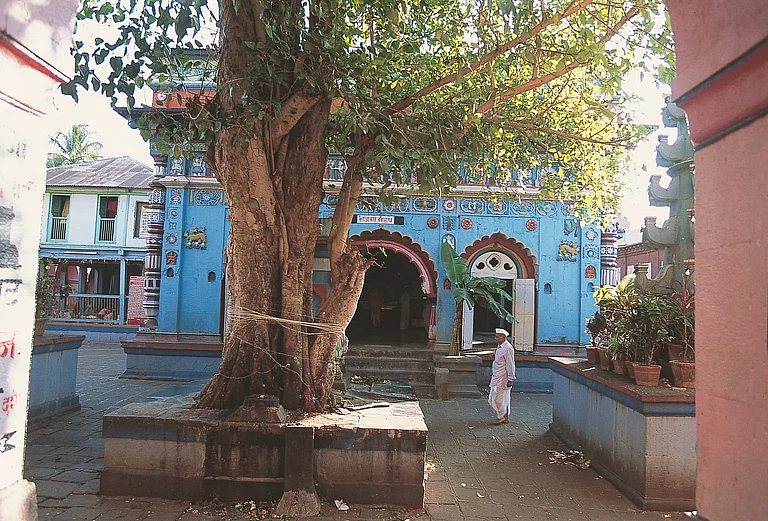
Check out the several ancient temples reflecting Konkan heritage in and around Sawantwadi. The 500-year-old Ravalnath Temple in Satarda is a prominent shrine dedicated to Lord Ravalnath, a local deity closely associated with the Natha cult. Just 7 km from Amboli Waterfall, the Hiranyakeshi Temple is the abode of Shiva and Parvati, drawing visitors for both its spiritual significance and scenic setting. These temples offer a glimpse into the region’s religious traditions and architectural style, making them essential stops for anyone keen to understand the cultural heart of Sawantwadi.
Places to See Nearby
Sawantwadi is well-positioned for several day trips. Head to Shiroda and Aravali for quiet beaches along the Konkan coast. If you are willing to cross into Goa, Querim and Arambol beaches are less than an hour away. History enthusiasts can also plan a trip to Yashwantgad Fort in Redi or the coastal Sindhudurg Fort in Malvan, historic sites with impressive architecture and stories of the region’s past. These destinations make Sawantwadi an ideal base for combining heritage, beaches, and a touch of adventure.
Advertisement
The Information
Getting There
Fly into Mopa (around 1 hour) or Dabolim (2–3 hours), take the Konkan Railway to Sawantwadi Road, or drive via NH66 for a scenic coastal–ghat route.
Best Time To Visit
Winter (December to February) is the most comfortable season, though the monsoon has its own moody charm if you don’t mind the rain.
Where To Stay
Sawantwadi offers a variety of accommodation options, from budget to luxury. For a royal experience, try the Sawantwadi Palace Boutique Art Hotel. Shilpgram Heritage Resort is a nature-focused retreat set amid gardens. If wellness is your priority, the Sarth Ayurveda Retreat & Wellness Centre is a good choice. For travellers on a budget, homestays around the town offer comfortable, authentic stays and a chance to experience local life firsthand.
Published At: