Before the buzzwords arrived, “eco-tourism, slow travel, sustainable escapes”—Koyna Nagar was already practising restraint. Cradled within the Western Ghats, this lake town near Satara grew around water, forest, and silence, long before travellers came searching for them. Today, as interest in mindful travel grows, Koyna Nagar feels quietly ahead of its time: an eco-sensitive zone where lived landscapes, not luxury labels, define the experience.
How This Offbeat Destination Is Changing The Way We Travel In Maharashtra
Weekend getaways get greener in Koyna Nagar, with serene lakes, trekking trails, and a wildlife sanctuary just waiting to be explored

Advertisement
Unlike Maharashtra’s headline destinations, Koyna Nagar doesn’t demand attention. It reveals itself gradually, as roads narrow, forests thicken, and the air cools noticeably. This is a region shaped as much by geography as by resolve, where one of India’s largest hydroelectric projects exists in careful balance with one of the Western Ghats’ richest biodiversity corridors. The reward for slowing down here is access: to still waters, unbroken forests, and a way of travelling that feels refreshingly unforced.
Where Water Reigns

The dam created the vast Shiv Sagar reservoir, influencing local life, climate, and travel in the region Shutterstock
Koyna Dam dominates both geography and imagination here. Rising across the Koyna River, it is one of India’s largest hydroelectric projects, a concrete colossus softened by mist, moss, and forested slopes. The dam’s backwaters spread into the expansive Shiv Sagar Lake, a reflective blue plane that mirrors the Sahyadri hills in quiet symmetry. Early mornings are the best time to stand still here, when fog drifts lazily over the water and the hills appear almost theatrical in their unveiling.
Advertisement
Beyond its visual drama, the dam has shaped life in the region for decades, powering homes, irrigating farmland, and quietly transforming Koyna Nagar into a water-bound town. Locals speak of the lake with familiarity rather than awe; fishermen push off at dawn, small boats cut gentle paths across the surface, and evenings bring families to its edges simply to watch the light change.
This watery landscape lends itself naturally to slow exploration. Boating on the lake reveals hidden inlets and forested banks inaccessible by road. On calm days, the stillness is broken only by the cry of distant birds or the sudden ripple of fish beneath the surface. Houseboat stays and lakeside camping are slowly gaining popularity, offering immersive ways to experience this tranquil geography, under star-filled skies unbroken by city glare.
Into The Wild
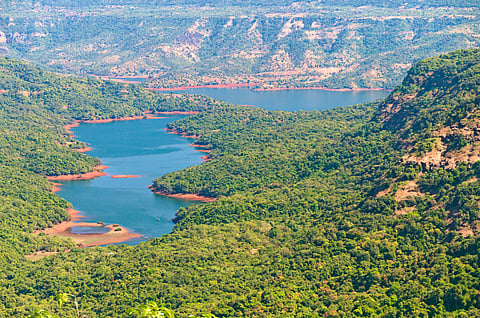
Green getaways in Western Ghats Shutterstock
Surrounding Koyna Nagar is one of the Western Ghats’ most ecologically significant stretches, the Koyna Wildlife Sanctuary. Spread across dense forests, rolling hills, and steep valleys, it forms a crucial part of the Sahyadri Tiger Reserve landscape. This is living wilderness, rich and surprisingly raw, where nature still dictates terms.
Advertisement
Wildlife sightings here are never guaranteed, and that’s precisely the point. Leopards, gaurs, sloth bears, and sambar deer move through the forests quietly, while the birdlife puts on a more generous show. Malabar pied hornbills glide between trees, crested serpent eagles circle overhead, and paradise flycatchers dart through shaded clearings. For birdwatchers and nature photographers, the sanctuary offers reward without spectacle, moments earned, not staged.
Treks through the sanctuary reveal a terrain that changes with every bend. One moment you’re walking beneath towering canopies, the next you’re staring down into valleys where waterfalls appear almost by surprise. Ozarde Waterfall, accessible by a forest trek, is especially dramatic during the monsoon, crashing down rocky cliffs with theatrical force, mist rising like breath from the earth itself.
Then there is Vasota Fort, its stone remnants perched high above the forest, accessible via a boat ride across Shiv Sagar Lake followed by a demanding trek. Once a formidable Maratha stronghold, today Vasota offers silence, wind, and views that sweep endlessly across forest and water. It’s history softened by wilderness, best visited slowly and respectfully.
Advertisement
Slow Travel Promise
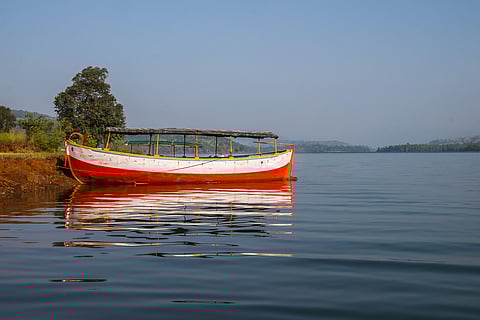
Koyna Dam stands as a rare example of infrastructure operating within an eco-sensitive zone Shutterstock
What makes Koyna Nagar truly special isn’t just its scenery, but the growing philosophy shaping how visitors experience it. Initiatives like Explore Koyna, led by locals who know the forests, rivers, and trails intimately—are redefining tourism here. Their focus is simple: meaningful encounters with nature that benefit the community while preserving what makes the region fragile and rare.
These experiences lean into authenticity, guided forest walks that explain medicinal plants, birding trails at unhurried hours, treks to hidden viewpoints like Neelkanth Point and Ghatmatha, where the Sahyadris spill out endlessly beneath you. There’s no rush here, no forced itinerary. Even nearby Tapola, often dubbed “Mini Kashmir,” retains a gentler energy when approached mindfully, its backwaters inviting kayaking and quiet exploration rather than noise.
Koyna Nagar also benefits from its year-round temperate climate. While the monsoon months transform it into a lush, rain-washed wonderland, ideal for waterfalls and dramatic landscapes, post-monsoon and winter bring clarity, cool mornings, and long days perfect for walking, photography, and wildlife exploration.
Advertisement
In a travel landscape increasingly driven by excess, Koyna Nagar stands for restraint. It is not a destination that dazzles instantly or demands attention. Instead, it rewards patience, with forests that feel ancient, waters that calm the mind, and a sense of space that many travellers don’t realise they’ve been craving.
For those willing to step off Maharashtra’s well-trodden tourism map, Koyna Nagar offers something rare: beauty without crowds, adventure without noise, and the luxury of time moving just slow enough to notice.
The Information
How to Reach:
Well connected by road, rail, and air. From Pune, it’s ~190 km (3–4 hours) via scenic highways; from Mumbai, ~290 km. Nearest railhead: Chiplun (45 km). Nearest airport: Pune International Airport. Local taxis and buses link the dam and town.
Best Time to Visit:
October to February for pleasant weather; monsoon (June–September) for lush greenery and waterfalls; avoid peak summer midday heat.
Nearby Attractions:
Koyna Wildlife Sanctuary, Vasota Fort, Ozarde and Ghatmatha Waterfalls, Neelkanth Point, Shiv Sagar Lake, Tapola (“Mini Kashmir”), Wind Energy Park, Mahabaleshwar, Pratapgad Fort.
Advertisement
Published At: