At the BRIDGES for Conscious Travel 2026 in New Delhi, Ladakh's Tourism Department outlined its vision of positioning the Union Territory as a 365-day destination, looking beyond its traditional summer tourism season. With a focus on wildlife tourism, winter sports, astro-tourism, and cultural experiences, the push puts the spotlight on what the region has to offer during its colder months. From tracking elusive snow leopards in mountain valleys and walking across the frozen Zanskar River to witnessing centuries-old monastic festivals and stargazing under exceptionally clear skies, winter opens up a different side of Ladakh. Travelling here requires careful planning and preparation, but is one of the most rewarding experiences in the country.
Exploring Ladakh In Winter: Wildlife, Frozen Lakes, And Monastic Festivals
From walking across the frozen Zanskar River and tracking elusive snow leopards to witnessing monastic festivals and stargazing in Hanle, discover eight experiences that make Ladakh worth exploring in winter

Walk Across A Frozen River: The Chadar Trek
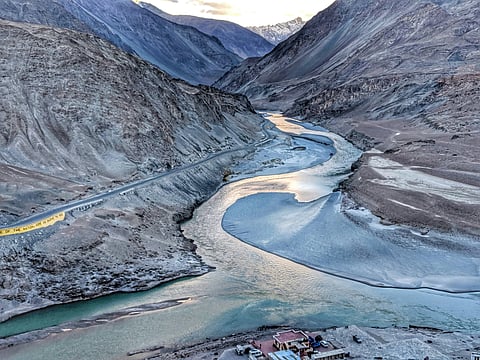
One of Ladakh's most extraordinary winter adventures, the Chadar Trek takes you along the frozen Zanskar River, which transforms into a natural ice trail during the coldest months. The word chadar means a sheet or blanket, referring to the layer of ice that covers the river. Beginning at Shingra Koma, around 75 km from Leh, the route passes through the dramatic Zanskar Gorge, flanked by steep rock faces and frozen waterfalls. The trek generally takes around nine days, including acclimatisation, and covers approximately 60 km on foot. One of its highlights is the frozen waterfall near Nerak village.
Walking on the Chadar is unlike a conventional Himalayan trek. The ice is constantly changing, and you may have to navigate open-water patches or walk along rocky riverbanks when the surface is unstable. Temperatures can fall well below zero, making proper equipment and experienced local guides essential. The trek is not guaranteed to operate every winter. Unstable ice led to its suspension in January 2026, so check official clearances before booking. It is advisable to attempt the route with an experienced guide.
Track The Elusive Snow Leopard In Hemis National Park
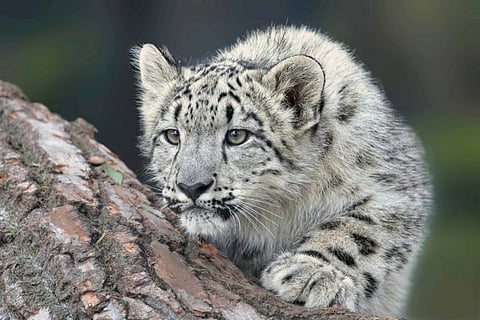
Winter brings wildlife enthusiasts to Ladakh in the hope of spotting one of the world's most elusive big cats. The region has an estimated population of 477 snow leopards, according to India's first Snow Leopard Population Assessment, making it one of the country's most important habitats for the species. Hemis National Park, Rumbak Valley, and Ulley Valley are among the best-known areas for sightings. January to March is generally favourable because snow leopards follow their prey, particularly blue sheep or bharal, to lower slopes during winter.
This is not a conventional jeep safari. Wildlife expeditions usually involve walking with local trackers who identify pugmarks and scan mountain ridges using spotting scopes. Travellers often spend several days in village homestays, heading out early in the morning to look for the animals. You might also encounter Tibetan wolves, red foxes, and golden eagles. Choose community-led expeditions that employ local spotters and support homestays. Avoid operators who bait animals, chase them for photographs, or use drones. The thrill of the experience is not the guarantee of a sighting, but understanding the ecosystem up close and responsibly.
See Pangong Tso Frozen In Winter
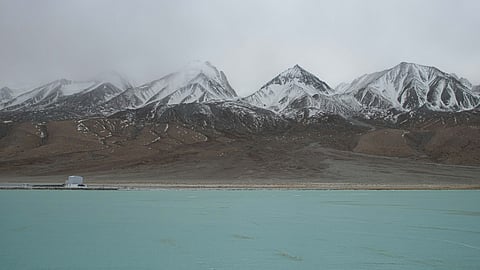
Pangong Tso is famous for its changing colours in summer, but winter presents an entirely different spectacle. At approximately 4,350 metres, this high-altitude saline lake freezes completely, creating an expansive sheet of ice against a backdrop of snow-covered mountains. Look closely at its surface, and you may notice intricate patterns, cracks, and different shades of blue formed as the water freezes. The stillness is a striking contrast to the busy lakeside camps of summer. The lake stretches approximately 134 km across the India-China border, with only part of it falling within India.
For an unusual sporting experience, look out for the Pangong Frozen Lake Marathon. Its next edition is listed for February 24–25, 2027, with full and half marathons, shorter distances, and an ultra-distance category. Running across a frozen high-altitude lake is certainly not an everyday experience, although participants need to be prepared for extreme temperatures and demanding altitude conditions. The drive from Leh involves crossing Chang La, a high mountain pass that can close temporarily after snowfall. Check road conditions before setting out, and travel with an experienced local driver.
Explore Nubra Valley Under Snow
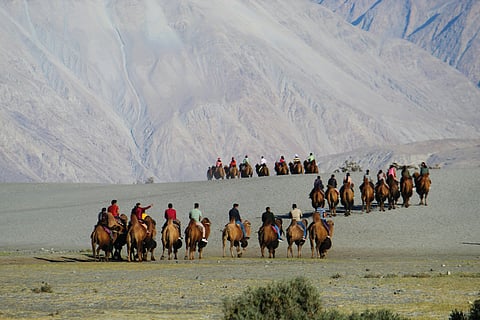
Known for its sand dunes and double-humped Bactrian camels, Nubra Valley takes on a quieter character in winter. Snow-dusted mountains frame its cold-desert landscape, while the orchards shed their leaves and the villages become noticeably less crowded. The journey from Leh crosses Khardung La before descending into the valley. Depending on snowfall, the dunes around Hunder may have a light covering of snow, creating an unusual contrast between the white landscape, sandy terrain, and Bactrian camels.
Make time for Diskit Monastery, founded in the 14th century and considered the oldest and largest monastery in Nubra. Its 100-foot Maitreya Buddha statue overlooks the Shyok River valley and is particularly striking against the winter landscape. The road over Khardung La is generally maintained, but heavy snowfall can disrupt traffic. Confirm the road status and availability of winter accommodation before travelling. An extra day in your itinerary is advisable in case you encounter weather-related delays.
Experience Ladakh's Winter Monastic Festivals
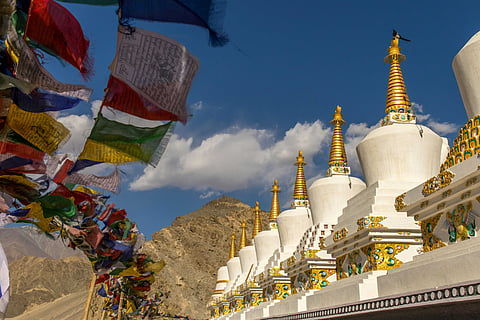
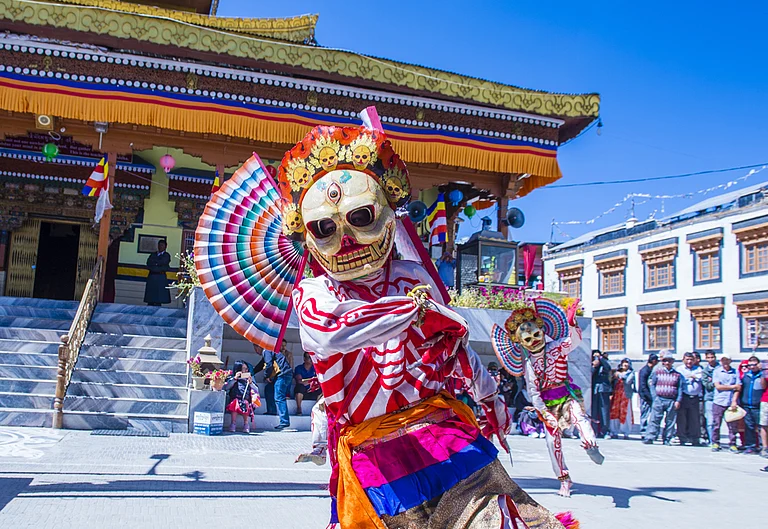
Winter is an interesting time to visit Ladakh's monasteries because several hold their annual religious festivals between November and March. These celebrations feature cham dances, in which monks dressed in elaborate masks and robes perform ritual movements depicting the triumph of good over evil. Spituk Monastery, founded in the 11th century, hosts the two-day Spituk Gustor festival in January. One of its distinctive rituals is the unveiling of a statue of Vajrabhairava, a protective deity that remains covered for much of the year. The 2027 festival is listed for January 5–6.
Another important celebration is Dosmochey, held in Leh, Likir, and Diskit in February. Monks perform masked dances, while ritual effigies representing misfortune and evil are ceremonially burnt. The festival marks the closing of the Tibetan lunar year and the arrival of a new one. In 2027, it is listed for February 4–5. These are religious occasions rather than performances staged for tourists. Arrive early, observe proceedings respectfully, and ask permission before photographing monks or rituals. Festival dates follow the Tibetan lunar calendar, so confirm them before planning your trip.
Try Ice Climbing And Watch An Ice Hockey Match

For those who would rather get onto the ice than simply admire it, Ladakh offers opportunities to experience two distinct winter sports: ice climbing and ice hockey. Ice climbing involves scaling frozen waterfalls and ice formations using specialist equipment such as crampons and ice axes, with ropes and protective systems. The Ladakh Mountain Guide Association conducts climbing activities, while the district's winter events calendar lists an Ice Climbing Festival in February.
Ice hockey, meanwhile, is deeply rooted in Ladakhi winter culture. What began as a recreational activity among Army personnel developed into a popular local sport, with community teams and tournaments attracting considerable interest. Look out for matches and skating events around Leh. The NDS Ice Hockey Stadium now has Ladakh's first international-level artificial rink, inaugurated in August 2026. Watching a match is a good way to experience a side of Ladakh that goes beyond its monasteries and mountain scenery.
Go Stargazing In Hanle
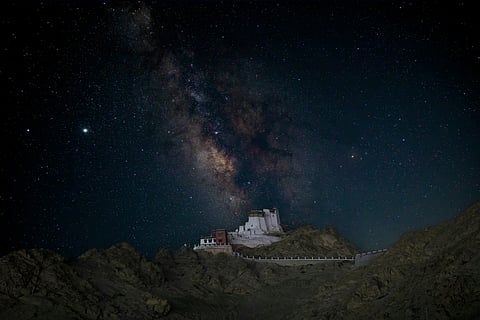
Ladakh's adventures do not end at sunset. In the remote village of Hanle, in the Changthang region, the night sky is an attraction in itself. Hanle is home to India's first Dark Sky Reserve, established in December 2022. Its exceptionally low light pollution makes it an excellent location for observing stars, planets, and distant celestial objects. The village is also home to the Indian Astronomical Observatory, operated by the Indian Institute of Astrophysics.
You do not need to be an astronomer to enjoy the experience. The institute has trained 24 local residents as Astronomy Ambassadors, equipping them with telescopes and the skills to conduct guided night-sky sessions. You can arrange an observation session through these local guides, many of whom also help visitors with homestay arrangements. Travellers should note that the observatory is a scientific research facility, not a public stargazing centre. For night-sky sessions, approach the local Astronomy Ambassadors instead. Winter's longer nights make the experience particularly appealing, although cloud cover and moon phases can affect visibility.
Discover Ladakh's Winter Kitchen

After spending hours outdoors in sub-zero temperatures, few things are as satisfying as returning to a warm kitchen for a traditional Ladakhi meal. The region's winter cuisine reflects how communities have adapted to limited seasonal supplies, relying on grains, preserved vegetables, and dried meat. Try skyu, a hearty dish of small pieces of wheat or barley dough cooked with root vegetables, or sha skam, dried meat used in traditional preparations. Another local speciality is paba, a dense preparation made with barley, pea, and buckwheat flours, traditionally served with thaangthur, a buttermilk-based accompaniment with greens.
In Leh, De Khambir on Changspa Road serves traditional preparations such as skyu, chu taki, thenthuk, and paba-thaangthur, alongside local bread and butter tea. Noodle soups such as thukpa and thenthuk are also comforting options during the colder months. Do remember that many tourist-oriented restaurants reduce their hours or close in winter. Check before visiting, or arrange meals through your homestay for a chance to try home-style Ladakhi cooking.
FAQs
1. Is Ladakh worth visiting in winter?
Yes. Winter offers a different perspective on Ladakh, with opportunities for snow leopard tracking, frozen river treks, ice sports, monastic festivals, and stargazing. It is also a quieter time to explore the region.
2. What are the best things to do in Ladakh in winter?
Some of the best winter experiences include attempting the Chadar Trek, tracking snow leopards in Hemis National Park, visiting frozen Pangong Tso, exploring Nubra Valley, attending monastic festivals, trying ice climbing, and stargazing in Hanle.
3. When is the best time to visit Ladakh in winter?
January to March is generally favourable for winter wildlife expeditions and snow leopard sightings. Several monastic festivals also take place between November and March. The ideal time depends on the experiences you wish to include.
4. Can you see snow leopards in Ladakh during winter?
Yes. Winter is considered a favourable season for snow leopard sightings, particularly in Hemis National Park, Rumbak Valley, and Ulley Valley. Local trackers lead walking expeditions to identify pugmarks and scan mountain ridges for the animals. However, sightings are never guaranteed.
5. What should travellers keep in mind before visiting Ladakh in winter?
Travellers should prepare for sub-zero temperatures, check road conditions and weather forecasts, and allow extra time for possible travel disruptions. Carry appropriate winter clothing, account for altitude acclimatisation, and arrange accommodation and transport in advance. For activities such as the Chadar Trek and snow leopard expeditions, travel with experienced local guides.