India has many different kinds of Holi celebrations, but one of the most famous takes place in Mathura and Vrindavan. A three-day trip to these towns offers an immersive, high-energy, and deeply traditional experience. Known as “Braj Holi,” the festivities begin almost a week before the national Holi date, with different towns observing their own unique rituals. Here is a complete three-day guide to experiencing the best of Braj Holi.
Experience The Magic Of Braj Holi: A 3-Day Guide To Mathura And Vrindavan
Celebrate Braj Holi in Mathura & Vrindavan with a three-day itinerary filled with colourful Lathmar Holi, temple visits, boat rides on the Yamuna, and traditional food. A perfect mix of culture, energy, and tradition awaits

Advertisement
Day 1: Barsana Lathmar Holi
Morning (7 am): Arrive in Mathura or Vrindavan and check into your hotel. Staying in Vrindavan is recommended for easier access to evening events.
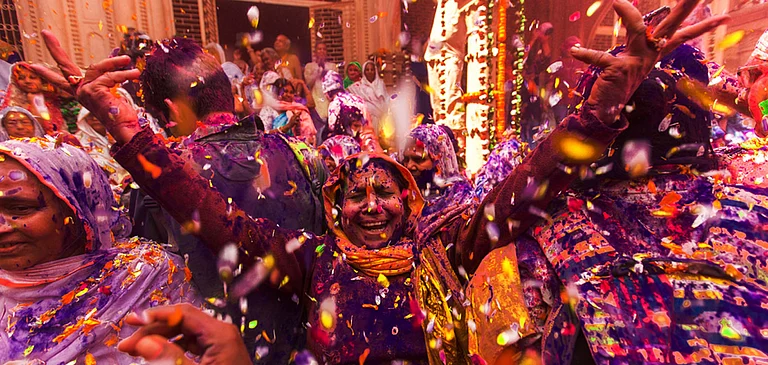
Travel to Barsana (about 40 km from Mathura) to witness the famous Lathmar Holi, where women playfully strike men with sticks while men shield themselves. The celebrations reimagine the legend of Radha and Krishna. The main events take place at the Radha Rani Temple. The hours between 7 am and 2 pm are the liveliest, with folk songs, traditional music, and showers of colourful abir powder adding to the drama.
Afternoon: Enjoy a traditional lunch in Barsana.
Evening: Return to Vrindavan and visit Prem Mandir to experience its stunning light and sound show.
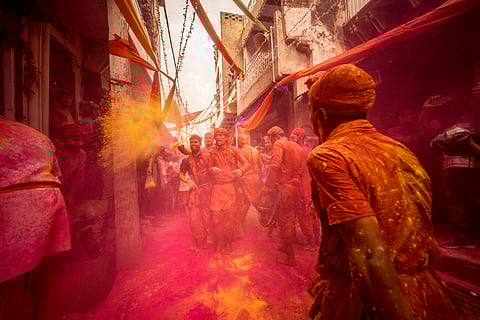
Barsana is famous for its Lathmar Holi festival Shutterstock
Day 2: Nandgaon And Phoolon Wali Holi
Morning (9 am): Visit Nandgaon (Nand Bhavan) for the return Lathmar Holi, where the men of Barsana come to Nandgaon to play Holi.
Afternoon: Return to Vrindavan for the Phoolon Wali Holi (Flower Holi) at the Banke Bihari Temple. Here, instead of throwing coloured powders, priests shower thousands of fresh flower petals, roses, lotus and marigolds, on devotees gathered in the temple courtyard. The fragrance of flowers and the sound of devotional singing create a gentle, uplifting rhythm that stands in contrast to the riotous street Holi that follows. This celebration reflects the deep spiritual roots of Holi in Braj, the land of Krishna and Radha, where each ritual is both a joyous welcome to spring and a tribute to divine love. You can also witness the traditional burning of the Holika pyre, symbolising the victory of good over evil, on the evening before the main Holi day.
Advertisement
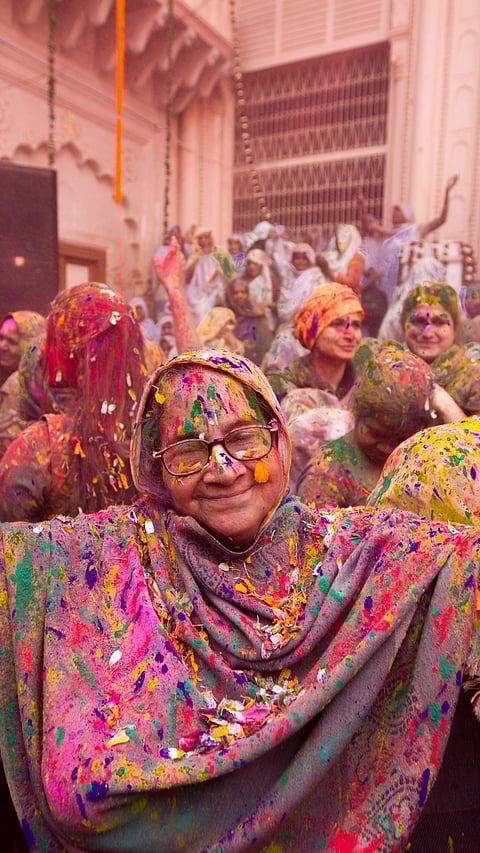
Phoolon Wali Holi (Flower Holi) at the Banke Bihari Temple Shutterstock
Evening: Visit the beautifully illuminated temple to witness special cultural performances and vibrant, musical celebrations in the evening. The ISKCON Temple in Vrindavan has vibrant evening kirtans and a more organised yet joyous and spiritual celebration, offering a slightly calmer atmosphere compared to Banke Bihari.
Day 3: Mathura Temples And Departure
Morning: Visit Krishna Janmabhoomi Temple. It is known as the birthplace of Krishna. Vrindavan and Mathura are known as Krishna’s legendary playground. It was here, in Braj in the epochal Dvapara Yuga some 5,000 years ago, that Krishna was, in the popular belief, born and raised, and where he carried out his courtship of Radha, flirted with gopis, lifted the Govardhan hill to protect the people from torrential rains and floods, vanquished demons.
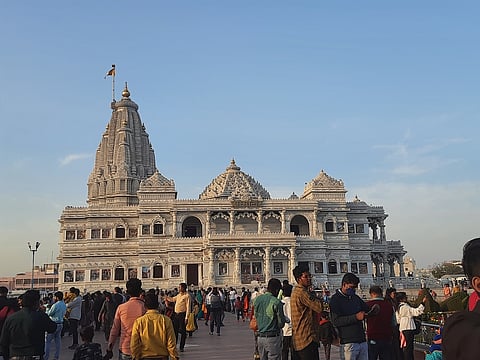
Prem Mandir in Vrindavan Pinkspinks/Shutterstock
Mid-Day: Visit the Dwarkadhish Temple. Built in 1814 by Seth Gokul Das Parikh in Mathura, it is one of the city's oldest and largest temples dedicated to Krishna. It features a distinctive black marble idol of Dwarkanath and stunning Rajasthani architecture, situated near the Yamuna.
Advertisement
Afternoon: Take a boat ride on the Yamuna River at Vishram Ghat. This historic spot is sacred to devotees of Krishna, who is said to have rested here after defeating Kansa. The ghat is a peaceful contrast to the day’s colourful celebrations.
Evening: Departure from Mathura/Vrindavan.
The Information
Accommodation: Book hotels at least 2–3 months in advance. Vrindavan is best for proximity to Banke Bihari and Prem Mandir. Mathura is more central for travelling to outlying villages like Barsana.
Local Travel: Hire a private taxi. Public transport (autos/rickshaws) gets severely clogged during peak Holi days.
Getting There: The nearest airport is Delhi (150 km) or Agra (60 km). Mathura Junction is the main railway station.
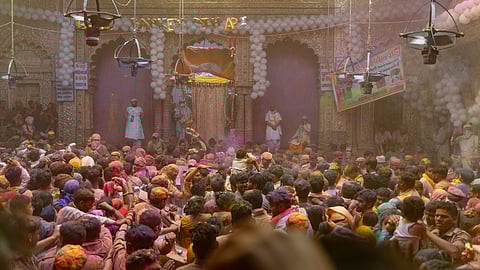
Holi celebrations at the Banke Bihari Mandir in Vrindavan Arnav Pratap Singh/Shutterstock
Travel Tips for Braj Holi 2026
Wear Protective Gear: Use sunglasses to protect eyes from powdered colours.
Clothing: Wear old cotton clothes that you don't mind ruining.
Safety for Women: Travel with a group, especially during Lathmar Holi, which can get chaotic.
Advertisement
Crowd Management: Reach temples early (6:00 AM) to avoid massive crowds at Banke Bihari.
Safe Areas: For a family-friendly experience, stick to the Phoolon Wali Holi at Banke Bihari or temple-organised events.
Avoid: Chemical colours, uninvited street play, and drinks from strangers.
FAQs
Where should I stay?
Vrindavan is ideal for its central location and proximity to key temples and evening events. Mathura is also convenient if you prefer staying closer to Barsana or Nandgaon.
What should I wear?
Wear old clothes that you don’t mind getting covered in colours. Light cotton fabrics are best, as they are comfortable and breathable. Sunglasses or goggles can help protect your eyes from coloured powders.
Are the celebrations safe?
Yes, the festivals are generally safe for tourists. However, it’s best to stay in groups, follow local advice, and avoid overly crowded areas during peak hours.
Can families with children attend?
Yes, but choose celebrations carefully. Barsana’s Lathmar Holi is energetic and playful, which can be overwhelming for very young children. Smaller temple events or Vrindavan’s evening festivities are more suitable for families.
Advertisement
What food should I try?
Try traditional sweets like Gujiya, Malpua, and local snacks such as Thandai (a festive, spiced milk drink often served with bhang).
Published At: