Indian stepwells are ancient, intricately designed subterranean structures with steps leading down to water. They were primarily built in arid regions such as Gujarat and Rajasthan. Stepwells served many purposes: storing water, providing places to bathe, and serving as social gathering spots. The stepwells showcase impressive engineering and artistic skill.
Architectural Marvel Of Chand Baori: Geometry, Design, And Highlights For Visitors
Chand Baori, in Abhaneri, Rajasthan, is one of India’s largest and deepest stepwell. With 3,500 steps over 13 levels, its intricate design and artistry make it a must-visit

Advertisement
Known by various names—Baori, Baoli, Bawdi, or Vav—they reflect India’s rich cultural and historical heritage. Chand Baori, in the village of Abhaneri, Rajasthan, stands out as one of the largest and deepest stepwells in the country. It features an astonishing 3,500 steps spread across 13 levels, making it a must-see destination for travellers and history enthusiasts alike.
An Architectural Marvel
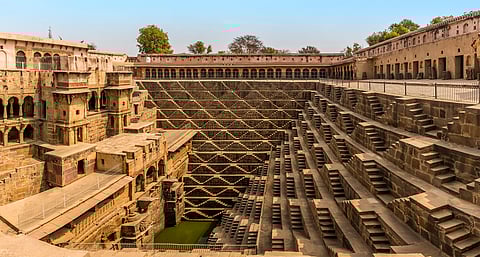
Chand Baori is located in the village of Abhaneri Shutterstock
Chand Baori is a brilliant example of stepwell architecture, plunging nearly 100 ft into the ground. On three of its sides, approximately 3,500 steps descend in a narrowing pattern towards the water tank at the bottom. The stepwell is renowned for its breathtakingly symmetrical design, which creates striking geometric patterns of light and shadow.
The stepwell in Rajasthan was built in the 9th century by King Chanda of the Nikumbha Dynasty and was intended for water conservation and as a cool retreat for the local community. With its 13 stories of intricately arranged steps, Chand Baori stands as one of the world’s largest and deepest stepwells, blending functionality with extraordinary visual beauty.
Advertisement
Carvings And Sculptures
If you are visiting the stepwell, there are a few things you should watch out for. Note the geometric precision with which steps descend in a perfect inverted pyramid, going downward. The uniformity reveals the sophisticated geometry and engineering skills of the builders. But Chand Baori is more than a construction feat—it is also a work of art. The stepwell’s walls are decorated with intricate carvings and sculptures.
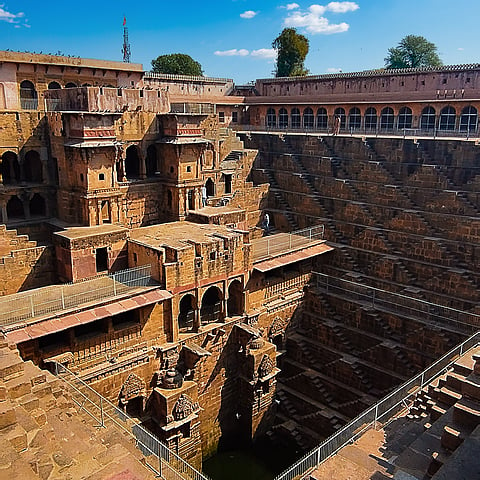
Chand Baori is a brilliant example of stepwell architecture Shutterstock
This four-sided stepwell is graced by a grand temple on one face, while at its heart lies a striking depiction of Sheshasayee Vishnu reclining on the serpent Ananta. The three stepped sides feature double flights of steps spanning ten landings, creating a rhythmic, cascading pattern. The fourth side is distinguished by multi-storeyed pillared corridors. There are several niches or shrines dedicated to gods such as Ganesha and Mahishasuramardini.
The Ganesha shrine is crowned with a chaitya adorned with a female dancer and her attendant. The upper levels display carvings of Uma-Maheshwara and Simhavahini Durga. There is also a small chamber known as Anderi Ujala, which was once used to draw water with traditional pulley-like devices. Local legend suggests that a tunnel once linked Abhaneri to Dausa.
Advertisement
Visitor Information
Chand Baori is located in the village of Abhaneri, in Dausa district, Rajasthan, about 90 km from Jaipur, opposite the Harshat Mata Temple. The stepwell is generally open to visitors from 7:30 AM to 6:30 PM, and the entry fee is approximately INR 20 per person, though this may vary. The best time to visit Chand Baori is during winter, from October to March. The monsoon months (July-September) are good for the lush greenery. Avoid the extreme heat of the months from April to June. Hiring a local guide is highly recommended, as they can provide insights into the history, architectural details, and cultural significance.
Things To See Nearby
Many travellers also combine a visit to Chand Baori with a day trip to Bhangarh Fort. Nearby is Jaipur - you can base yourself there and check out the city’s iconic sights like Hawa Mahal (Palace of Winds), Amber Fort, City Palace, and Jal Mahal (Water Palace). These nearby sites make Chand Baori part of a rich cultural and historical journey.
Advertisement
FAQs
Where is Chand Baori located?
Chand Baori is in the village of Abhaneri, Dausa district, Rajasthan, about 90 km from Jaipur. It is situated near the Harshat Mata Temple.
What is unique about its design?
The stepwell follows an inverted pyramid layout with double flights of steps on three sides and multi-storeyed pillared corridors on the fourth.
What are the visiting hours?
The stepwell is generally open from 7:30 AM to 6:30 PM daily.
Is there an entry fee?
Yes, the entry fee is approximately INR 20 per person, though it may vary.
What should I look out for when visiting?
Note the precise geometric layout, the 13 stories of steps forming an inverted pyramid, and the intricate carvings on the side walls.
Published At: