A remarkable kind of spectacle unfolds along Bihar's rivers during Chhath Puja. As dusk settles, the water catches the flicker of thousands of diyas, silhouettes gather knee-deep in the current, and the air fills with folk songs passed down through generations. By dawn, the riverbanks are stirring again, this time awaiting the first rays of the sun. Observed with extraordinary devotion, Chhath is as much an offering to the rivers that sustain life as it is a celebration of the Sun God. From the sweeping ghats of the Ganga to quieter stretches along the Gandak and Phalgu, Bihar offers a remarkable collection of riverfront settings in which to witness the festival.
10 Scenic Riverfront Destinations In Bihar To Experience Chhath Puja 2026
As thousands gather along Bihar's sacred rivers to welcome the setting and rising sun, these 10 riverfront destinations offer a glimpse into the timeless devotion of Chhath Puja

Advertisement
This year, Chhat Puja 2026 takes place from Friday, November 13, 2026, to Monday, November 16, 2026.
Beginning with Nahay-Khay on November 13, when devotees take a holy dip, clean their homes and prepare a vegetarian meal. The second day, Lohanda and Kharna, on November 14, involves fasting throughout the day, followed by an evening meal of jaggery kheer and rotis. This marks the beginning of the 36-hour nirjala (waterless) fast. On November 15, the main day of Chhath Puja, devotees gather at riverbanks and other water bodies to offer arghya (prayers and offerings) to the setting sun during Sandhya Arghya. The festival concludes on November 16 with Usha Arghya, when devotees offer prayers to the rising sun at dawn before breaking their fast through the ritual of parana.
Here are ten riverfront destinations to experience Chhath Puja in 2026.
Patna: The Ganga At Its Most Reverent
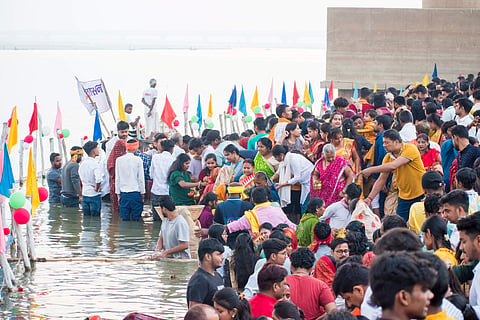
View of people doing Chhath Puja at Ganga Ghat in Patna Shutterstock
Few places capture the scale of Chhath Puja quite like Patna. The capital's long stretch of the Ganga riverfront becomes a gathering ground for families observing the festival, with its many ghats offering different vantage points of the rituals. Gandhi Ghat, one of the city's best-known riverfront spaces, is particularly scenic, with its broad views of the Ganga and a promenade-like setting. Other notable locations include Collectorate Ghat, Digha Ghat, Mahendru Ghat, and Kali Ghat. As the sun begins to descend, the river becomes a canvas of reflections, with devotees standing in the water, holding their soops (bamboo baskets) filled with fruits, thekua and sugarcane. The following morning, the same riverfront welcomes worshippers for Usha Arghya, as the first light breaks over the water.
Advertisement
Hajipur: Along The Gandak's Banks

A shot of Chhath celebrations (Representational image) Wikimedia Commons
On the banks of the Gandak, Hajipur offers a different riverfront experience from Patna's expansive Ganga ghats. Its most significant riverbank is Konhara Ghat, a place steeped in mythology and local tradition. The name is associated with the legend of Gajendra Moksha, in which Lord Vishnu rescues an elephant from a crocodile. The ghat is also a longstanding site of religious observances, with Chhath Puja bringing families to its riverbanks to offer prayers to the setting and rising sun. The confluence of the Ganga and Gandak lends the surrounding landscape a distinctive character, making this an especially interesting stop for travellers tracing Bihar's riverine heritage.
Sonepur: Where Two Rivers Meet
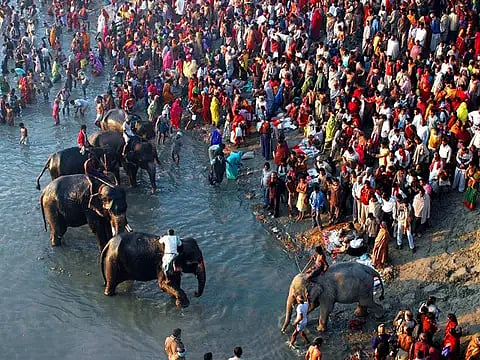
Sonepur is the meeting point of the Ganga and Gandak rivers Bihar Tourism
At the meeting point of the Ganga and Gandak rivers, Sonepur has long held a special place in Bihar's religious geography. The town is best known for its historic Sonepur Mela, held around Kartik Poornima, when pilgrims arrive for ritual bathing and visits to the Hariharnath Temple. The confluence, however, gives the destination an appeal beyond the fair. During the Chhath season, the surrounding riverbanks become part of a wider landscape of worship and pilgrimage. The sight of the two rivers meeting, with their shifting sandbanks and expansive skies, offers a striking setting for experiencing the festival. It is also an opportunity to explore the area's layered religious traditions, particularly the legend of Gajendra Moksha associated with the Hariharnath shrine.
Advertisement
Buxar: Echoes Of The Ramayana
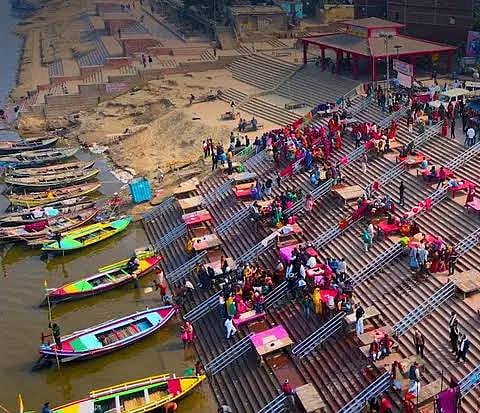
Ramrekha Ghat in Buxar is linked by local tradition to Lord Rama, Lakshmana and sage Vishwamitra Bihar Tourism
In Buxar, the Ganga flows past a landscape closely associated with stories from the Ramayana. Ramrekha Ghat is among the town's important religious landmarks, linked by local tradition to Lord Rama, Lakshmana and sage Vishwamitra. The ghat has long drawn pilgrims for ritual bathing and religious observances, and it also sees devotees during Chhath. What makes Buxar particularly compelling is the way its mythology and riverfront setting intersect. Away from the larger crowds of Patna, the town offers an opportunity to experience the festival against a backdrop of older pilgrimage traditions. A visit here can also be paired with an exploration of Buxar's historical sites and temples.
Bhagalpur: The Ganga's Wider Canvas
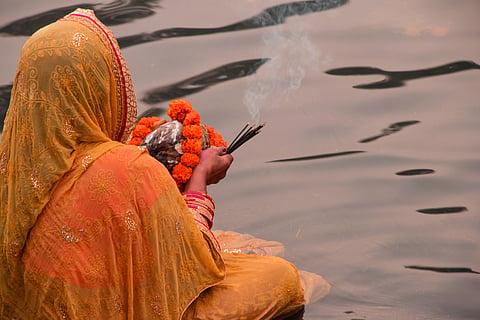
A lady performs Chhath puja by a river (Representational image) Shutterstock
Known as Bihar's Silk City, Bhagalpur has another identity shaped by its relationship with the Ganga. The river runs alongside long stretches of fertile plains, mango groves and fields, creating a landscape that feels markedly different from the more urban riverfront of Patna. Barari Ghat, Manik Sarkar Ghat and Kuppa Ghat are among the important riverfront ritual sites in the city. During Chhath, these banks become gathering places for devotees, with the rituals unfolding against the broad river and its shifting sandbanks. The district is also home to the Vikramshila Gangetic Dolphin Sanctuary near Kahalgaon, making the wider river landscape significant for both cultural and ecological reasons.
Advertisement
Sultanganj: A Temple Amidst The Waters
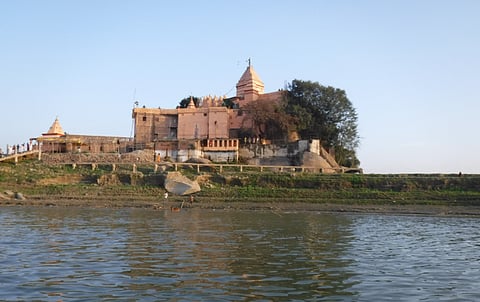
The ancient Ajgaibinath Temple stands on a rocky island in the Ganga Wikipedia
The riverfront at Sultanganj has a distinctive silhouette. The ancient Ajgaibinath Temple stands on a rocky island in the Ganga, its presence lending the surrounding river landscape an almost theatrical quality. A major pilgrimage destination, the temple is particularly associated with the Shravani Mela, when devotees collect holy Ganga water for the journey to Deoghar. During the Chhath season, the surrounding riverbanks offer another perspective on Bihar's devotion to the river and the Sun. The combination of rocky outcrops, open water and the temple rising above the Ganga makes Sultanganj one of the more visually distinctive places to explore along this stretch of the river.
Munger: Beneath The Fort Walls
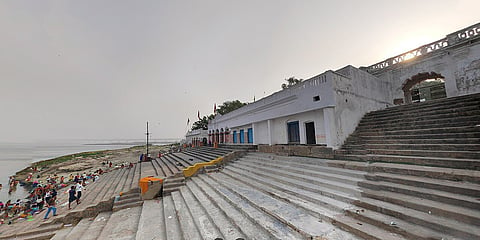
The Kastaharni Ghat within the Munger Fort complex is a revered bathing spot on the Ganga Wikimedia Commons
Munger's riverfront carries the weight of centuries. The historic Munger Fort grounds feature historic structures, with recorded histories spanning from the Guptas and Pala dynasty to the British period. Within the fort complex lies Kastaharni Ghat, a revered bathing spot on the Ganga whose name is commonly interpreted as a place that relieves suffering. Local religious traditions associate the ghat with Lord Rama and Lakshmana, while its northward-flowing stretch of the river is regarded as especially sacred. During Chhath, the wider riverfront offers a setting for the festival's offerings to the Sun. The sight of the Ganga flowing alongside the fort's historic walls adds an architectural dimension to the experience, making Munger an interesting destination for travellers who enjoy exploring the relationship between sacred geography and history.
Advertisement
Simaria: A Pilgrim's Riverside Retreat
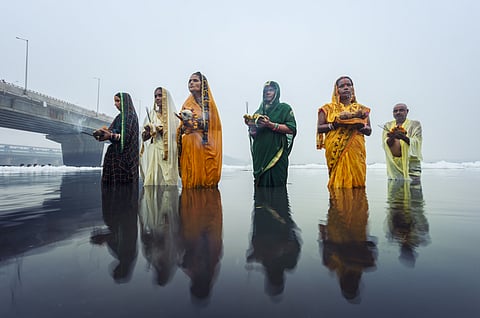
Women in the river observing Chhath rituals Manish Jaisi/Wikimedia Commons
On the northern bank of the Ganga in Begusarai district, Simaria is one of Bihar's significant pilgrimage destinations. Its riverbank is associated with the annual Simaria Mela and the month-long tradition of Kalpvas, during which devotees stay in temporary dwellings, observe religious discipline and take ritual dips in the river. The atmosphere here is shaped by an older rhythm of pilgrimage, particularly during the Kartik period, when the riverfront sees a steady flow of visitors. Simaria is also the birthplace of Hindi poet Ramdhari Singh Dinkar. For travellers, the destination offers a chance to experience Chhath within a larger landscape of seasonal devotion, where the Ganga is central to both everyday life and religious practice.
Barh: The Quieter Ganga Town
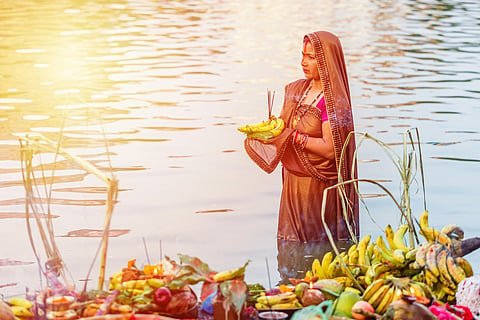
Barh is a smaller riverside town located around 55 kilometres from Patna (Representational image) Shutterstock
Around 55 kilometres from Patna, Barh is a smaller riverside town whose cultural life is closely tied to the Ganga. Unlike the capital's more prominent riverfront, Barh offers a glimpse of a quieter river-town atmosphere. Chhath Puja is among its most important festivals, with families returning to their ancestral homes to observe the rituals. The relationship between the town and the river is particularly evident during the festival, when the ghats become focal points for community gatherings and offerings. Barh is worth considering for travellers interested in seeing how Chhath is woven into the everyday identity of smaller towns rather than experienced only through the large-scale celebrations of Bihar's major cities.
Advertisement
Gaya: Along The Sacred Phalgu
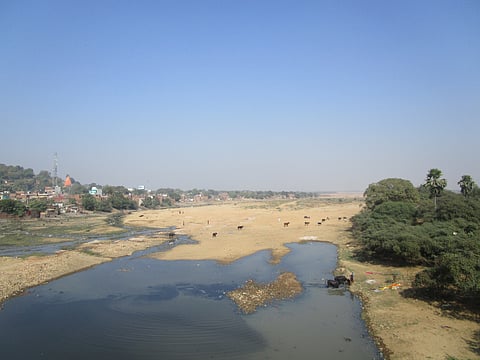
The Phalgu River is known for its unusual stretches of exposed sandy riverbed Wikipedia
Gaya offers a strikingly different riverfront landscape. Here, the Phalgu River is known for its unusual stretches of exposed sandy riverbed, with water often flowing beneath the visible surface. Along its banks stands the Vishnupad Temple, one of the city's most important pilgrimage sites, believed to enshrine the footprint of Lord Vishnu. The river is deeply associated with Hindu rites for ancestors, particularly during Pitripaksha. During Chhath, the city's sacred water bodies and designated ghats become gathering places for devotees offering Arghya to the Sun. The combination of ancient temples, sandy riverbanks and surrounding hills gives Gaya a distinct atmosphere, one where the rituals of Chhath sit within a much older tradition of pilgrimage.
As daylight slips behind Bihar's riverbanks and returns the following morning, Chhath reveals something extraordinary about the relationship between a landscape and its people. Here, rivers are not simply backdrops to a festival, but are central to its meaning. Whether it is the sweeping Ganga at Patna, the meeting of two rivers at Sonepur or the ancient banks of the Phalgu in Gaya, each destination offers a distinct way of witnessing the same devotion. One of the things that makes Chhath so memorable in Bihar is that long after the diyas have burned out and the offerings have been carried home, the reminiscence of the river glowing beneath the first and last light of the day stays with you.
Advertisement
FAQs
1. When is Chhath Puja 2026?
Chhath Puja 2026 will be observed from November 13 to November 16, with Sandhya Arghya on November 15 and Usha Arghya on November 16.
2. Which are the best places to experience Chhath Puja in Bihar?
Patna, Hajipur, Sonepur, Buxar, Bhagalpur, Sultanganj, Munger, Simaria, Barh and Gaya are notable destinations to experience Chhath Puja along Bihar's rivers.
3. Which river is most closely associated with Chhath Puja in Bihar?
The Ganga is among the most significant rivers associated with Chhath Puja in Bihar. However, devotees also observe the festival along the Gandak, Sone and Phalgu rivers.
4. What are the main rituals of Chhath Puja?
The four-day festival involves Nahay Khay, Kharna, Sandhya Arghya and Usha Arghya. Devotees observe a fast and offer prayers to the setting and rising Sun.
5. What should travellers keep in mind when visiting Bihar during Chhath Puja?
Travellers should respect religious customs, avoid disrupting rituals, seek permission before photographing devotees, avoid littering and check local administration advisories regarding ghat accessibility and safety.
Advertisement
Published At: