Whether you are in a car on a road trip or cruising across the waves, motion sickness can strike unexpectedly. It often initiates with a subtle uneasiness in the stomach, quickly escalating to cold sweats, disorientation, and vomiting. Experts say this phenomenon arises from a clash of sensory signals your brain interprets from your eyes, inner ear, and muscles. When these signals conflict, it can lead to those distressing symptoms of nausea and dizziness that afflicted travellers dread. While some instances of motion sickness may require medical attention, mild cases can be navigated with a few practical strategies. Preparation can go a long way in reducing the likelihood of motion sickness.
Easy Hacks To Combat Motion Sickness While Travelling
If you have a passion for travel but find yourself hindered by the discomforts of motion sickness, these tips could help keep nausea at bay

Advertisement
Tips To Prevent Motion Sickness
Focus On The Horizon

Focus on the horizon on a road trip Unsplash
If you start to experience symptoms of motion sickness, one effective strategy is to focus your gaze on a stable object in the distance, such as the horizon or a stationary landmark. This technique helps reorient your senses by providing a point of reference, which can counteract the conflicting signals your brain receives from your inner ear and eyes. By concentrating on this fixed object, you may find that the discomfort associated with motion sickness diminishes, allowing you to feel more grounded and at ease during travel.
Choose Your Seat Carefully
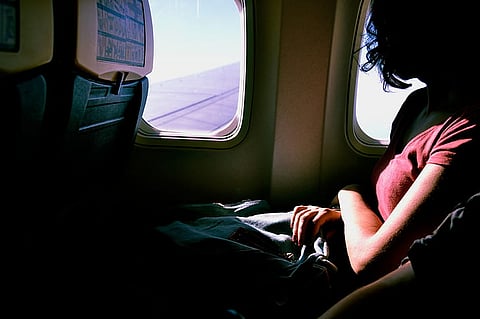
The ideal seat to combat motion sickness is typically over the front edge of the wing Shutterstock
When travelling, careful seat selection can significantly enhance your comfort and reduce feelings of motion sickness. Experts say that it’s generally advisable to avoid sitting in the rear of any vehicle, as these seats often experience more movement and bumps. For the best experience, opt for seats located in the middle or front areas where motion is minimised.
Advertisement
If you're embarking on a cruise, aim to secure a cabin located in the front or centre of the ship, preferably at a lower level near the waterline. This choice tends to provide a smoother ride, as these areas are less affected by the ship's swaying. For air travel, the ideal seat is typically located over the front edge of the wing, as this position stabilises the aircraft's movements.
When taking a train journey, seek a forward-facing seat situated close to the front of the train and beside a window. This arrangement not only gives you a better view but also helps align your body with the direction of travel, reducing the disorientation that sometimes accompanies train rides.
Lastly, if you're travelling by car, the most comfortable option is either to drive or to occupy the front passenger seat. This allows you to have a broader view of the road ahead, which can significantly reduce motion sickness compared to sitting in the back.
Advertisement
Distract Yourself
If you are experiencing motion sickness, one effective strategy is to distract yourself with activities that engage your senses without overwhelming them. Listening to calming music or an engaging podcast can help shift your attention away from the sensations causing discomfort. It's also advisable to avoid reading or looking at screens, as these activities can exacerbate the confusion between what your inner ear senses and what your eyes perceive, intensifying the feeling of nausea.
Eat Light

Have a light meal before the trip Rangeecha/Shutterstock
Another great hack to deal with motion sickness is to eat light before the trip. Many also find that nibbling on plain crackers can be particularly soothing, as they are bland and easy on the stomach. Additionally, drinking cold water can help maintain hydration, which is crucial, especially if you're feeling queasy.
Have Some Ginger
Combining a ginger supplement with various ginger-based products, such as ginger snaps, ginger ale, or candied ginger, can be an effective way to deal with nausea. Ginger contains active compounds known for their anti-nausea properties, which can help calm the stomach and reduce the sensation of dizziness associated with motion.
Advertisement

Published At:
Tags