The conclusion of the India–European Union Free Trade Agreement feels less like a routine trade announcement and more like the opening of a long-awaited corridor. While tariff cuts and export figures dominate headlines, the deal’s most immediate and tangible impact may be felt not in factories or boardrooms, but at airports, visa counters and conference halls across Europe and India.
Why Europe Just Got Closer For Indian Travellers And Professionals
India and the EU seal a landmark trade deal, one that could reshape business travel, professional mobility and long-term people-to-people exchange

Advertisement
Finalised at the 16th India–EU Summit in New Delhi, the agreement links the world’s fourth- and second-largest economies, together accounting for nearly a quarter of global GDP. Beyond goods and services, it creates a future-ready framework for mobility—reshaping how professionals, students, entrepreneurs and travellers move between India and the 27-nation European bloc. For a country where Europe has long been a dream destination but visa hurdles a persistent deterrent, the implications are quietly transformative.
A New Mobility Map
At the heart of the agreement is a facilitative mobility framework that brings clarity to short-term, temporary and business travel in both directions. Indian professionals travelling to Europe for project-based work, whether in IT services, consultancy, research, education or training, are expected to benefit from more predictable entry conditions. Equally, European professionals and investors gain structured access to India’s expanding market.
The framework recognises the realities of modern global work. Intra-corporate transferees, business visitors, contractual service suppliers and independent professionals are all covered under defined conditions, reducing uncertainty for multinational firms operating across borders. Importantly, provisions extend to dependants and family members of eligible transferees, a detail that could influence longer business stays and relocation decisions.
Advertisement
Over time, this could reshape travel patterns in Europe’s major commercial hubs, cities like Berlin, Paris, Amsterdam and Milan, where extended business travel often blends into longer stays, conferences and professional networking. For the travel industry, this translates into increased demand for accommodation, co-working spaces, event tourism and mobility-linked services.
Tourism Ripple Effects
While the FTA does not directly rewrite visa laws, it creates the conditions for smoother travel. Commitments to digitalise Schengen visa processes, address document verification challenges and streamline procedures could significantly reduce long processing times and rejection rates that have plagued Indian applicants. In 2024 alone, over a million Indians applied for European visas, with rejection rates hovering around 15 per cent.
Beyond corporate travel, the agreement indirectly boosts tourism-linked segments. Increased movement for exhibitions, trade fairs, academic exchanges, medical treatment and cultural programmes is expected as access to services markets expands. Europe’s appeal for Indian students and early-career professionals is also reinforced through structured engagement on education mobility and post-study pathways, strengthening long-term people-to-people ties.
Advertisement
At the same time, European travel to India, for investment, collaboration and increasingly experiential tourism, stands to benefit from greater predictability and cooperation under the agreement. The effect may be subtle at first, but sustained over years, it could recalibrate how Europe and India experience each other beyond leisure travel.
A Wider European Door

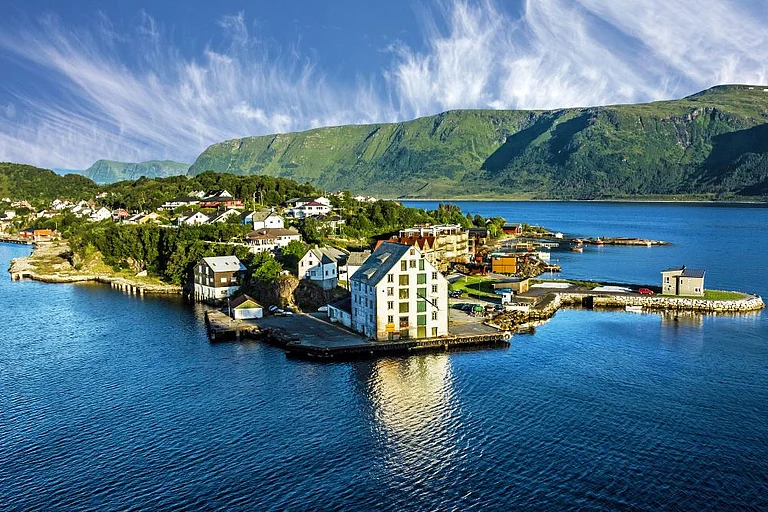
The agreement aligns trade and travel, offering greater predictability for professionals and enterprises operating across regions Shutterstock
The timing of the India–EU FTA is significant. Coming on the heels of India’s recent trade agreements with the UK, EFTA countries and New Zealand, it effectively opens most of Europe to Indian businesses and professionals under aligned frameworks. Together, these deals reduce fragmentation and position Europe as a unified, accessible destination for Indian outbound travel linked to work, study and entrepreneurship.
Economically, the agreement unlocks preferential access for over 99 per cent of Indian exports by value, strengthens labour-intensive sectors and expands services trade across IT, finance, education, tourism and construction. But from a travel perspective, its real legacy may lie in normalising movement, making cross-border work trips less daunting, academic exchanges more fluid and professional travel a routine part of India–Europe engagement.
Advertisement
As implementing guidelines roll out and mobility provisions begin to translate into lived experiences, the India–EU FTA may come to be remembered not just as a landmark trade pact, but as the moment Europe felt a little closer, and travel between the two regions, a little more human.
FAQs
1. What is the India–EU Free Trade Agreement?
It is a comprehensive trade pact between India and the European Union covering goods, services, investment and a structured framework for professional and business mobility.
2. Does the agreement change tourist visa rules for Europe?
Not directly. However, it lays the groundwork for smoother, more predictable visa processes through digitalisation and mobility cooperation.
3. Who benefits most from the mobility provisions?
Business travellers, intra-corporate transferees, contractual service providers, independent professionals and students are expected to see the biggest impact.
4. Will Indian professionals be able to work in Europe more easily?
The agreement enables short-term, project-based work and business travel under clearer conditions, but long-term employment rules remain country-specific.
Advertisement
5. How could this affect travel between India and Europe?
Over time, it may boost business travel, education-linked stays, conferences and mobility-driven tourism across major European and Indian cities.
Published At:
Tags