Calling all stargazers! You won't want to miss this week’s supermoon, the final one of the year! Known as the Beaver Moon, it promises to shine brighter and larger as it approaches about 225,000 miles (361,867 kilometres) of Earth on Thursday.
When And How To Watch The Last Supermoon Of 2024: All You Need To Know
Mark the dates for witnessing the breathtaking beauty of the final supermoon of 2024. This moon is the final in this year's series of four consecutive supermoons

Advertisement
When To Look To The Skies
While it reaches its full phase on Friday, NASA says the best time to catch a glimpse of the year's last supermoon is November 15, starting at 4:29 p.m. EST. Witness this stunning celestial event just after the peak of the Taurid meteor shower and right before the Leonids light up the sky. The breathtaking beauty of the fourth and final supermoon of 2024 will reach full illumination on November 15. For those in India and much of Asia, the prime time to witness the supermoon of 2024 will be on the evening of November 16 as it rises in the sky.
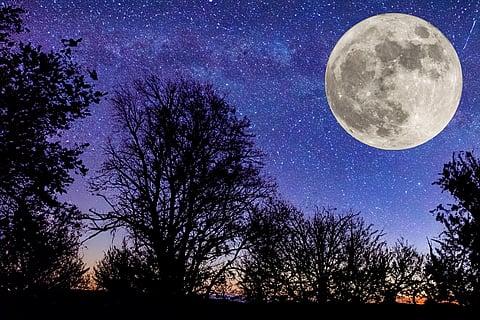
This one is the final in this year's series of four consecutive supermoons Shutterstock
This moon is the final in this year's series of four consecutive supermoons. The other spectacular moons were August's blue moon, September's harvest moon, and October's hunter's moon.
Last month’s supermoon brought us a stunning view, 2,800 miles (4,500 kilometres) closer to Earth, making it the closest supermoon of 2024. This spectacular series kicked off in August with the August 19 full moon, a rare "super blue moon"—the only one of this year. Get ready for even more incredible sights, as 2025 will feature three supermoons starting in October.
Advertisement
What Is A Supermoon?
The "super" part refers to the moon's orbit, which brings it slightly closer to Earth this month, making it appear bigger and brighter. When a supermoon occurs, a full moon is at its closest point to the Earth, resulting in a stunning and awe-inspiring sight. The moon appears significantly larger and radiates a brilliance that is up to 15% brighter than a typical full moon.
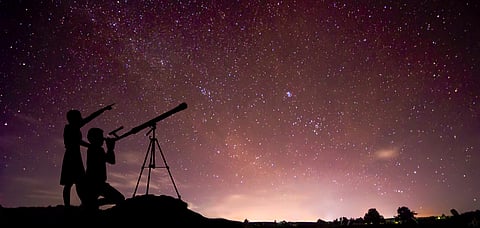
Look to the skies on November 14 and 15 Shutterstock
Why Beaver Moon?
According to NASA , the Beaver Moon, celebrated as the full Moon in November, carries a rich legacy rooted in Native American and European traditions. This evocative name reflects a crucial time in nature when beavers actively prepare for the harshness of winter by reinforcing their dams and stockpiling food. Moreover, November historically marked the season for trapping beavers to obtain their thick, warm pelts, essential for crafting cosy winter clothing. Embracing the significance of the Beaver Moon connects us to the cycles of nature and highlights our ancestors' ingenuity in adapting to their environment.
Advertisement
Published At:
Tags