When India’s first Vande Bharat Sleeper train began operations on the Kamakhya–Howrah route in January, it marked a significant step in overnight rail travel. Weeks into service, the Indian Railway Catering and Tourism Corporation (IRCTC) has revised its onboard meal offerings, introducing non-vegetarian options and updating the menu to better reflect regional food preferences along the eastern corridor.
What’s Cooking On India’s First Vande Bharat Sleeper
The Kamakhya–Howrah Vande Bharat Sleeper introduces non-veg meals, marking a shift toward region-specific dining on premium trains

Advertisement
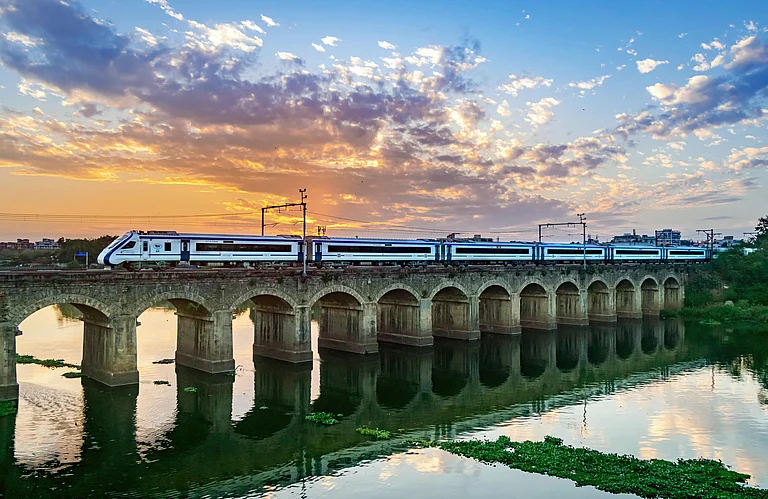
Flagged off by Prime Minister Narendra Modi on January 17 and commencing commercial operations from January 22, the Kamakhya–Howrah–Kamakhya Vande Bharat Sleeper Express is the country’s first sleeper version of the semi-high-speed Vande Bharat trains. This overnight train runs six days a week between West Bengal and Assam, both of the regions known for their rich food cultures.
Based on what passengers said after the first launch, IRCTC changed the menu, so people can now pick between vegetarian and non-vegetarian options. The new menu has dishes with Bengali and Assamese flavours, instead of one standard menu for everyone on this train.
From Feedback To Food
The decision to introduce non-vegetarian meals followed passenger feedback received in late January, after which IRCTC finalised the revised offering to streamline operations while improving onboard convenience. The update was also reflected at the policy level, with the Railway Board initiating changes to the ticketing system so passengers can select their meal preferences in advance.
Advertisement
The addition of chicken-based dishes came after the initial vegetarian-only menu sparked criticism, particularly in West Bengal, where food choices are often viewed as expressions of cultural identity. While the debate briefly took on political overtones, the eventual outcome was a practical one: a menu that mirrors what people actually eat along this route.
The new non-vegetarian option centres on chicken, served as a modest portion of boneless pieces in gravy, prepared in regional styles. Importantly, the rest of the meal spread remains intact, ensuring consistency while allowing choice. The change has already been implemented on board, making the sleeper service more inclusive without overhauling its catering operations.
Howrah To Kamakhya
For passengers travelling from Howrah to Kamakhya on train number 27575, the dining experience now feels unmistakably eastern. Beyond the standard morning tea, biscuits, and muffins served between 6:30 am and 8 am, IRCTC has curated three rotating meal menus for the journey.
Advertisement
Rice takes centre stage, with options such as basanti pulao, ghee rice, and green peas pulao. These are paired with paratha and comforting accompaniments like cholar dal, aloo gajar methi matar bhaja, and jhuri aloo bhaja. Vegetarian mains include classic Bengali preparations such as matar paneer, chanar dalna, and dhokar dalna.
If you're a non-vegetarian, the menu now has Bengali chicken curry, murgh rogini, and murgir jhol. These dishes focus on comfort and aren't too spicy. For dessert, they've got sandesh, kala jamun, and kheer kadam to finish things before the train arrives in Assam.
Kamakhya To Howrah
On the way back from Kamakhya to Howrah (train number 27576), the food is a little different but still good. You can have jeera rice, jeera corn pulao, or kismis pulao with tehdar paratha for dinner. The dal is a mix of arhar and moong, and the vegetables include lesera aloo bhaji, bhendi aloo bhaji, and beans aloo bhaji, similar to home cooking in Assam.
Advertisement
Vegetarians can pick paneer masala or kadai paneer. If you like meat, there's chicken masala or Assamese-style chicken curry. For sweets, enjoy narikal burfi, rasgulla, and lalmohan to end the meal with a cosy, festive feel.
Eastern Railway has indicated that the menu revamp was consciously designed to suit the preferences of passengers from West Bengal and Assam, reinforcing the idea that premium rail travel in India is increasingly about localisation, not uniformity.
As Vande Bharat Sleeper trains prepare to expand to more routes in the future, the Kamakhya–Howrah service offers an early lesson: speed and comfort matter, but so does what’s served on the tray. On overnight journeys especially, a warm, familiar meal can make all the difference between simply arriving and arriving well-fed, content, and at ease.
FAQs
1. Which route does the Vande Bharat Sleeper train operate on?
The Vande Bharat Sleeper runs between Howrah and Kamakhya, connecting West Bengal and Assam six days a week.
Advertisement
2. Are non-vegetarian meals now available on the Vande Bharat Sleeper?
Yes, passengers can now choose between vegetarian and non-vegetarian meal options on both legs of the journey.
3. What kind of non-vegetarian food is served onboard?
The menu includes regional chicken dishes prepared in Bengali and Assamese styles, served as part of the main meal.
4. Can passengers select their meal preference in advance?
Yes, IRCTC is updating its ticket booking system to allow passengers to clearly choose between veg and non-veg meals.
5. When did the Vande Bharat Sleeper train begin commercial operations?
The train started commercial operations in January 2026, shortly after being flagged off earlier that month.
Published At: