If you are fond of road trips, here is some good news for you. There are some exciting developments underway for road travellers as the construction of the six-lane Delhi-Dehradun Greenfield Access Controlled Expressway is progressing rapidly. This expansive expressway, spanning 212 kilometres, originates from the Delhi-Mumbai Expressway near Akshardham in Delhi, with reports indicating its operational commencement in March of this year.
This New Expressway To Cut Down Delhi-Dehradun Travel Time To Half
This expansive expressway, spanning 212 kilometres, originates from the Delhi-Mumbai Expressway near Akshardham in Delhi will slash travel time to approximately 2 hours and 30 minutes between Delhi and Dehradun

Advertisement
The ambitious project is segmented into four sections, traversing through key areas such as Shastri Park, Khajuri Khas, the EPE interchange at Khekra in Mandola, Baghpat, Shamli, Saharanpur in Uttar Pradesh, ultimately linking to Dehradun, Uttarakhand. With a substantial investment exceeding INR 10,000 crore, the primary objective is to significantly slash travel time.
Significant Cut Down on Travel Time
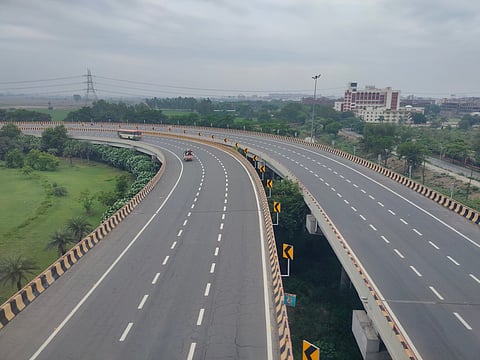
There will be a 12-kilometre-long wildlife elevated corridor, the largest in Asia, facilitating unhindered movement for wildlife Shutterstock
Upon completion, the travel duration from Delhi to Haridwar or Dehradun in Uttarakhand is expected to reduce to approximately 2 hours and 30 minutes, a noteworthy improvement from the current journey time of six to five hours. One of the noteworthy features of the expressway is the introduction of a 12-kilometre-long wildlife elevated corridor, the largest in Asia, facilitating unhindered movement for wildlife. Additionally, a 340-metre tunnel near the Dat Kaali temple in Dehradun has been strategically designed to minimise disruptions to wildlife. The Ganeshpur-Dehradun section further incorporates multiple animal passes, effectively mitigating the risks associated with animal-vehicle collisions.
Advertisement
Propelling Regional Economy
According to project authorities, the construction of this corridor is not only poised to invigorate the regional economy but also to catalyze tourism. The comprehensive initiative includes the construction of five road overbridges, 110 vehicle underpasses, and 76 kilometres of service roads in densely populated zones, along with a collective stretch of 29 kilometres of elevated sections. Sixteen entry-exit points are strategically established throughout the corridor.
Engineered for a minimum speed of 100 kilometres per hour, the expressway is designed with planned amenities every 25-30 kilometres. This transformative development is anticipated to fuel regional economic growth, with a particular focus on benefiting Uttarakhand’s flourishing tourism sector. Operating under the Engineering, Procurement, and Construction (EPC) mode, the project promises to deliver enhanced road user experiences and improved connectivity for all.
Published At: