The saltwater crocodile population in the Sundarban Biosphere Reserve (SBR) has shown a promising increase, according to a recent survey by the State Forest Department. This giant reptile, among the largest in the world, now numbers between 220 and 242 in the Indian Sundarbans, the study reveals.
Sundarbans Survey Reveals Increase in Saltwater Crocodile Hatchlings
According to the latest State Forest Department study, saltwater crocodiles in the Sundarbans now number between 220 and 242. The report highlights a rare increase in hatchlings, signalling a thriving population in this vast mangrove habitat

Advertisement
The report, Population Assessment and Habitat Ecology Study of Saltwater Crocodiles in Sundarbans 2025, highlights a rise across all age groups, with a notable increase in hatchlings—rarely seen in the challenging terrain of the mangrove forest. Conducted between December 2024 and February 2025, the survey combined physical sightings, GPS mapping, and habitat analysis to provide a comprehensive understanding of these elusive creatures.
Reports indicate that a senior official from the Sundarban Tiger Reserve (STR) stressed the importance of the data in informing future conservation efforts. By estimating crocodile density per kilometre across varied habitats, the team extrapolated these findings to cover the entire Sundarbans, offering crucial insights into the species’ habitat ecology and supporting its ongoing preservation.
Silent Sentinel Of The Mangroves
The saltwater crocodile (Crocodylus porosus) reigns as the world’s largest reptile and a formidable apex predator within the Sundarbans region of West Bengal. Also known as the estuarine or Indo-Pacific crocodile, this species plays a critical role in maintaining the delicate balance of its ecosystem. Saltwater crocodiles in India are primarily found in the coastal regions and estuaries of the Sundarbans, Bhitarkanika National Park, and the Andaman and Nicobar Islands. These locations offer the mangrove habitats and brackish water environments that saltwater crocodiles favour.
Advertisement
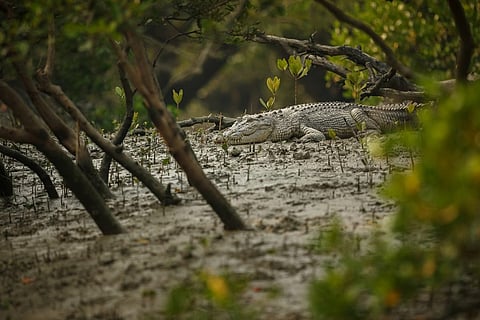
Saltwater crocodiles are recognisable by their broad snouts, central ridges above the eyes, and distinctive oval scales Shutterstock
Males can grow up to six metres long and weigh around 1,000 kilograms, dwarfing females who typically reach no more than three metres. Recognisable by their broad snouts, central ridges above the eyes, and distinctive oval scales, saltwater crocodiles are perfectly adapted for life in both freshwater and saltwater environments.
They are hypercarnivores, feeding on a varied diet that evolves with age—from fish and crustaceans in their youth to livestock, wild boar, and even monkeys as adults. Their habitat spans coastal areas, estuaries, mangroves, and brackish wetlands, where they exhibit an extraordinary tolerance for salinity, distinguishing them from other crocodilian relatives such as gharials and muggers.
The Habitat

The Sundarbans are the world's largest mangrove forest, located in the Bay of Bengal delta Shutterstock
The Sundarbans, a UNESCO World Heritage Site, offers an essential sanctuary for these reptiles. Thanks to initiatives like the Bhagabatpur Crocodile Project, established in 1976, conservation efforts have strengthened, supporting a recent survey estimating between 204 and 234 saltwater crocodiles in the region. Here, they dominate as the top aquatic predator, outmatching rivals like river sharks, king cobras, pythons, and even the semi-aquatic Bengal tiger.
Advertisement
The Information: The Sunderbans, West Bengal
The Sundarbans is not only home to dense mangrove forests and diverse wildlife but also to a resilient human population. The people of the Sundarbans have intricately adapted to the region’s harsh yet resource-rich environment. Their culture, livelihoods, and daily lives are deeply intertwined with the forest, its rivers, and its rhythms.
Living Off The Land And Water
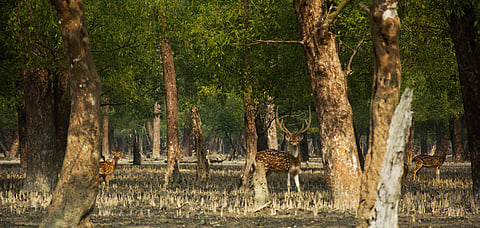
At the Sunderbans National Park Shutterstock
The people of the Sundarbans rely deeply on the forest and its waterways for their livelihoods. Fishing remains a primary occupation, with the region’s intricate network of tidal rivers and estuaries offering an abundant supply of fish that sustains both families and local markets. Honey collection is another key activity, carried out by collectors who venture into the dense mangroves each season. Their work is both risky and revered, as they face the dangers of tigers and crocodiles while harvesting wild honey. Agriculture also plays a crucial role, with communities cultivating rice, pulses, and vegetables on land that is often saline and prone to flooding—requiring considerable resilience. In addition, locals depend on non-timber forest produce such as fuelwood, thatching materials, timber, and edible gastropods, which contribute to both household needs and income generation.
Advertisement
Shared Cultures
The culture of the Sundarbans is a vibrant tapestry of Hindu and Muslim traditions, woven together through a shared reverence for Bonbibi, the forest goddess. Worshipped as a divine protector against tigers and other dangers lurking in the mangroves, Bonbibi holds a central place in the spiritual life of the region. Her presence bridges religious divides, with both communities turning to her for safety and guidance. Forest workers, whether honey collectors, fishermen, or wood gatherers, often begin their day with prayers at her shrines. This unique form of "forest religion" has emerged from the harsh realities of the environment, offering not only courage but also a moral framework for living in respectful harmony with the forest.
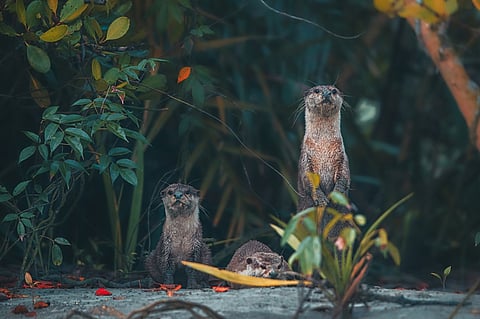
Otters in the Sunderbans Shutterstock
Best Time To Visit
Like much of the humid Bengal delta, the Sundarbans is best visited between October and March. Winter, from December to February, is particularly rewarding, with cooler temperatures and clear skies making for a comfortable experience. This season also offers the best chances for wildlife sightings, as animals are more active and visible. Royal Bengal tigers, in particular, are more likely to emerge from the dense forest to bask in the winter sun, offering visitors a rare glimpse.
Advertisement
Getting To The Sundarbans
The journey to the Sundarbans typically begins in Kolkata, with several travel options available. The nearest airport is Netaji Subhash Chandra Bose International Airport, from where travellers can hire a car or taxi to reach entry points like Godkhali or Canning. For those preferring rail travel, regular trains run from Sealdah station in Kolkata to Canning, the closest railway station to the Sundarbans. By road, a drive from Kolkata to Godkhali takes approximately three hours, offering a scenic route through rural Bengal before you embark on your onward journey into the mangrove forests.
In Harmony With The Wild
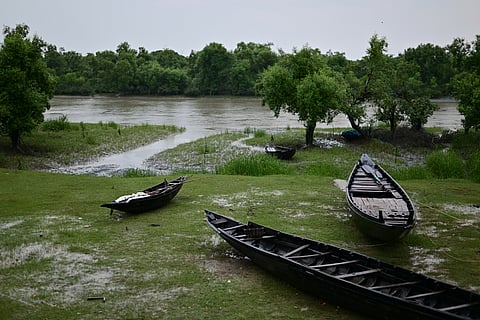
Boats in the Sunderbans Somak Sarkar/Shutterstock
Travellers are encouraged to respect the environment, embrace the tranquillity, and remain open to the unpredictability of nature. Sustainable travel begins with simple actions—carrying reusable items, avoiding littering, and conserving water, a precious resource in this fragile ecosystem. Choosing eco-conscious accommodations and responsible tour operators supports conservation efforts. Visitors should also show respect for wildlife by avoiding loud noises and staying within designated paths. Immersing oneself in local culture deepens the experience—so learn about Bonbibi, and the customs of those who call the Sundarbans home.
Advertisement
Published At:
Tags