For a long time, India's first bullet train has been a topic of discussion in politics and the transportation industry. Now, it seems like that idea is close to becoming real. If everything goes as planned, the first high-speed train will start running in August 2027, which will be a big step for transportation in India.
India’s Bullet Train Project Moves Closer To Reality With 2027 Launch Plan
India’s high-speed rail network takes shape as the first indigenous bullet train prepares to debut on the Surat–Vapi corridor in 2027

Advertisement
The Mumbai–Ahmedabad High-Speed Rail (MAHSR) line, which is 508 kilometers long and supported by Japanese technology and money, is going to start with a 97-kilometre section between Surat and Vapi in Gujarat. This part will serve as the first step of India’s entry into the world of fast trains.
What's especially important is that the first train used will be made in India. This shows that India wants to build its own high-speed train technology.
First Stretch Opens
The first part of the line, between Surat and Vapi, is scheduled to open in August 2027. Even though the whole line will eventually connect the two cities, the decision to start with a smaller section shows a practical approach. Instead of waiting for everything to be finished, officials are starting with the completed parts first. This allows them to test and improve the system while the rest is being built.
The high-speed line uses advanced technology. It's based on Shinkansen technology from Japan, which is known as one of the safest and most reliable high-speed rail systems in the world. Along with the trains, the project includes special tracks, elevated bridges, advanced signaling, and stations designed for high-speed travel.
Advertisement
Made In India
A big change is that the first trains will be made in India. The train, called B28, is being made by Bharat Earth Movers Limited (BEML) in Bengaluru. The B28 trains can travel up to 280 kmph, which is a big step for India in becoming self-sufficient in high-speed rail technology. At first, the trains will travel at around 250 kmph, but they can be upgraded as the technology improves. India is now trying to develop its skills in advanced rail systems. The project still involves Japanese cooperation, especially in sharing technology and designing infrastructure. Still, using trains made in India shows that the larger goal is to produce high-speed trains in the country in the long run.
The signalling system for the line will use ETCS Level-2 technology, a modern rail control system that can handle high-speed operations. Contracts for these systems have already been awarded, and the installation is happening while the construction continues.
Advertisement
Costs And Expansion

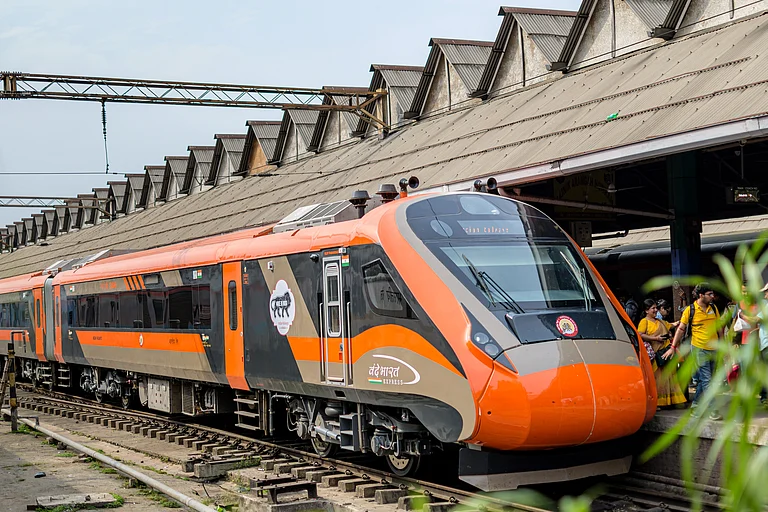
The 508-km Mumbai–Ahmedabad high-speed rail corridor marks India’s biggest leap into bullet train technology Unsplash
Like most big building projects, the Mumbai–Ahmedabad bullet train has seen its costs change over time. When the project was first approved in 2015, the cost was estimated at INR 97,636 crore. Since then, things have changed. The total cost has gone up due to inflation, higher costs for buying land, more infrastructure needs, and the use of advanced signaling and locally made trains. Expenses for taxes, relocation, station access, and moving utilities have also added to the cost. Now, the total cost of the project is estimated to be almost twice the original amount.
Despite these problems, the bullet train project is still important to India's transport plans. The government has already chosen other high-speed rail lines as future growth connectors, including routes like Mumbai–Pune, Delhi–Varanasi, Chennai–Bengaluru, and Hyderabad–Bengaluru. Project reports for these routes are being reviewed, which suggests that the Mumbai–Ahmedabad line is just the first part of a much larger high-speed network.
Advertisement
At the moment, all stakeholders are tracking the Surat–Vapi stretch. When the first train leaves the station in 2027, it will represent the commencement of India's long-awaited high-speed rail.
(With inputs from various sources.)
FAQs
1. When will India’s first bullet train begin operations?
India’s first bullet train is expected to start operations in August 2027 on the Surat–Vapi stretch of the Mumbai–Ahmedabad corridor.
2. Which route will the first bullet train run on?
The first operational section will run between Surat and Vapi in Gujarat, covering a distance of 97 kilometres.
3. How fast will the bullet train travel?
The B28 bullet train is designed to run at speeds of up to 280 kmph, with initial operations likely around 250 kmph.
4. Who is manufacturing India’s first bullet train?
The trainset, called B28, is being manufactured by Bharat Earth Movers Limited (BEML) in Bengaluru.
5. What is the total length of the Mumbai–Ahmedabad bullet train corridor?
The full Mumbai–Ahmedabad High-Speed Rail corridor will span 508 kilometres once completed
Advertisement
Published At: