Restaurants and hotels across several Indian cities are reporting disruptions in the supply of commercial LPG cylinders, the primary fuel used in most commercial kitchens. Industry associations say deliveries have slowed or stopped in some areas over the past few days, creating operational uncertainty for businesses that depend on regular cylinder supplies to run their kitchens.
Explained: The LPG Supply Disruption Affecting India's Restaurant Industry
As geopolitical tensions affect global energy flows, India’s heavy reliance on imported LPG is beginning to affect the restaurant industry

Advertisement
The issue has been reported in cities including Mumbai, Bengaluru and Chennai, where hospitality associations have approached the central government seeking clarification and intervention. While widespread shutdowns have not yet occurred, restaurant operators say the uncertainty around supply has created concern across the sector.
“Practically speaking, I don’t think any restaurant has 'shut' down to date, but there is a sense of panic around,” said Anurag Katriar, founder and managing director of Indigo Hospitality and former president of the National Restaurant Association of India (NRAI). According to Katriar, much of the anxiety is being driven by inconsistent information circulating among distributors and restaurateurs, rather than widespread operational disruptions so far.
“One day, you hear something that there is a complete ban, then there is another story which says there is no dearth of supplies to commercial establishments. All kinds of stories floating around are creating anxiety in the minds of people,” he said.
Advertisement
However, industry representatives in some cities say supply interruptions are beginning to occur at the distribution level. In Mumbai, restaurant operators report that deliveries of commercial LPG cylinders have slowed sharply in recent days.
Sunil Shetty, honorary general secretary of the Indian Hotel and Restaurant Association (AHAR), said the disruption has already started affecting some establishments.
“For the last three to four days, there has been no supply of cylinders in Mumbai. On March 6, there were some deliveries, but after that, it has stopped,” Shetty said. “Yesterday, some restaurants were unable to operate because of a shortage of supplies.”
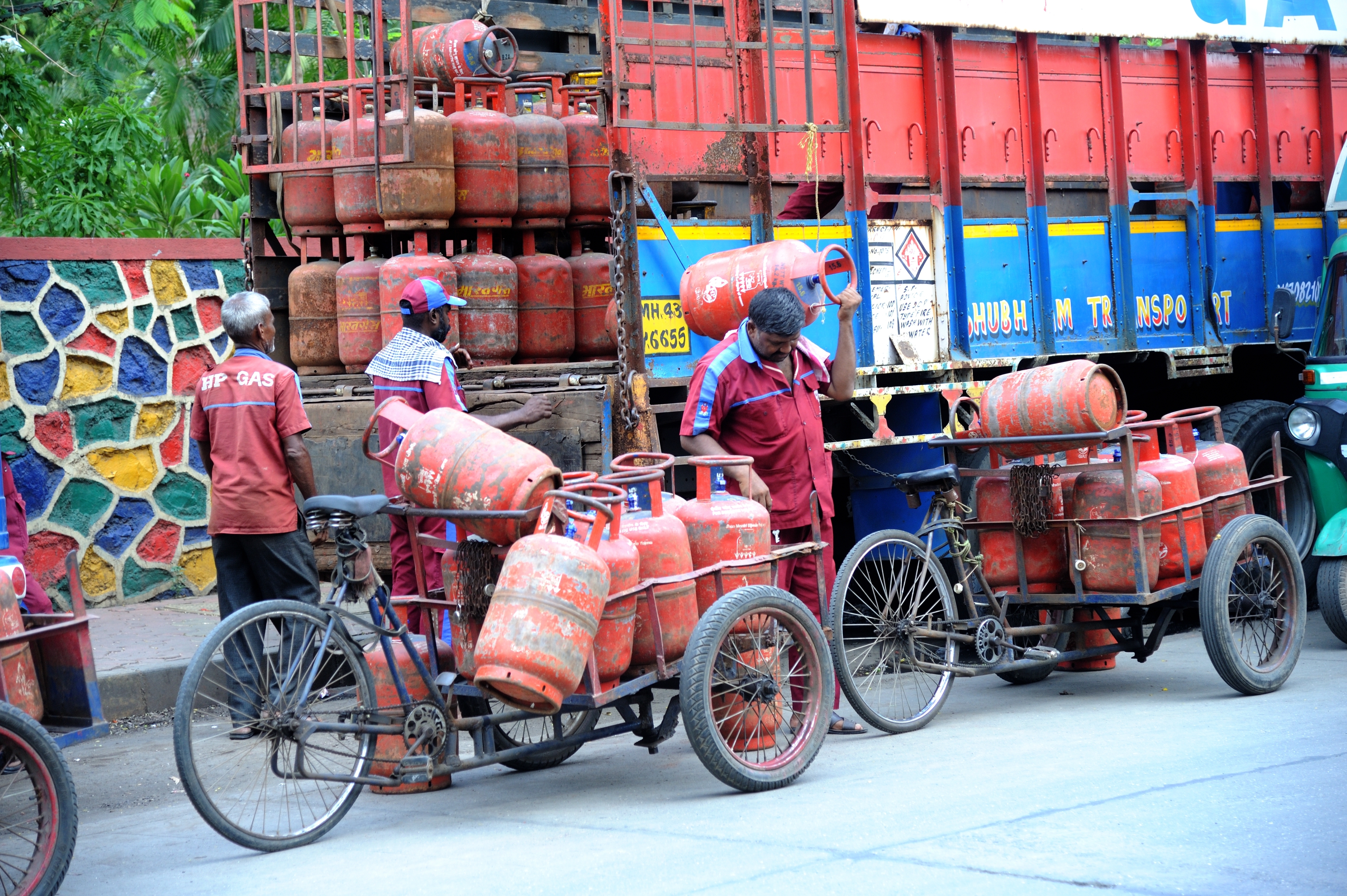
Workers transport home cooking LPG cylinders for delivery to customers in Mumbai Shutterstock
Restaurants typically have limited storage capacity for LPG cylinders, so even short disruptions in delivery schedules can affect kitchen operations. Shetty said that if supplies do not resume soon, more establishments could face operational challenges in the coming days.
Why The Shortage Has Emerged
The LPG shortage has developed at the intersection of global energy disruptions, domestic supply priorities and confusion in the distribution chain.
Advertisement
The broader backdrop is the escalation of geopolitical tensions in West Asia, particularly involving Iran, Israel and the United States. The conflict has drawn attention to the Strait of Hormuz, a strategically important shipping corridor connecting the Persian Gulf with global energy markets, through which a significant share of the world’s crude oil and LPG shipments passes.
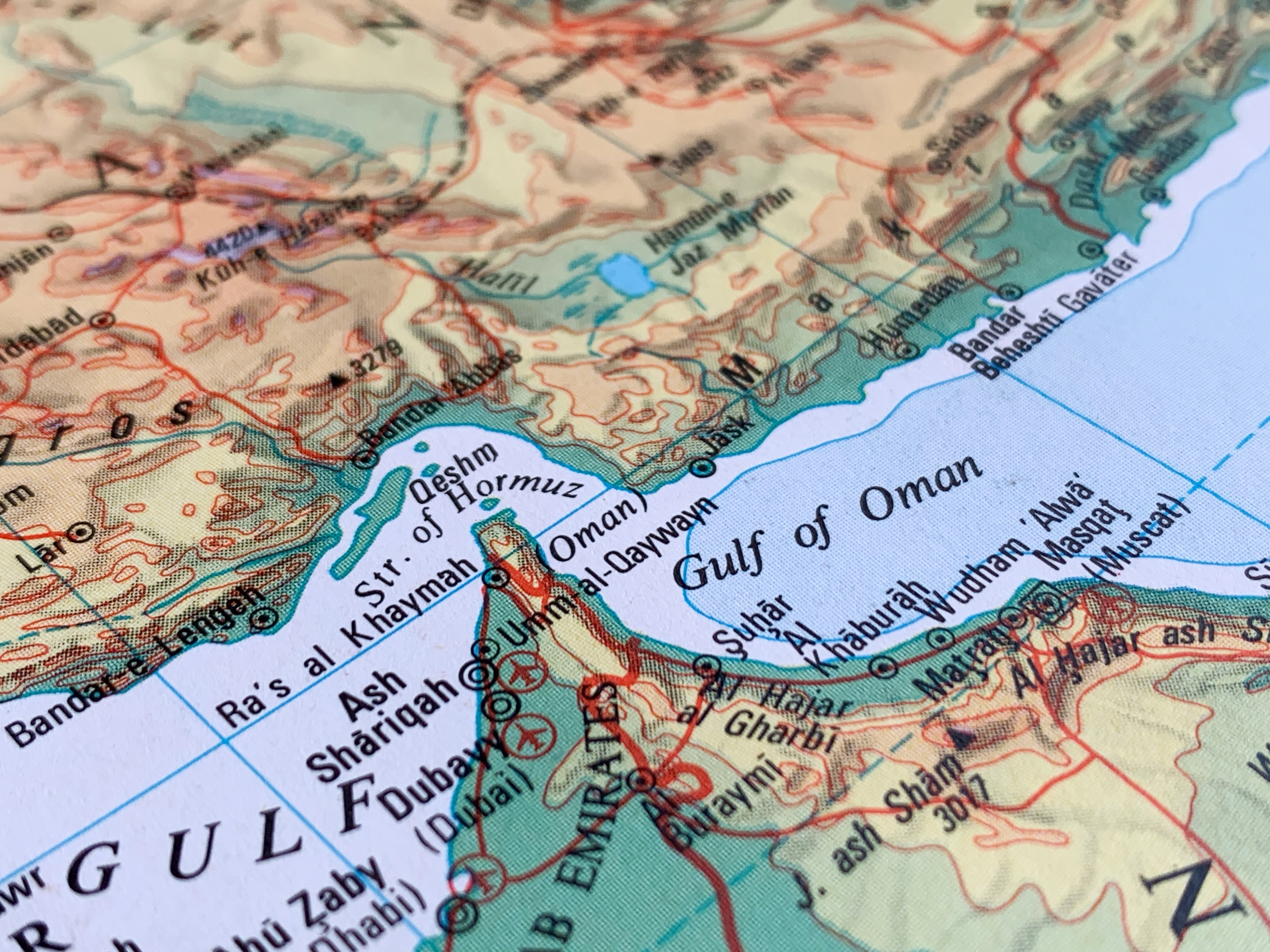
Strait of Hormuz, a narrow yet strategically important shipping corridor connecting the Persian Gulf with global energy markets Shutterstock
“Any disruption in the Strait of Hormuz immediately raises risks for LPG supply and shipping flows,” said Sumit Ritolia, lead analyst at Kpler, a provider of real-time data and analytics for commodity markets and maritime logistics. A large share of LPG exports from the Middle East—including supplies from Qatar, Saudi Arabia and the United Arab Emirates—passes through the route, making it critical for Asian importers.
India imports a large share of its LPG from Gulf countries, with most shipments travelling through the Strait of Hormuz before reaching Indian ports. Analysts estimate that the country imports roughly 80–85 per cent of its LPG consumption.
Advertisement
Ritolia said that if shipments through Hormuz remain constrained, Indian buyers may have to source LPG from alternative suppliers such as the United States or West Africa, which would involve longer shipping routes and higher freight costs. “This could tighten regional availability and push up replacement costs, especially if multiple Asian buyers compete for limited cargoes,” he said.
India consumes roughly 900–1,000 thousand barrels per day of LPG, of which around 600 thousand barrels per day is imported, with 80–90 per cent sourced from the Middle East. As a result, any disruption or perceived risk to energy flows in the region can affect global supply chains and influence domestic availability and pricing.
Domestic Supply Priorities And Commercial Impact
Amid this uncertainty, the government moved to prioritise household cooking gas supply in order to prevent shortages for domestic consumers. Industry representatives say this shift in supply priorities has had unintended consequences for commercial users such as restaurants.
Advertisement
Sagar Daryani, president of the National Restaurant Association of India (NRAI) and co-founder and chief executive officer of Wow! Momo Foods Pvt Ltd, said recent government directives prioritised domestic LPG consumption but did not prohibit supply to restaurants.
“The government clearly mentioned that priority should be given to LPG cylinders for domestic consumption. However, nowhere was it mentioned that LPG cylinders for commercial purposes should be banned,” Daryani said. According to him, the shortage may partly be due to how distributors have interpreted the directive.
“There is ambiguity in the minds of distributors, and that has led to a shortage of supply for commercial cylinders,” he said.
Heavy Dependence On LPG In Restaurant Kitchens
The hospitality sector’s reliance on LPG makes it particularly vulnerable to supply disruptions. Most restaurants in India operate using LPG cylinders as their primary cooking fuel, while piped natural gas connections are available only in some urban areas.
Advertisement
“Eighty per cent of restaurants operate on LPG cylinders,” Daryani said. “Only about 20 per cent have PNG gas lines or operate on electricity.”
Because of this dependence, the impact of supply disruptions is likely to vary across the food service industry. Quick-service chains that use some electrical equipment may be able to adjust temporarily, but casual dining restaurants, fine dining establishments and cloud kitchens rely far more heavily on gas-based kitchens.
“Casual dining, fine dining and cloud kitchens would be severely affected because their kitchens are designed around LPG,” Daryani said.
The disruption has also coincided with an increase in LPG prices. Domestic cylinders rose by about ₹60, while commercial cylinders rose by roughly ₹115. Industry representatives say the larger concern is not the price increase itself but the continuity of supply.
“Pricing going up is a P&L problem. The first problem is continuity of business,” Daryani said.
Supply shortages can also distort distribution networks. “Officially the increase is about eight per cent,” Daryani said. “But we are hearing that in some places black marketing is happening and prices are going up much higher.”
Advertisement
Meanwhile, some restaurants are trying to reduce gas consumption. Katriar said certain processes, such as making stocks or cooking staff meals, have been shifted to induction equipment where possible. However, most commercial kitchens are designed around gas-based cooking systems, making such changes temporary rather than long-term solutions.
Smaller Food Businesses May Face Greater Challenges
Industry leaders say the effects of the shortage may be felt unevenly across the hospitality sector. Larger restaurant groups may have more flexibility to adjust their operations or shift some cooking processes to alternative energy sources. Smaller establishments often have fewer options.
Katriar said roadside eateries and small independent restaurants may face greater difficulties if LPG supplies remain constrained.
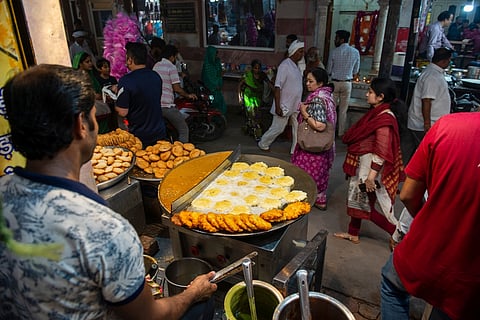
Roadside eateries and small independent restaurants may struggle more if LPG supplies remain limited Shutterstock
“The biggest impact will actually not be faced by big restaurants but by roadside eateries,” he said. These businesses often purchase cylinders frequently and do not have alternative cooking infrastructure, such as induction equipment or piped gas connections.
Advertisement
They may also find it more difficult to absorb increases in fuel costs if LPG prices continue to rise.
Industry Seeks Clear Communication And Stable Supply
Restaurant associations say they have approached the government, requesting clarity on commercial LPG supply and asking that restaurants continue to receive cylinders even if deliveries are regulated.
Pradeep Shetty, vice president of the Federation of Hotel and Restaurant Associations of India (FHRAI) and spokesperson for the Hotel and Restaurant Association (Western India), said the shortage has intensified due to confusion among distributors following recent government notifications.
“The shortage of commercial LPG has become extremely serious over the past week, with intermittent disruptions escalating into a near-complete halt in supply in several regions since yesterday,” Shetty said. “Following the notification dated March 5 by the Ministry of Petroleum and Natural Gas, there has been considerable confusion among suppliers and distributors, many of whom have stopped supplying commercial LPG cylinders to hotels, restaurants and food service establishments.”
Advertisement
He added that shortages are being reported across multiple cities, including Mumbai, Pune, Aurangabad and Nagpur, as well as in states such as Delhi, Karnataka, Telangana, Tamil Nadu and Andhra Pradesh. According to Shetty, if the situation does not improve soon, a significant number of establishments in Mumbai may be forced to suspend operations depending on their remaining cylinder stocks.
Meanwhile, Katriar said the industry understands that energy disruptions may require temporary adjustments but believes commercial establishments should continue receiving supplies.
“We understand that there is a crisis,” he said. “All we are saying is please don’t single us out for non-supply. Even if supply is reduced, continue to supply commercial establishments.”
What Happens Next
Government officials say steps are already being taken to stabilise LPG supply and ensure that domestic cooking gas remains available despite the disruption.
The Ministry of Petroleum and Natural Gas said it has directed oil refineries to increase LPG production and divert additional output toward domestic use. Authorities have also introduced a 25-day gap between LPG bookings to prevent hoarding and black marketing amid current supply uncertainty.
Advertisement
The ministry said imported LPG meant for non-domestic use is currently being prioritised for essential services.
“Non-domestic supplies from imported LPG is being prioritised to essential non-domestic sectors such as hospitals and educational institutions,” the ministry said in a statement on X.
To address concerns raised by the hospitality sector and other industries, the government has also constituted a committee within the oil marketing companies to examine supply requests from commercial users.
“For LPG supply to other non-domestic sectors, a committee of three EDs of OMCs (Oil Marketing Companies) has been constituted to review the representations for LPG supply to restaurants, hotels and other industries,” the ministry said.
Authorities have also invoked provisions under the Essential Commodities Act to safeguard household LPG availability. Refineries and petrochemical units have been directed to maximise LPG production and divert key hydrocarbon streams toward the domestic LPG pool.
Petroleum and Natural Gas Minister Hardeep Singh Puri said the country’s overall energy supply remains stable despite geopolitical tensions affecting global energy markets.
“India is in a comfortable position, and there is no room for anxiety,” Puri said last week. “Energy imports into the country are in full flow from all non-Hormuz routes. The energy requirements of our citizens are being fully met.”
For the hospitality sector, however, the immediate concern remains the continuity of commercial LPG deliveries. Restaurants typically have limited storage capacity for cylinders, so even short disruptions in supply can affect daily kitchen operations.
Industry representatives say the situation will depend on how quickly supply chains stabilise and whether regular deliveries to commercial establishments resume in the coming weeks.
FAQs
1. Why are restaurants in India facing LPG supply disruptions?
Restaurants are experiencing LPG supply disruptions due to global energy tensions, India’s reliance on imported LPG, and confusion in the distribution chain prioritising domestic cylinders.
2. How dependent are Indian restaurants on LPG cylinders?
Industry estimates suggest around 80 per cent of restaurants in India rely primarily on LPG cylinders for cooking, making them vulnerable to supply disruptions.
3. Are restaurants shutting down due to LPG shortages?
Most restaurants remain operational, but some establishments in cities like Mumbai have reported supply delays that could affect kitchen operations if the shortage continues.
4. Why is LPG supply being prioritised for households?
The government has prioritised domestic LPG supply to ensure households have access to cooking gas during global energy disruptions.
5. Could LPG shortages increase restaurant prices?
If supply disruptions persist and LPG prices rise, restaurants may eventually face higher operating costs that could affect menu pricing.
Published At: