The 18th BRICS Summit, being held in New Delhi on September 12–13, has brought travel and tourism into sharper focus, with several developments aimed at strengthening international connectivity and easing movement between member countries.
BRICS Summit 2026: The New Travel Rules And Flight Routes To Know
From a free 30-day e-Tourist visa for Thai nationals to the return of direct Guangzhou-Delhi flights, new measures around the18th BRICS Summit in New BRICS 2026 aim to make travel more connected and seamless

Advertisement
Among the key announcements are the resumption of direct flights between India and China, a free e-Tourist visa facility for Thai nationals, and the adoption of a tourism framework that places greater emphasis on seamless travel, artificial intelligence and digital connectivity.
Direct India-China flights to resume
China Southern Airlines will resume regular direct passenger flights between Guangzhou and New Delhi from September 21, 2026, restoring a commercial air link that has been suspended for six years.
The return of the route is expected to improve connectivity between the two countries, offering a more convenient option for leisure and business travellers while strengthening people-to-people and tourism links.
India has also announced a free 30-day, double-entry e-Tourist visa for Thai nationals. The move is intended to encourage tourism between India and Thailand and comes as the BRICS countries look at ways to strengthen travel corridors and facilitate greater movement between participating nations.
Advertisement
Jaipur Declaration puts seamless travel on the agenda
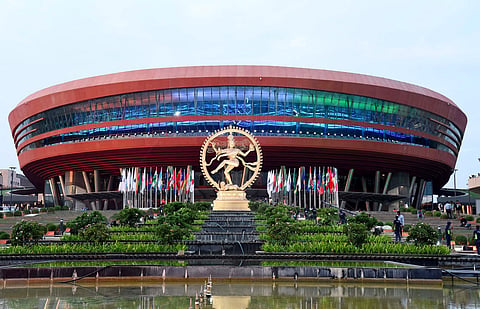
Bharat Mandapam to host cultural events for the 18th BRICS Summit Wikimedia Commons
Ahead of the leaders’ summit, BRICS Tourism Ministers finalised the Jaipur Declaration, formally the BRICS Tourism Ministers’ Communiqué 2026, under India’s chairship.
The framework outlines several areas of cooperation aimed at facilitating travel across BRICS countries. These include reducing barriers to mobility, simplifying visitor services and developing multilingual travel tools to help international visitors navigate destinations more easily.
Technology also features prominently in the declaration, with member nations highlighting the potential of human-centred artificial intelligence and digital tools for destination management and transit planning.
Another focus is cross-border digital financial connectivity, with the framework exploring ways to reduce friction in digital transactions for travellers. It highlights models such as Brazil’s Pix and the UAE’s UAE Pass alongside India’s Digital Public Infrastructure initiatives.
Delhi Airport expands international capacity
The push for stronger international connectivity is also being supported by upgrades at Delhi's Indira Gandhi International Airport.
Advertisement
The airport has completed an international processing upgrade that has increased its annual international passenger-handling capacity to 31 million. The expansion is expected to help accommodate growing international traffic as new aviation and tourism partnerships emerge.
Together, the developments announced and highlighted around the BRICS Summit point towards a broader effort to make travel between member countries more connected, digitally enabled and easier to navigate. While the immediate changes include the return of direct India-China flights and a new visa incentive for Thai visitors, the Jaipur Declaration sets out a longer-term vision for smoother cross-border travel across the BRICS grouping.

Inside Delhi Airport T3 Delhi International Airport Ltd
FAQs
1. What is the BRICS Summit 2026?
The 18th BRICS Leaders’ Summit is being held in New Delhi in September 2026 under India's BRICS chairship.
What new visa facility has India announced for Thai travellers?
India has announced a free 30-day, double-entry e-Tourist visa for Thai nationals. The initiative is intended to encourage tourism and strengthen people-to-people connections between India and Thailand.
Advertisement
When will direct India-China flights resume?
China Southern Airlines is scheduled to resume direct passenger flights between Guangzhou and New Delhi from September 21, 2026, following a six-year suspension.
What does the Jaipur Declaration say about travel?
One of its four priority areas is tourism exchanges and seamless travel facilitation. The framework also discusses digital technologies, multilingual communication and easier visitor services.
Has Delhi airport expanded its international capacity?
Yes. Delhi's Terminal 3 has begun international operations at the repurposed Pier C, increasing the airport's annual international passenger-handling capacity to 31 million.
Published At: